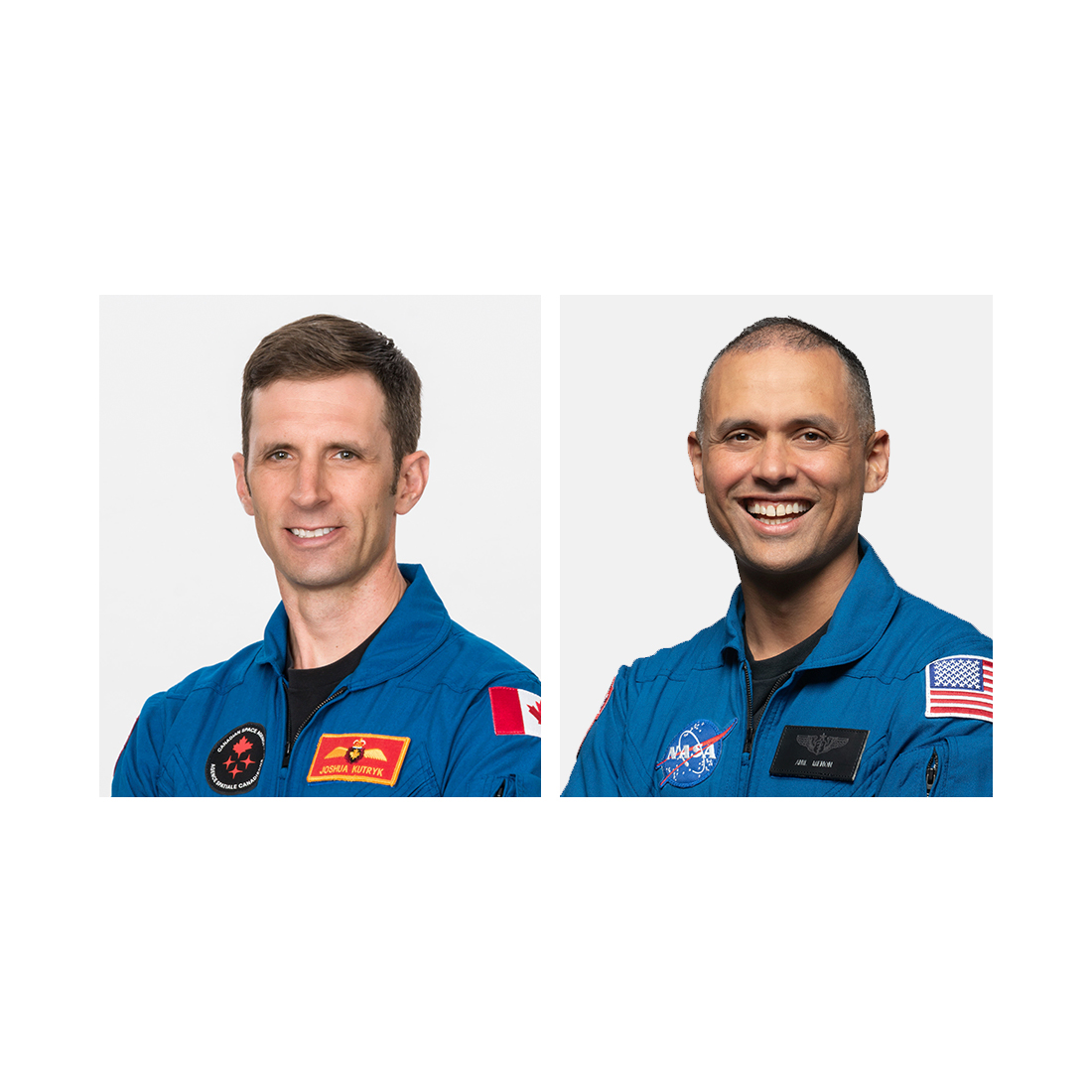
NASA and the Canadian Space Agency completed the final step of a multi-year power upgrade on Nov. 5, 2026, when Expedition 75 flight engineers Joshua Kutryk (CSA) and Anil Menon (NASA) installed and deployed the eighth and last roll-out solar array (IROSA) on the International Space Station’s truss structure.
The spacewalk began at 8:36 a.m. EST and lasted 6 hours, 59 minutes. With the new array in place, the station’s power generating capacity increases from about 160 kilowatts to roughly 215 kilowatts — an increase of about 30 percent.
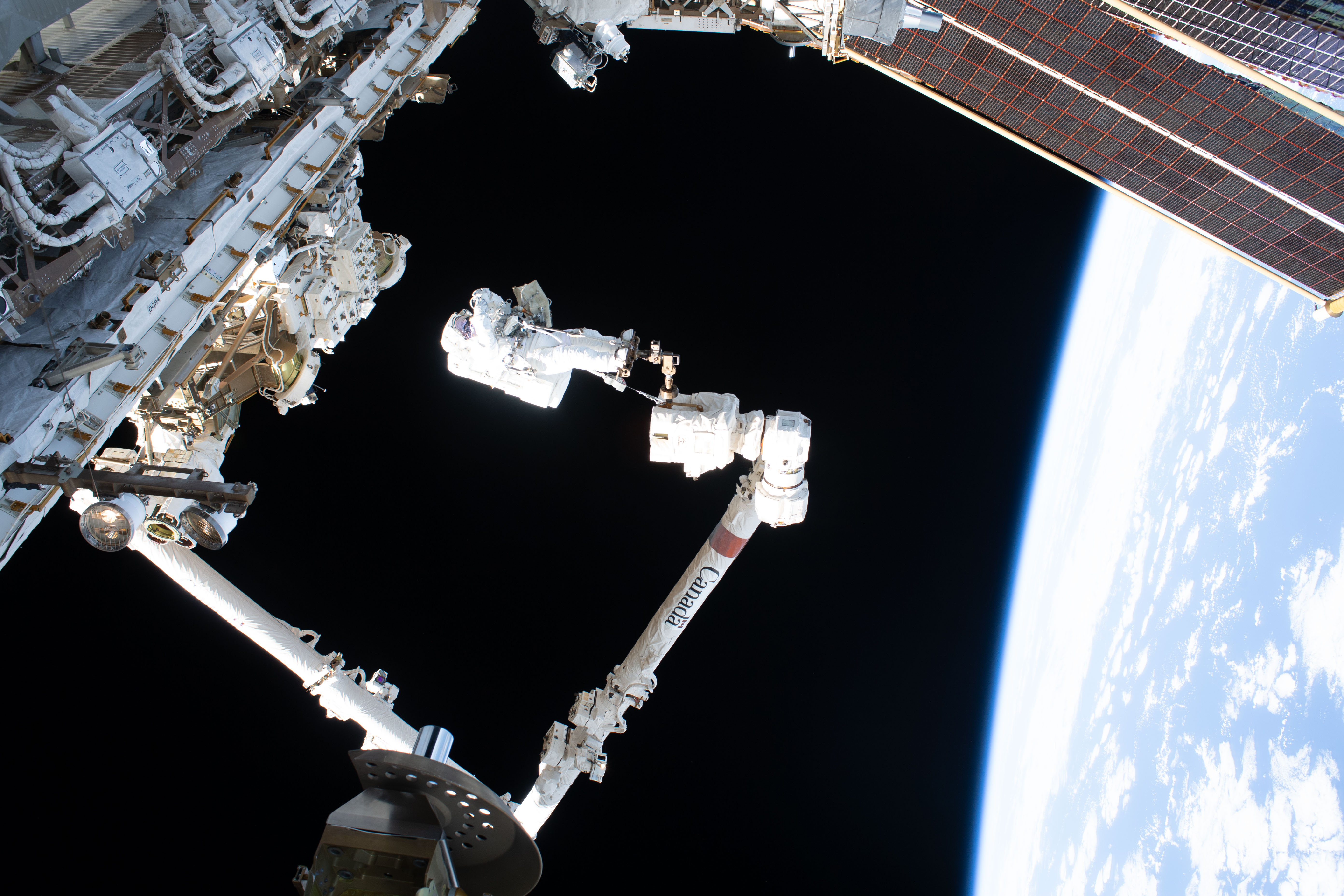
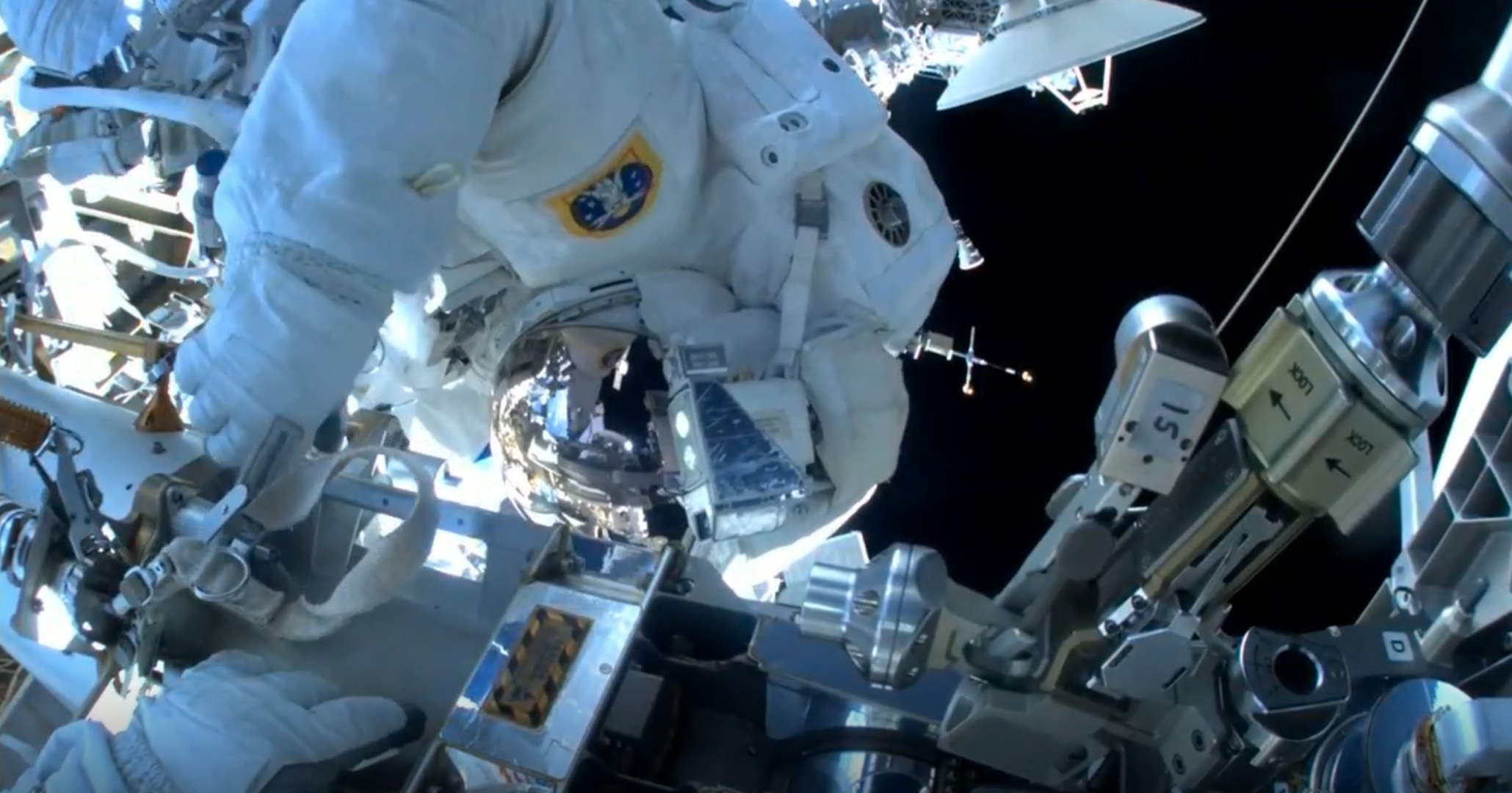
Kutryk and Menon carried out a sequence of tasks to complete years of augmentation work that began in June 2021. The pair repeated many of the procedures used during a previous outing on Oct. 29, when they installed a roll-out array on the port truss. For the Nov. 5 installation, Menon rode Canadarm2 while carrying the folded array to the starboard truss, handed it to Kutryk, then detached from the arm to assist at the worksite; the two performed multiple handoffs and used foot restraints to secure the array for attachment.
Mission controllers encountered a temporary electrical anomaly after initial cable mating, with the newly connected array producing lower-than-expected current. Because power connections to the live legacy wing can only be safely handled during orbital night, flight controllers had the crew pause and move up cleanup tasks while waiting for the next darkness window. During that night pass Kutryk inspected and reseated a power connector; after the station returned to daylight engineers reported "good currents," and the crew proceeded to release the final restraint bolts.
The array unfurled in about ten minutes and reached full length; NASA reported the deployment completed at roughly 3:05 p.m. EST during the spacewalk. Each IROSA produces about 8 kilowatts, compared with about 19 kilowatts from each original wing when new. Rather than replacing the aging original wings, the smaller roll-out arrays are installed in front of them to augment power while partially shading older panels.
Following the installation, Kutryk and Menon refilled spacesuit water tanks, removed air bubbles, installed rechargeable suit batteries, inspected and stowed tools, and powered down spacewalk-supporting equipment in the Quest airlock. NASA flight engineers Jessica Watkins and Luke Delaney assisted the duo in and out of suits, operated Canadarm2 during the operation, participated in post-spacewalk conferences with ground teams, and helped with cleanup tasks.
Across the station, Expedition 75 crewmates continued biomedical and scientific work: Sergey Teteryatnikov performed blood pressure and 24-hour cardiac monitoring sessions while exercising on a treadmill; Anna Kikina serviced ventilation systems and payload hardware; and commander Pyotr Dubrov conducted overnight carbon dioxide monitoring and inspected module hatches. Other research during the week included microbiology, space crop studies, bioprinting and testing of virtual reality and super-intelligence tools.
NASA streamed live coverage of the spacewalk beginning at 7 a.m. EST. The agency described the completed IROSA program as raising the station’s available power by up to about 30 percent to support operations through its remaining lifetime.