SpaceComputer to fly Space Fabric on D-Orbit ION mission in 2027
SpaceComputer, the Singapore-based in-orbit digital security startup, has booked a demonstration flight of its Space Fabric secure-compute payload on a D-Orbit ION mission scheduled for 2027, the company told Payload in an exclusive report published 16 November 2026.
Space Fabric is a software and hardware layer that sits atop a satellite’s compute module and uses cryptographic methods to provide verifiable proof that compute processes running in orbit were in fact executed on board. The module is designed to let multiple digital payloads share a single in-orbit compute resource while remaining isolated from one another.
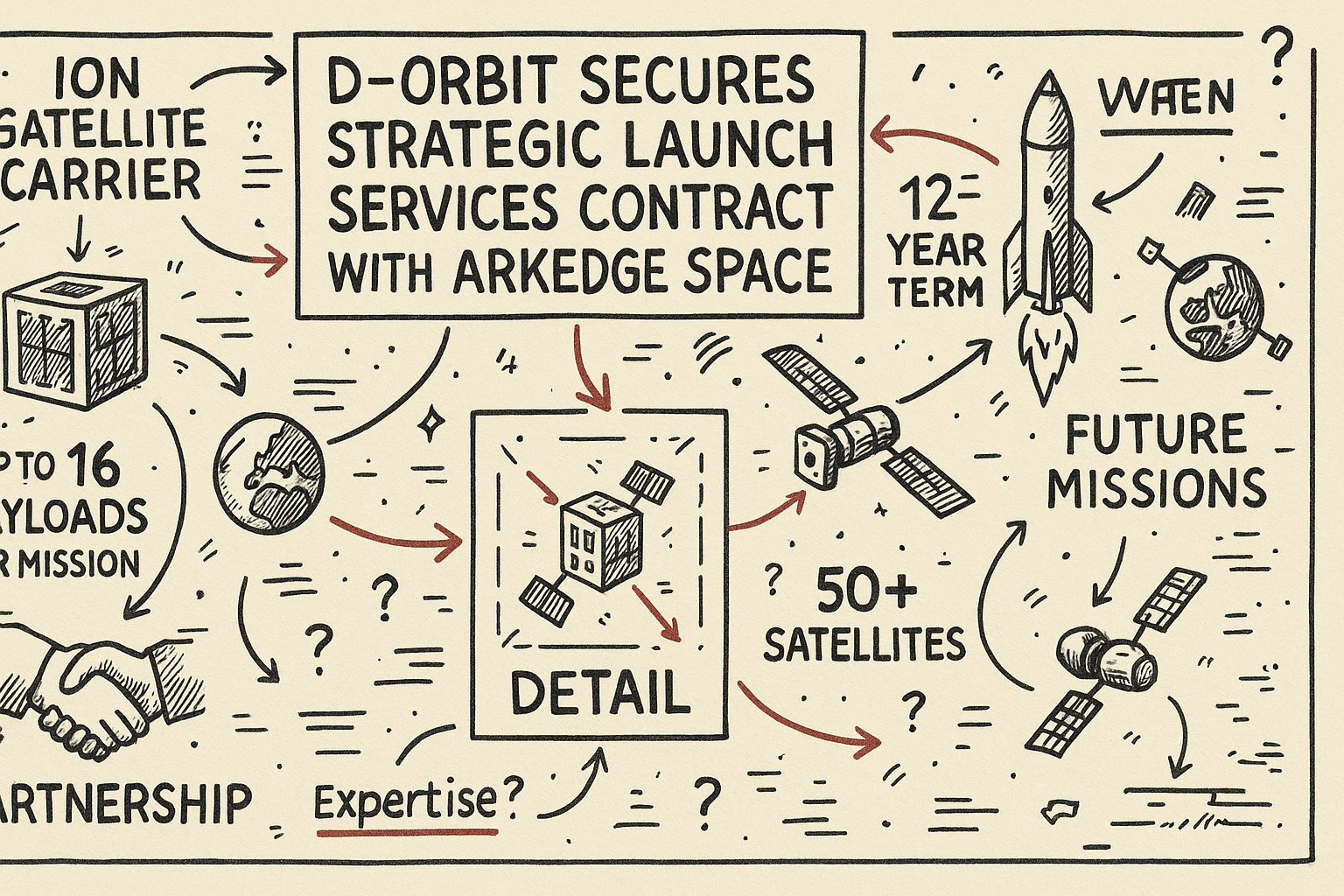
On the D-Orbit mission, Space Fabric will connect directly to Aptos Orbital’s cEDGE box and communicate over the Iridium satcom network. The stated aim of the demonstration is to ensure that data transmitted from satellites to ground networks has not been tampered with during transit. SpaceComputer officials also described ambitions to extend the technology to secure intersatellite links.
SpaceComputer CEO Daniel Bar framed Space Fabric as analogous to HTTPS on the terrestrial internet. “With the internet, we arrived at the place where we have HTTPS securing pretty much every website,” Bar told Payload. “Space Fabric essentially gives that HTTPS-for-space standard.”
The D-Orbit flight is planned as one of three missions SpaceComputer expects to fly in 2027. The company also intends to run a mission to geostationary orbit on an undisclosed satellite and a mission with Spacemanic to serve as a minimum viable product for its security architecture for compute payloads. Collectively, these demonstrations are aimed at moving a new standard for digital security for compute and communications modules toward market readiness.
SpaceComputer described rising on-orbit security needs driven not only by defense considerations but also by commercial realities. Modern satellites increasingly host payloads from multiple companies that may share compute and communications resources; SpaceComputer argues that those payloads will require cryptographic isolation to operate safely together. The company envisioned a future in which orbital data centers and shared-payload architectures will “need a security layer to ensure everyone is operating in a protected silo,” Bar told Payload.
Payload’s article was updated to note the involvement of Aptos Orbital.