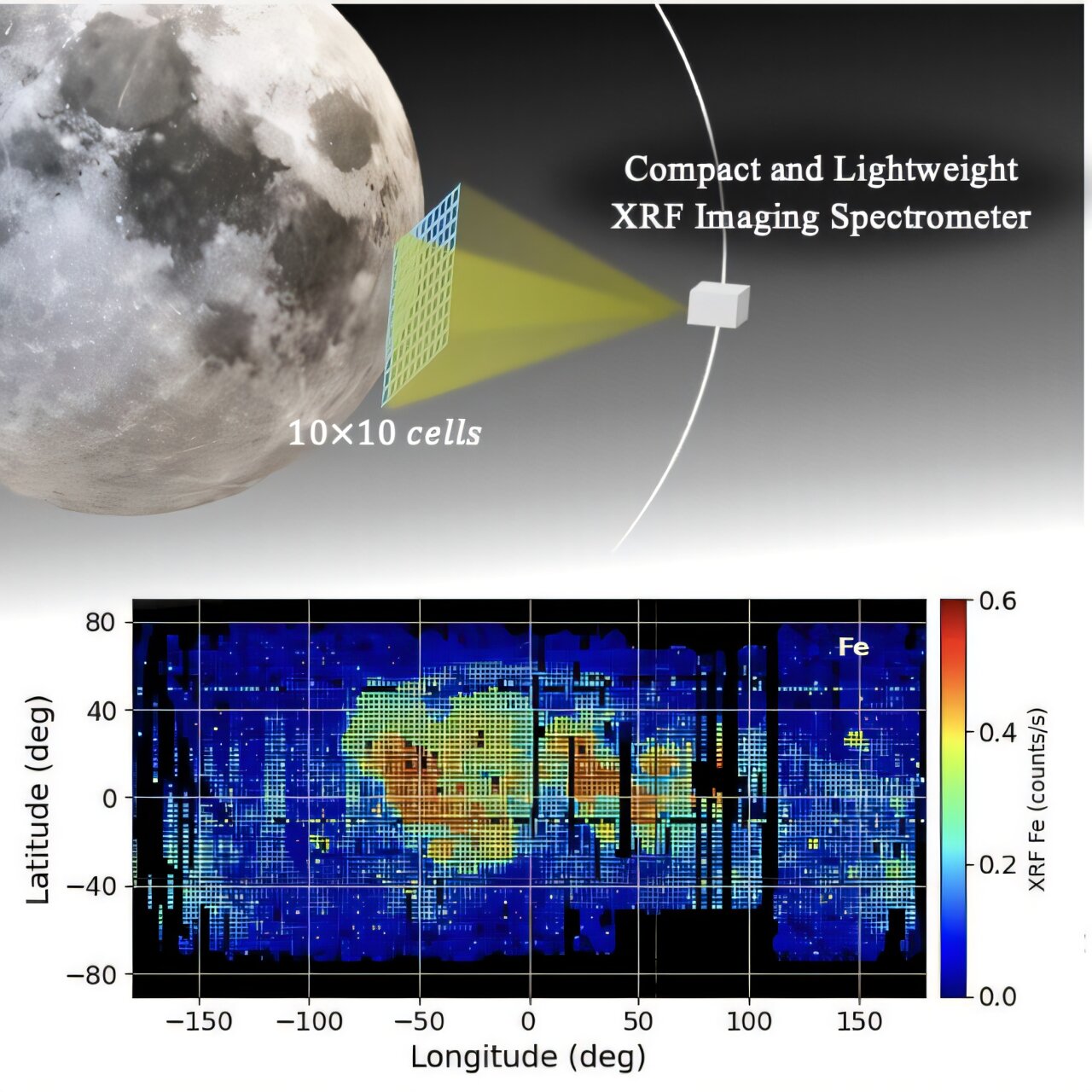
Researchers from Tokyo Metropolitan University have made significant strides in lunar exploration with the development of a compact X-ray telescope. This innovative instrument, part of a new lunar orbiter concept, promises to map the chemical composition of the Moon's surface within a relatively short period of two years. Such a development could provide invaluable insights into the lunar geological evolution, a field that has intrigued scientists for decades.
The lunar orbiter concept is centered around the ability to detect and map five key elements present on the Moon's surface. By employing detailed simulations, the research team has demonstrated that the proposed telescope can effectively carry out this task. The findings highlight the potential of this technology to significantly enhance our understanding of the Moon's composition and, by extension, its history.
Understanding the distribution and concentration of these elements is crucial for piecing together the Moon's past. This knowledge not only informs us about the Moon's own geological processes but also sheds light on broader questions about the solar system's formation and evolution. Mapping elements such as magnesium, aluminum, silicon, calcium, and iron could reveal patterns and anomalies that have persisted since the Moon's formation.
The telescope's compact design is a critical factor in its capability to complete such a comprehensive survey in just two years. This efficiency is achieved through advanced modeling techniques that optimize the detector's performance and simulate a realistic satellite mission. The research suggests that the use of an X-ray telescope can offer a more detailed and expansive picture of the Moon's surface than previous methods.
These advancements in lunar exploration technology are particularly timely as interest in the Moon is resurging. With numerous international missions planned, including those aimed at establishing a sustainable human presence on the lunar surface, understanding the Moon's resources and geological history is more relevant than ever. Such knowledge could inform the development of future lunar bases and the potential for resource extraction.
The work of Tokyo Metropolitan University represents a significant leap forward in space exploration technology, showcasing how innovative approaches and compact designs can achieve ambitious scientific goals. If successful, this mission could set a new standard for lunar exploration, paving the way for more detailed and efficient surveys of other celestial bodies in the future.