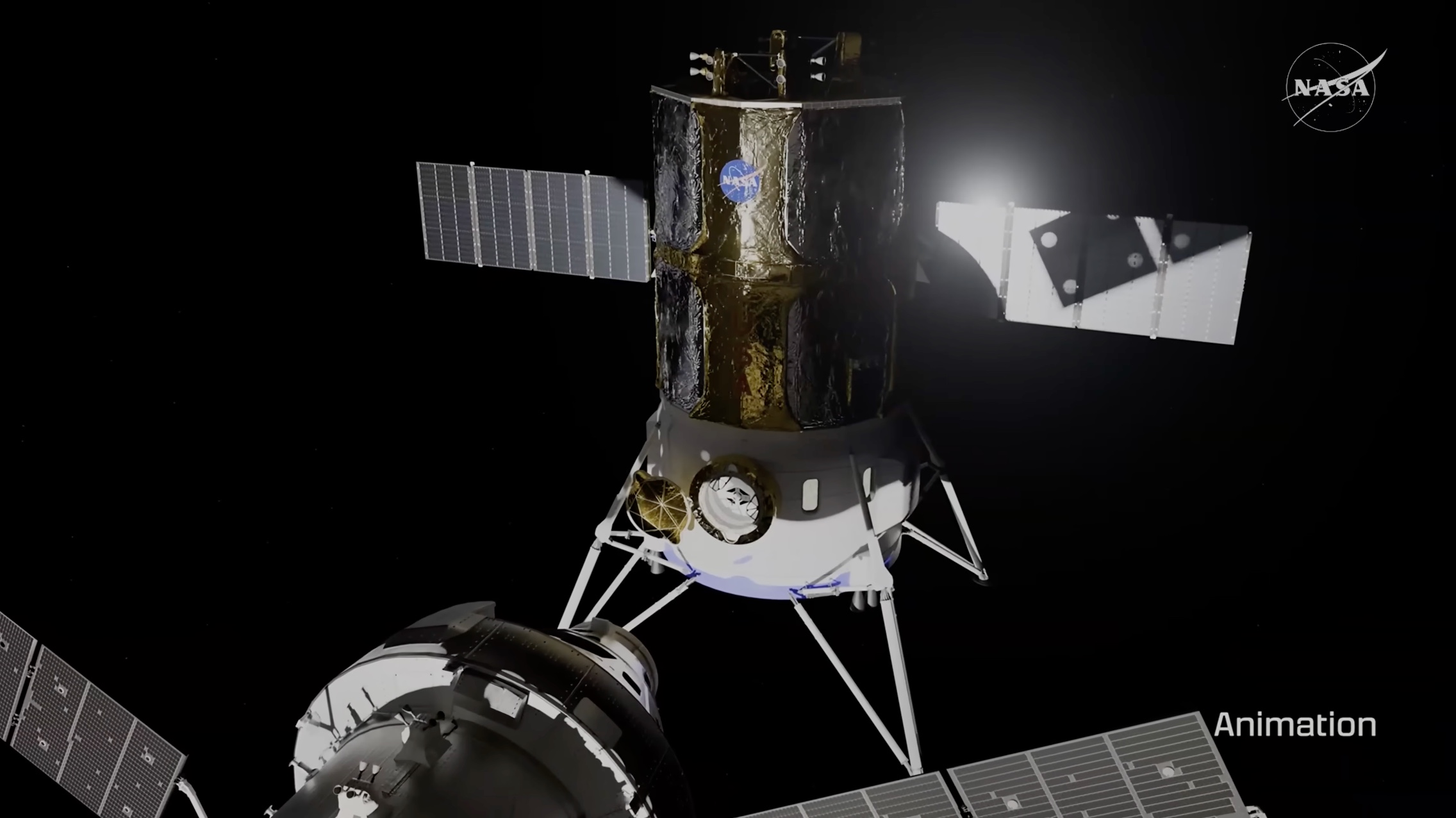
NASA is embarking on one of its most ambitious projects yet with the Artemis III mission, scheduled for mid-to-late 2027. This mission marks a significant milestone in humanity's return to lunar exploration, as it aims to pave the way for a crewed landing on the Moon, anticipated to occur by 2028. The Artemis III mission is not just a stepping stone but a complex and highly coordinated rehearsal involving three distinct rocket launches and the integration of two commercial lunar landers in Earth orbit.
The Artemis III mission is designed as an orbital test to validate the interoperability of hardware and software between NASA's Space Launch System (SLS) and commercial vehicles from SpaceX and Blue Origin. This approach allows engineers to conduct thorough verifications in a controlled environment of low-Earth orbit, setting a new benchmark for spaceflight operations.
The Launch Sequence
The operation begins with Blue Origin launching a test version of its Blue Moon crew cabin into a designated parking orbit. This vehicle is engineered to loiter in space for up to 30 days, providing ample time for orbital checkouts. Once the Blue Moon lander is verified, the four-person Artemis III crew will launch aboard NASA's Orion spacecraft atop the Space Launch System from Kennedy Space Center in Florida. The crew consists of Commander Randy Breslin, Pilot Luca Parmitano, and Mission Specialists Frank Rubio and Andre Douglas.
Following this, SpaceX will launch a test article of its Starship lander into orbit. The Orion spacecraft will maintain a circular orbit and will act as the chaser vehicle, tasked with docking with both commercial landers sequentially. The docking procedures present unique challenges, as each lander has its own set of docking mechanics.
Innovative Docking Procedures
The Artemis III mission will execute docking procedures at a baseline altitude of approximately 460 kilometers. The Orion spacecraft will perform a lateral docking maneuver along the side of the Blue Moon lander, adjacent to its crew cabin. For the SpaceX Starship lander, a nose-to-nose docking procedure will be employed. During these operations, the software control will alternate between the spacecraft, with Orion's flight software managing the Blue Moon docking and Starship's systems taking over during its docking phase. This dual-docking campaign is the first of its kind, integrating hardware and software interfaces from both human landing system providers simultaneously.
Path to the 2028 Lunar Landing
The data collected during these orbital trials is crucial for validating life support, electrical, and communication interfaces before attempting deep-space missions. The mission will conclude with the crew's return to Earth, utilizing an upgraded ablative heat shield designed to withstand high-energy reentry. This comprehensive rehearsal is a crucial step toward the first crewed landing on the Moon's South Pole, scheduled for the Artemis IV mission.
Jeremy Parsons, the Artemis program manager, described the mission as a "highly choreographed dance" that demands precise coordination across multiple launch pads and mission operations. Steve Creech, program manager for NASA’s Human Landing System Program, emphasized the strategic importance of this test, stating that each provider has aggressive objectives that are intended to complement upcoming uncrewed demonstration missions at the Moon.
As NASA continues to collaborate with its commercial partners, missions like Artemis III highlight the importance of industry cooperation in the pursuit of sustainable lunar exploration. The success of this mission will not only validate critical technologies but also set the stage for future explorations that aim to establish a permanent human presence on the Moon.