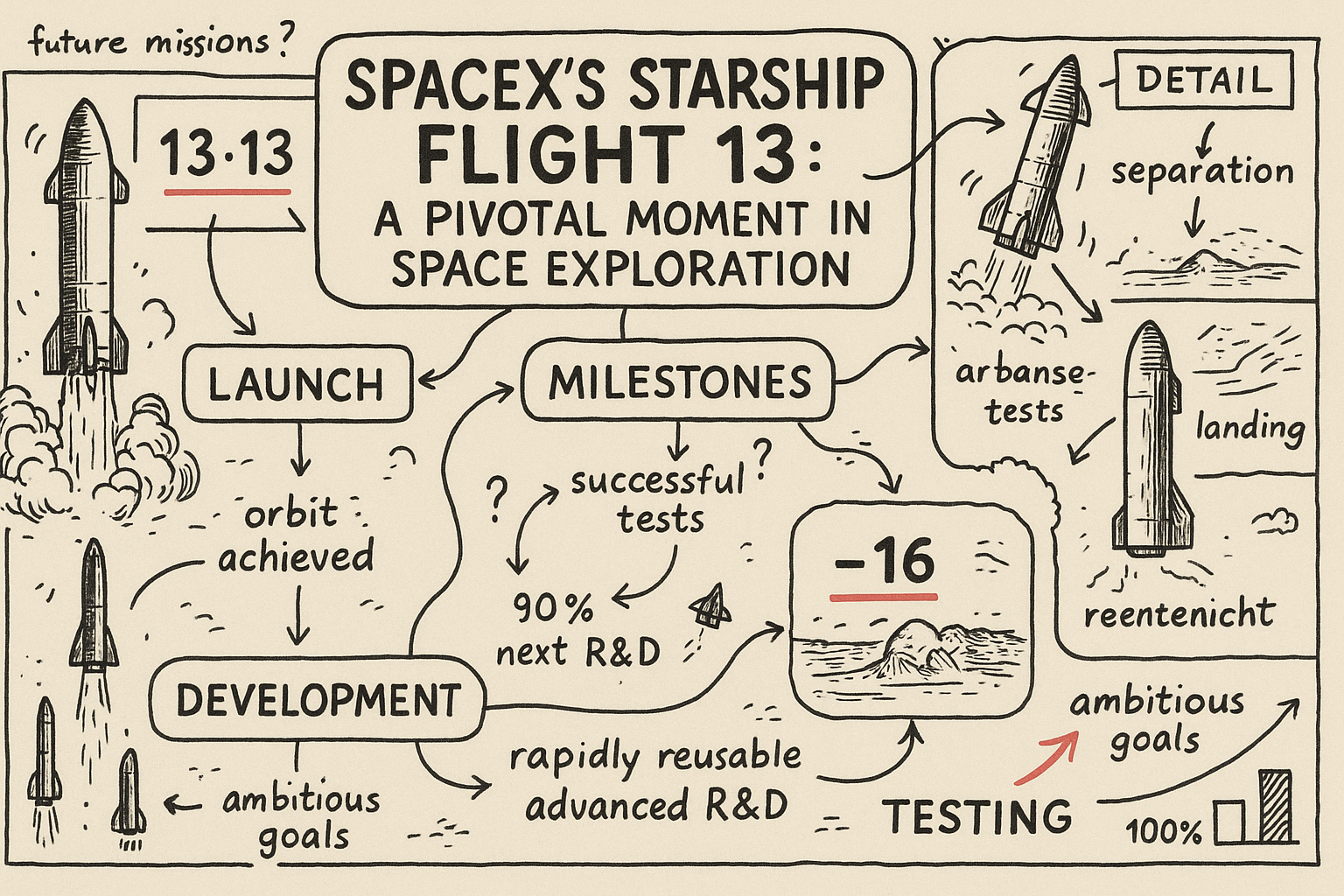
SpaceX's Starship Flight 13, scheduled for July 16, 2026, represents a significant milestone in the journey of modern space exploration. This launch is not just another routine event in SpaceX’s busy schedule; it is potentially the final suborbital flight before the Starship system is earmarked for full orbital missions. Following a successful ignition test of all 33 engines on the Starship booster, this mission is poised to redefine the boundaries of commercial space travel.
A New Era for Starship
The Starship rocket, a towering colossus, stands as the largest and most powerful rocket ever constructed. Its successful deployment could mark the inception of the next chapter in human space exploration. Historically, the advancement of rocket technology has been a game of incremental improvements. However, SpaceX's approach, characterized by their rapid development and iterative testing cycles, has accelerated this timeline significantly.
With Flight 13 anticipated to be the last in a series of suborbital tests, SpaceX is on the cusp of sending Starship into full orbital missions. This transition underscores the company's commitment to not only enhancing payload capacities but also reducing the cost per launch, a pivotal factor in making space more accessible.
Innovative Approaches and Partnerships
SpaceX's partnership with NASA, as seen in the recent decision to utilize the Falcon Heavy rocket for the SunRISE mission, demonstrates the growing synergy between commercial space companies and governmental agencies. This collaboration highlights the broader trend of leveraging commercial innovation to achieve scientific and exploratory objectives.
Moreover, the Starship system's potential for reusability and its ambitious goal to ferry humans to Mars adds a layer of complexity and excitement to its development. The recent successful launch of a flight-proven rocket for the 600th time, sending Starlink satellites to orbit, exemplifies SpaceX's operational expertise and reliability in launch services.
Challenges and Opportunities
Despite these advancements, the journey has not been without its challenges. The complexity of igniting and managing 33 engines simultaneously is an engineering marvel, but it also presents significant risks. The iterative testing approach allows SpaceX to adapt quickly, learning from each test to improve future launches.
Historically, the space industry has been wary of such rapid development cycles. However, SpaceX's success has prompted a reevaluation of these traditional methodologies. The potential for lower costs and increased launch frequencies creates a compelling case for adopting similar models across the industry.
Implications for the Future
The implications of Starship Flight 13's success are far-reaching. Beyond the immediate technical achievements, it sets the stage for SpaceX's more ambitious projects, including lunar missions and eventual Mars colonization. The potential to transport large payloads and multiple astronauts paves the way for multinational collaborative missions, a necessity for tackling the complexities of deep space exploration.
As we stand on the brink of this new era, the success of Starship Flight 13 could influence policy decisions, funding allocations, and international partnerships in space exploration. It invites a broader dialogue on the ethics and sustainability of space colonization, urging stakeholders to consider the long-term impact of these advancements.
Surprising Fact: Despite the complexity and perceived risk, SpaceX’s rapid test-launch cycles have proven more effective than traditional, slower-paced methodologies, challenging the industry’s historical norms.