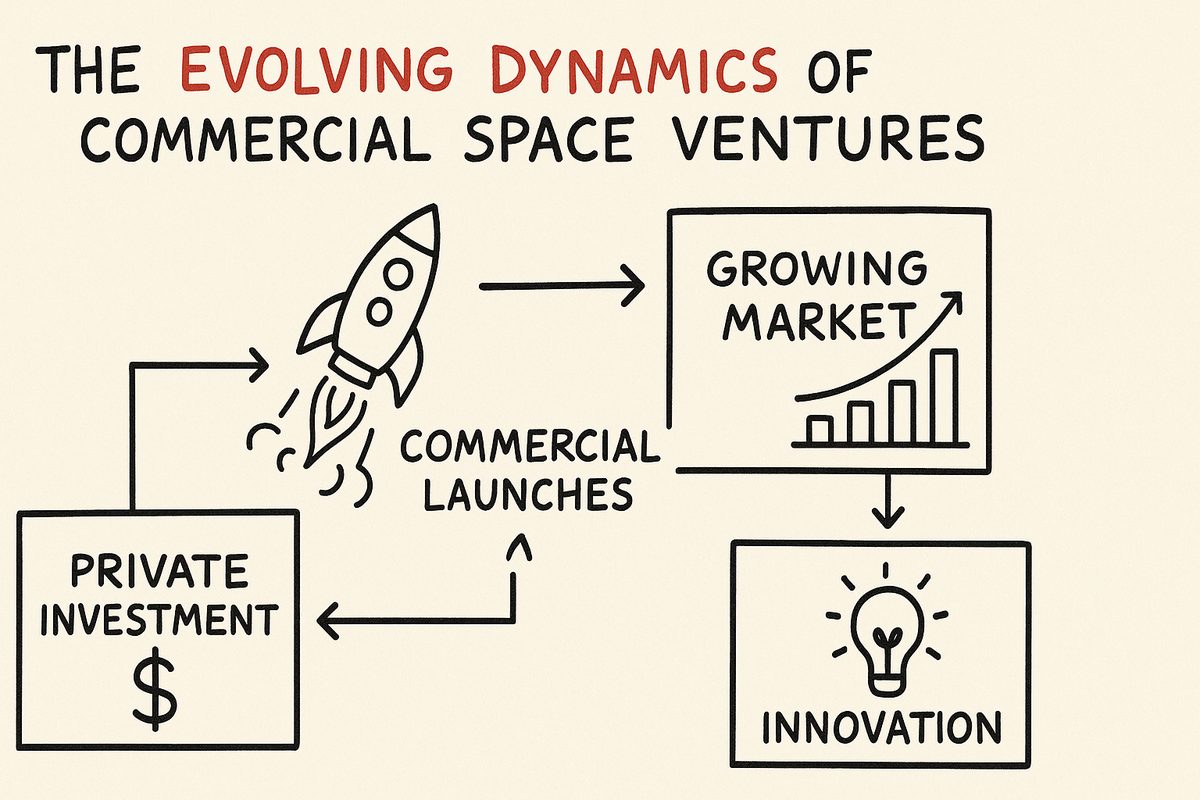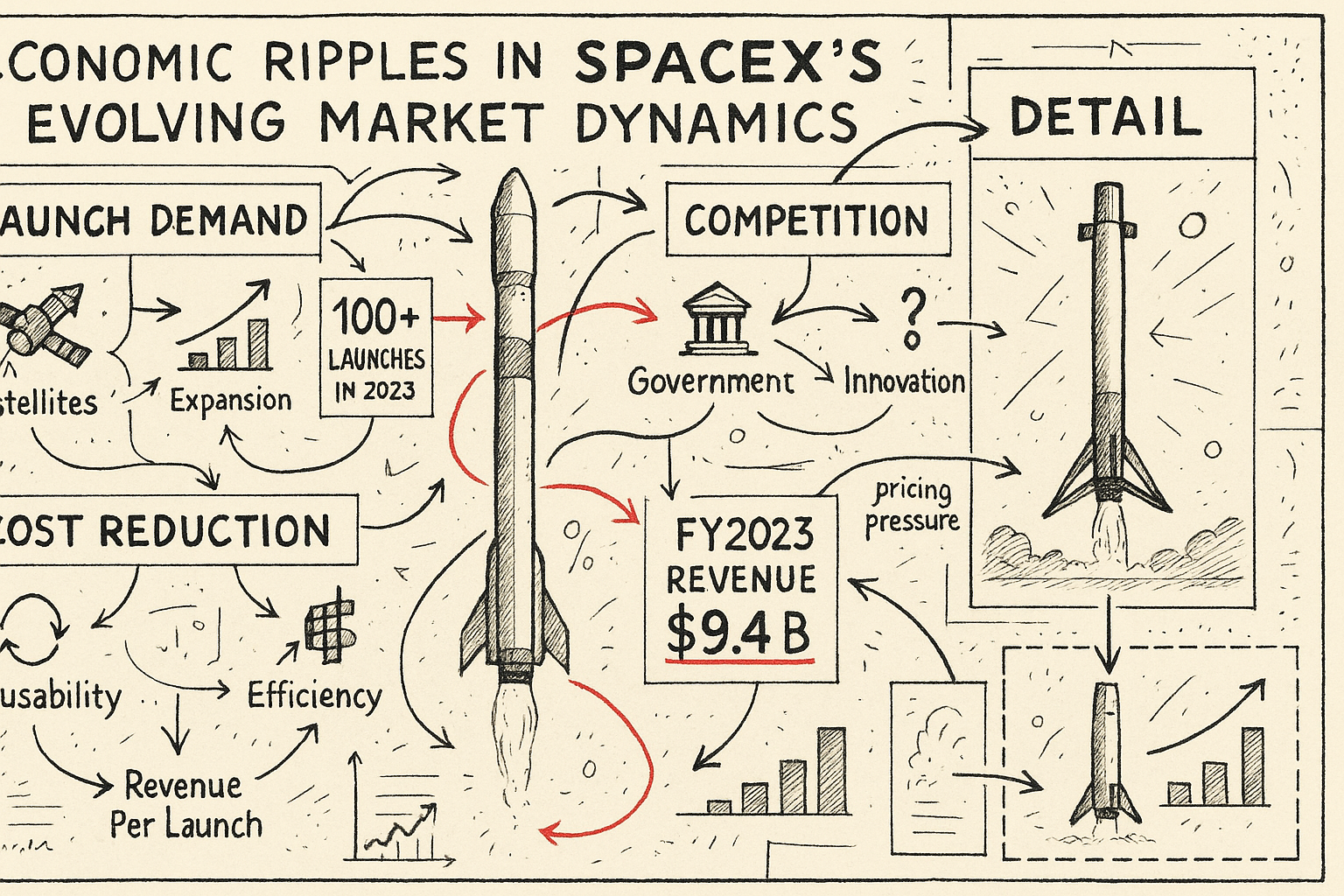
The commercial space industry is in the midst of a transformative phase, driven largely by the evolving market dynamics surrounding SpaceX. As the juggernaut of the space launch market, SpaceX has long been perceived as a reliable cornerstone upon which countless satellite companies have built their business models. However, recent shifts signal a nuanced reality that could redefine the sector's future.
Pivotal Shifts in Launch Economics
SpaceX's Falcon 9 has been the linchpin of commercial space launches, offering unprecedented reliability and competitive pricing. This success has encouraged a multitude of space ventures to emerge, banking on predictable access to orbit. Yet, the recent freeze in Falcon 9 sales (Source 1) has created waves of anxiety across the industry, challenging the assumption of guaranteed access.
Compounding this uncertainty is SpaceX's recent IPO valuation, which has declined to $135 per share (Source 3). The market's initial exuberance post-IPO has tempered, reflecting a more sobering assessment of SpaceX's ambitious promises. This recalibration is critical as it underlines the market's evolving expectations and the increasing pressure on SpaceX to deliver on its expansive vision.
Technological and Strategic Adaptations
In parallel, technological advancements are reshaping competitive dynamics. While Venus Aerospace's $91 million funding to develop a rotating detonation rocket engine (Source 4) underscores a push towards innovative propulsion technologies, a recent study suggests that the pursuit of ever-larger launch vehicles may not always be beneficial (Source 5). This insight challenges the prevailing 'bigger is better' paradigm and hints at a more nuanced approach to rocket design, emphasizing efficiency over sheer size.
Moreover, the strategic move by AST SpaceMobile towards vertical integration (Source 7) highlights a growing trend of companies seeking to insulate themselves from market volatility by controlling more of their supply chain. This strategy could provide a hedge against the uncertainties in the launch market, offering a more stable path forward.
Regulatory and Competitive Pressures
SpaceX's market dominance is not without scrutiny. The company's influence in military satellite deployments has attracted congressional attention, testing the Pentagon's commitment to fostering competition (Source 6). This regulatory pressure could lead to increased oversight and potentially open doors for other players in the sector, fostering a more balanced competitive landscape.
Future Implications and Industry Outlook
The confluence of these factors paints a complex picture of the commercial space economy. While SpaceX continues to grapple with its own expansion challenges, as evidenced by its need for more production space (Source 8), the broader industry must navigate a landscape that is both fraught with challenges and ripe with opportunities.
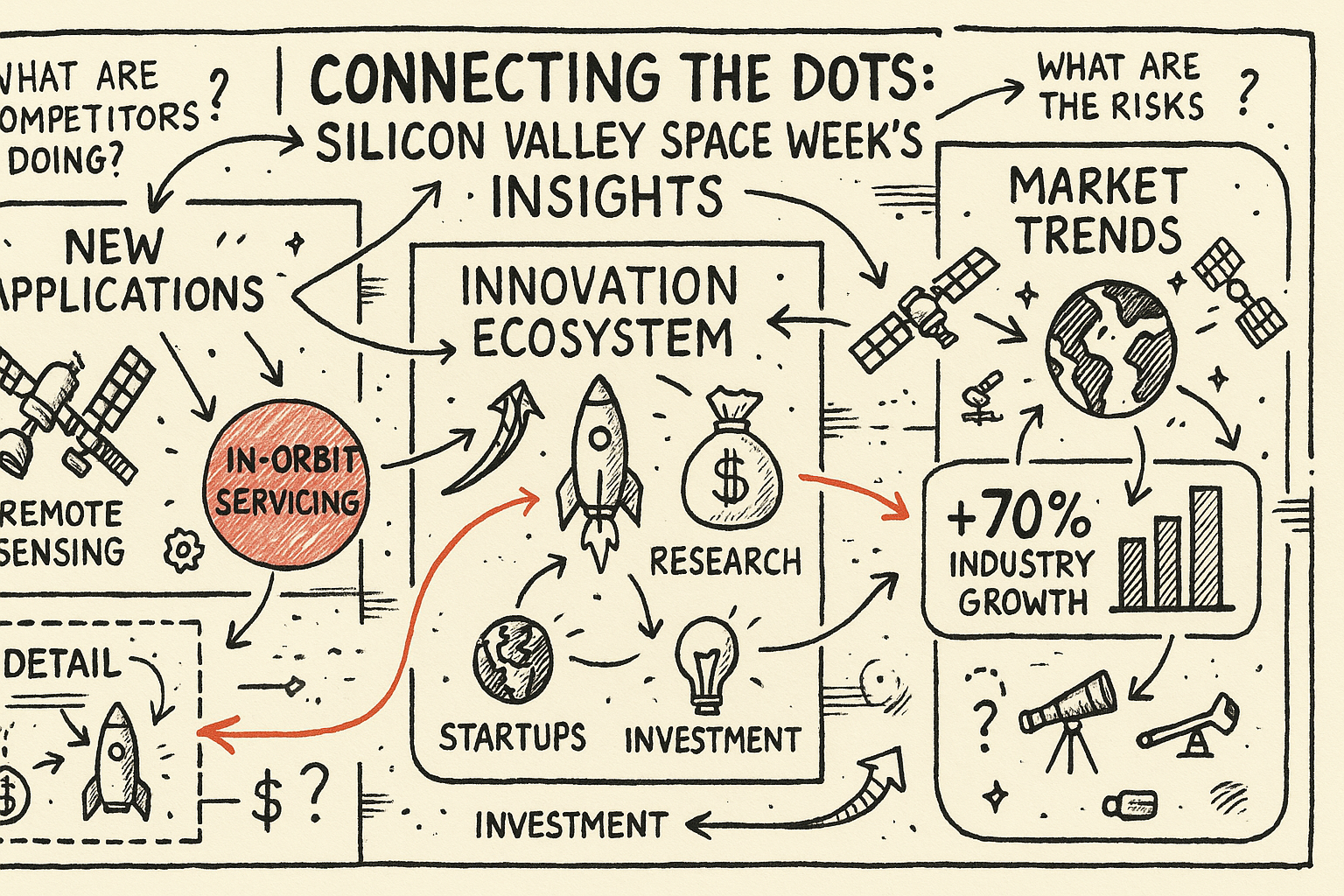
Looking ahead, the sector's trajectory will likely hinge on the successful integration of new technologies, strategic adaptations to market shifts, and the resolution of regulatory pressures. Companies that can effectively balance innovation with pragmatic strategic adjustments will be well-positioned to thrive in this evolving ecosystem.
In conclusion, while SpaceX remains a pivotal force in the commercial space industry, the recent developments underscore the importance of agility and innovation. As the industry recalibrates in response to these economic ripples, the future of space commerce promises to be as dynamic as it is ambitious.