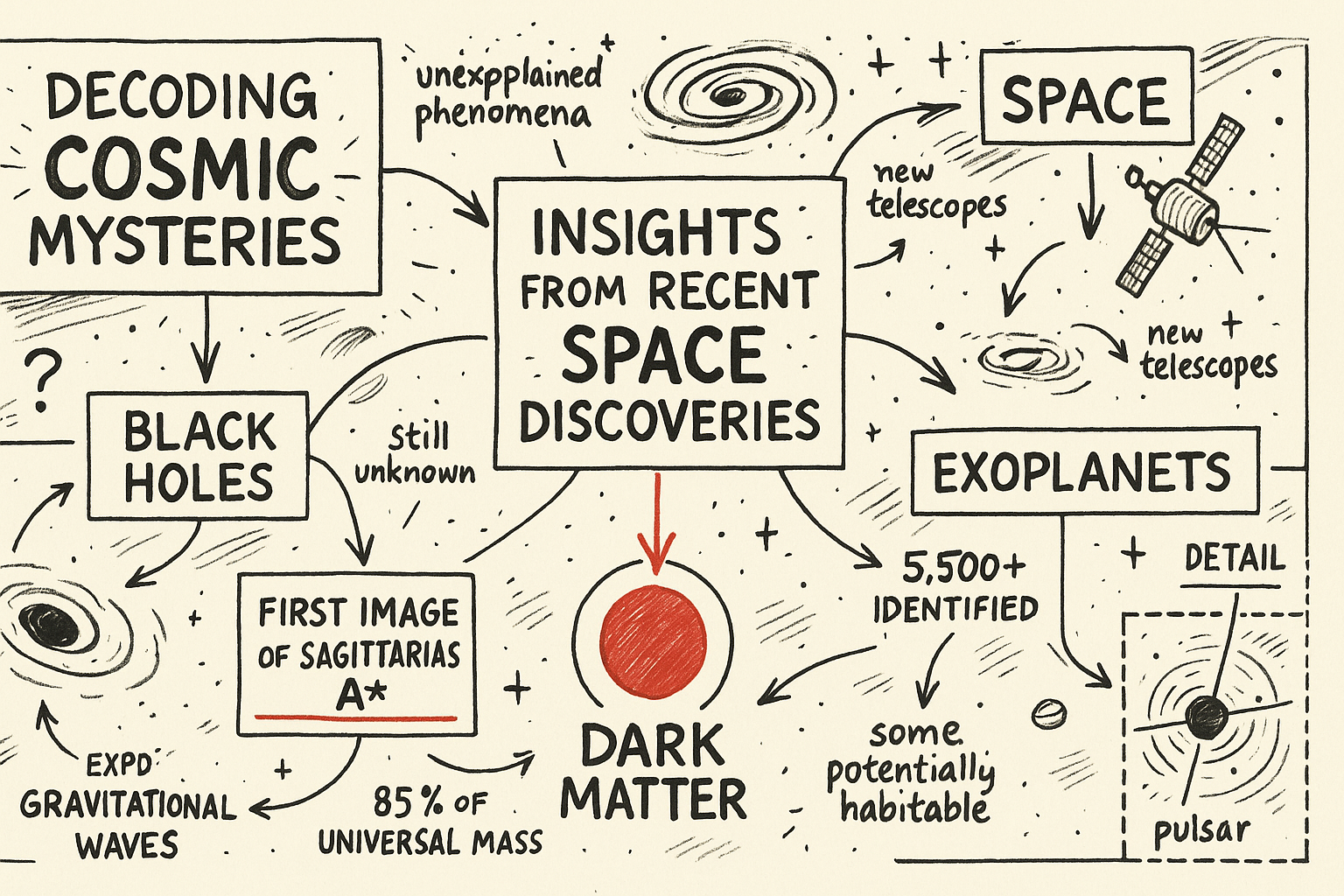
The cosmos, ever enigmatic, has recently unveiled some of its secrets through a series of intriguing discoveries. From the hidden black holes in Omega Centauri to the subtle decline in star formation in Andromeda, these developments offer us not only solutions to longstanding mysteries but also fresh questions about the universe's evolution.
Uncovering the Hidden Black Holes
The Omega Centauri globular cluster has long been a puzzle for astronomers. Expected to be teeming with black holes, the evidence for such phenomena was scant until now. Utilizing archival data from the Hubble and James Webb Space Telescopes, astronomers have pinpointed a stellar-mass black hole, marking the first direct evidence of its kind in this cluster. This breakthrough underscores the importance of combining historical data with cutting-edge technology to revisit and solve age-old astronomical enigmas.
The Decline of Andromeda's Star Formation
Another revelation comes from our galactic neighbor, Andromeda. New Hubble data indicates that star formation in Andromeda has been on a slow decline for the past 500 million years, with a noticeable drop in the last 40 million years. This finding not only helps refine our models of galactic evolution but also raises questions about the future dynamics of our own Milky Way, given its eventual collision with Andromeda.
Galactic Assembly in the Early Universe
In a fascinating look back in time, astronomers have observed a group of six young galaxies assembling a mere 1.2 billion years after the Big Bang. This discovery provides a rare glimpse into the methods of galaxy formation in the early universe, suggesting that even massive galaxies began as smaller constituents that gradually coalesced. It highlights the intricate and piecemeal nature of cosmic construction.
Rethinking Black Hole Behavior
Further complicating our understanding of black holes, astronomers have identified a 'wandering' black hole far from the center of its host galaxy. This rare event challenges existing theories on black hole dynamics post-galactic collisions and suggests a need to reconsider how black holes interact with their environments over cosmic timescales.
The Oldest Stars Weigh in on Cosmology
In a development that subtly counters current cosmological debates, the ages of the oldest stars have been found to align perfectly with the standard model of the universe. This discovery quietly undermines alternative theories, such as those attempting to address the Hubble tension, and indicates that the solution may lie elsewhere, perhaps in the unknown aspects of dark energy or modified gravity.
These insights not only advance our understanding of cosmic phenomena but also challenge and refine our theoretical frameworks. As we continue to push the boundaries of astronomical research, each discovery serves as a reminder of the universe's complexity and the continual need for innovation in scientific inquiry.