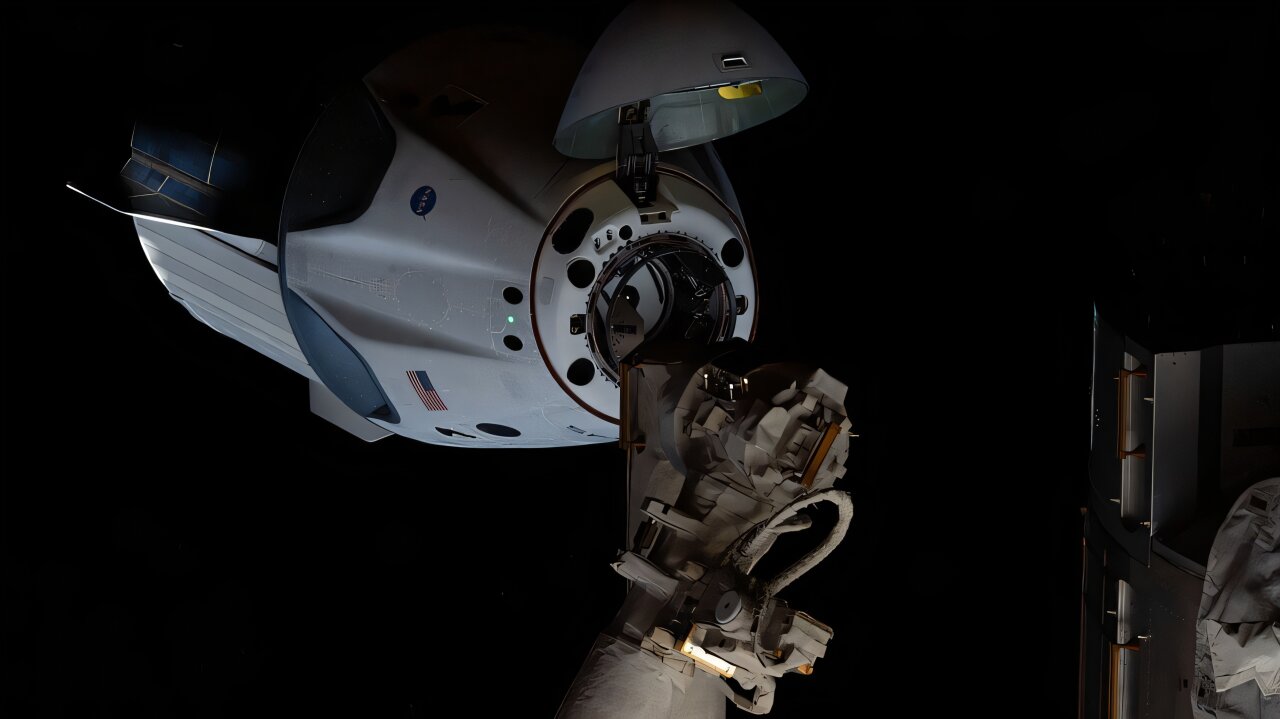
Stanford unveils an AI 'world model' to simulate docking scenarios
Stanford researchers have posted a paper on the arXiv preprint server describing an artificial intelligence system called the Out-of-this-World-Model (OWM) that trains spacecraft to perform "mental simulations" of proximity operations such as docking with the International Space Station (ISS). The work was reported by Universe Today on 24 September 2026 and republished by Phys.org; both accounts draw from the same preprint and together provide complementary detail about the approach and its motivations.
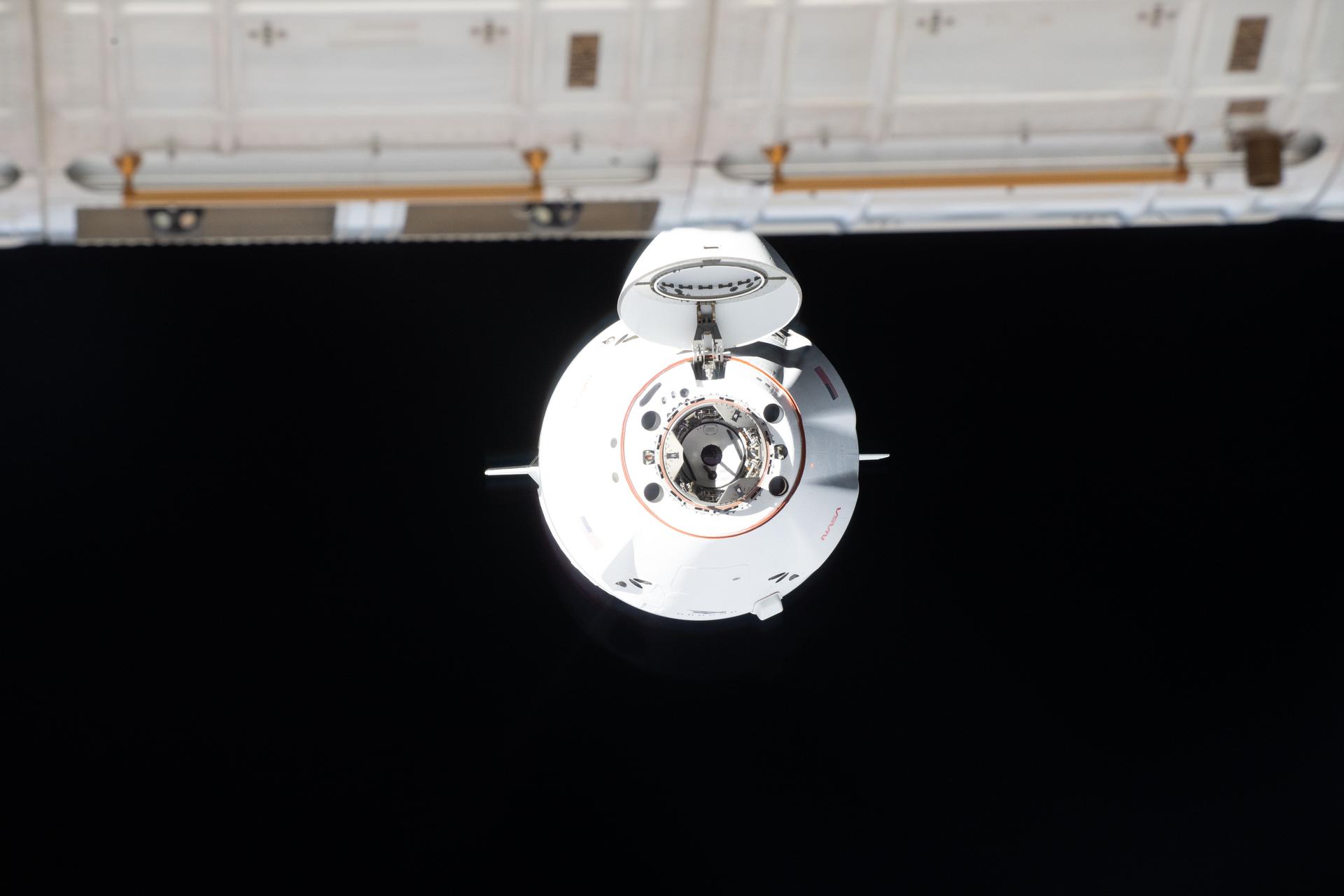
The research addresses the challenge of autonomous docking in low Earth orbit (LEO), a task the reports compare to "traveling down a highway at 28,000 km/hr and parallel parking into an open garage"—an apt description of the narrow margins and complex dynamics involved when a vehicle must match velocities and orientations with a multibillion-dollar laboratory moving at orbital speed. Historically, spacecraft guidance has relied on Guidance, Navigation and Control (GNC) algorithms plus filters such as the Extended Kalman Filter to fuse inertial sensors, GPS and star trackers into thruster commands. But those traditional techniques struggle with high-speed video and fragile computer-vision pipelines that can fail under glare, shadow or unanticipated visual changes.
Previous attempts to apply reinforcement learning (RL) to space tasks produced brittle policies that succeed only under the exact rules and visual conditions seen during training. The Stanford team takes a different tack by building a learned "world model": an internal simulator that the AI uses to imagine possible future observations and outcomes. Universe Today and Phys.org both describe the analogy used by the authors: an outfielder catching a baseball does not solve equations on the fly but relies on a mental model to predict where the ball will land. OWM extends that notion to proximity operations by letting an agent run many short, internal simulations—its "dreams"—to evaluate candidate maneuvers before executing them in real hardware.
According to the reporting, OWM integrates elements of video-based perception with dynamics learning so that the system can process visual input robustly even when traditional feature detectors would be confused by glints or shadows. Because the internal model is trained to generate plausible future observations, it reduces the agent's dependence on brittle hand-crafted vision rules and on the precise match between training and deployment environments. The paper's preprint explains that the model's simulated rollouts allow the control policy to choose actions after exploring multiple hypothetical futures, a capability the authors argue improves robustness to variations in docking geometry and lighting.
Both articles highlight that the work does not claim to replace established GNC pipelines immediately; rather, it proposes an approach that could augment or complement them. The reporting underscores caution: learned models introduce new failure modes and must be validated across a wide range of scenarios before flight. Universe Today notes that changing simple aspects of a problem—such as which side of the ISS a docking port is on—can break naive RL agents; OWM is intended to address that brittleness by relying on flexible internal simulation.
The broader context for this research is mature: autonomous proximity operations are central to crewed and uncrewed servicing, orbital logistics and debris-mitigation activities. Current operational systems (for example, automated cargo Dragon rendezvous with the ISS) combine human supervision with deterministic navigation stacks. OWM's promise, as presented in the preprint and summarized by the two articles, is to provide spacecraft with a perception-driven decision layer that can reason about uncertain visual inputs and rapidly evaluate multiple candidate trajectories.
Historic progress in autonomy for spaceflight has often balanced innovation with conservative verification. Kalman-filter-based navigation and rule-based vision systems survived their early years because their failure modes were relatively well understood and could be analysed on the ground. Learned models, by contrast, require new validation methods. Both reports emphasize that the Stanford paper is a research-stage advance posted as a preprint; practical deployment would demand rigorous testing, hardware-in-the-loop simulations, and careful safety analysis before any flight demonstration.
Looking forward, the authors and the reporting suggest several possible implications. If internal-simulation approaches like OWM prove robust, they could reduce operator workload for routine rendezvous, improve autonomy for rapid-response servicing missions, and enable more flexible interactions between heterogeneous spacecraft that cannot rely on identical guidance stacks. At the same time, the community will need to develop verification techniques specific to learned world models, and to quantify how they interact with existing GNC and fault-detection systems.
In sum, the Stanford Out-of-this-World-Model represents a research contribution that synthesises perception, dynamics learning and planning into an AI that "dreams" short futures to inform action selection during proximity operations. The work, now available as a preprint, aims to overcome fragility in vision and brittleness in policy learning, while leaving open the significant verification and safety steps required to move from promising simulations to hardware-tested autonomy in orbit.
Sources: Universe Today (24 September 2026) and Phys.org (republished piece based on the same preprint).