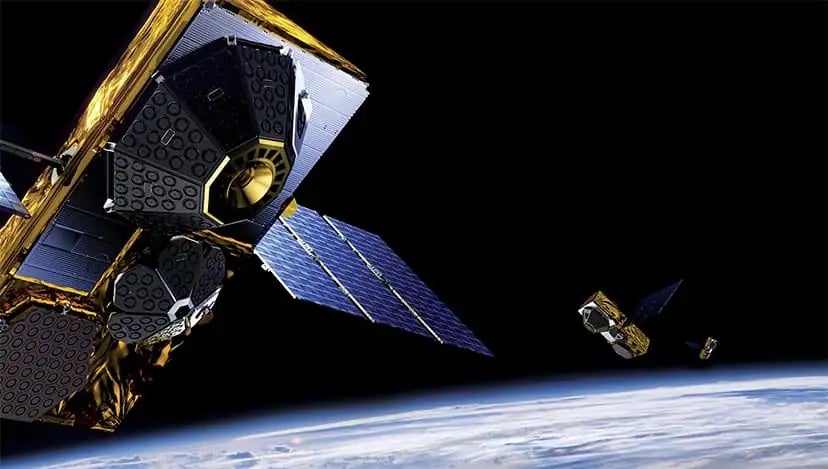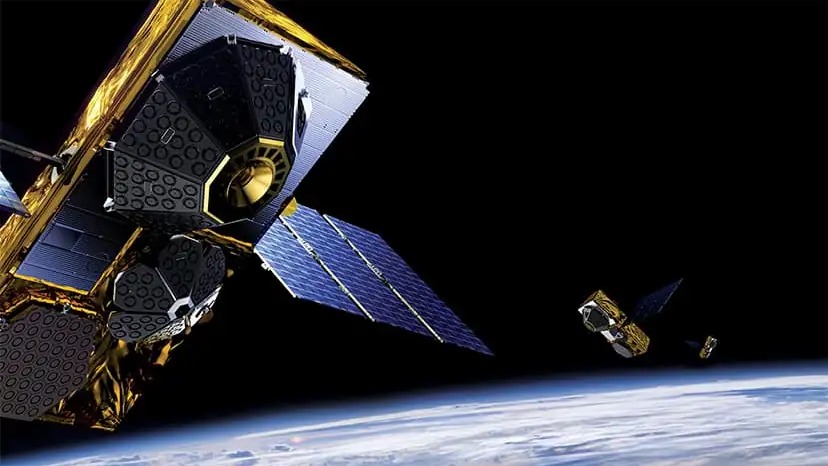
MDA Space said on 10 November 2026 that the first eight satellites it delivered for Globalstar’s 2‑R mission have passed initial functional tests in orbit, nearly three months after their 15 August launch.
Under the 2‑R mission, MDA Space is the prime contractor building 17 replacement satellites that will augment Globalstar’s existing low Earth orbit constellation, which the company calls HIBLEO. Globalstar, a U.S. satellite communications company, uses that network for direct‑to‑device services embedded in Apple iPhone 14 and later models and the Apple Watch Ultra 3, as well as for SPOT GPS messengers and Internet of Things applications.
Of the eight satellites now tested, two have begun raising their orbits using electric thrusters. Because the thrusters produce very little thrust, orbit raising is being performed gradually. Rocket Lab, which designed, built and commissioned the satellite platforms, is supporting orbit raising for all eight spacecraft. For the remaining six satellites, MDA Space and Globalstar will begin orbit raising once their target orbital planes move into alignment; in the meantime teams are testing both the payloads and the satellite buses.
Once each satellite reaches the last testing altitude it will be moved into its final orbit, the companies said. Mike Greenley, chief executive of MDA Space, commented that “from the assembly, integration and testing of Globalstar 2‑R satellites to the launch campaign and post‑launch activities, we have accomplished multiple mission firsts with fine‑tuned skill and agility.”
The second and final batch of nine satellites completed final integration at MDA Space’s facility in Montreal. Together the two batches will replenish Globalstar’s HIBLEO constellation and support direct‑to‑device connectivity that lets select mobile phones connect directly to satellites without a ground tower, plus IoT services.
The 2‑R satellites are separate from Globalstar’s C‑3 third‑generation constellation, which MDA Space is also building under a $1.1‑billion contract signed in February 2025. The second batch’s integration progress was noted as the companies continue to prepare Globalstar’s broader replacement efforts. Amazon agreed in April 2026 to acquire Globalstar; the U.S. Federal Communications Commission approved that deal in October 2026, and closing is expected in 2027 with conditions that include Globalstar meeting milestones for replacement satellites for its HIBLEO‑4 constellation.