 Company Profile
Rocket Lab
Small satellite launch provider and spacecraft manufacturer with vertical integration
Overview
Overview
Rocket Lab is a vertically integrated aerospace company specializing in small satellite launch services and spacecraft manufacturing. Founded in 2006 by Peter Beck, the company has established itself as the second most frequently launching orbital rocket company globally, operating the Electron launch vehicle from facilities in New Zealand and Virginia.
The company's business model spans three core segments: launch services via the Electron rocket, space systems manufacturing including satellite buses and components, and emerging capabilities in medium-lift launch with the under-development Neutron vehicle. Rocket Lab manufactures its own rocket engines, avionics, flight software, and spacecraft platforms, enabling end-to-end mission solutions for commercial and government customers.
Rocket Lab went public via SPAC merger in August 2021 and has since expanded its defense and civil space portfolio significantly. By Q4 2025, the company reported revenue of $179.65 million (up 36% year-over-year) and a backlog of $1.85 billion (up 73% year-over-year). The company completed 21 missions in 2025, setting a new annual record, and has secured major contracts from the U.S. Space Force, NASA, and international customers. With facilities in the United States and New Zealand, Rocket Lab serves the growing small satellite market while developing Neutron to compete in the medium-lift segment for constellation deployment, crewed missions, and deep space cargo.
Launch Record
Rocket Lab has flown 20 orbital missions tracked in the NovΔ mAInd launch database, at a 100% success rate, averaging 1.1/month. Our tracking covers 2025-02-08 to 2026-09-11; earlier flights are outside this dataset.
Computed from our own launch tracker, not supplied by the company. See the full launch tracker →
Products & Vehicles
Electron
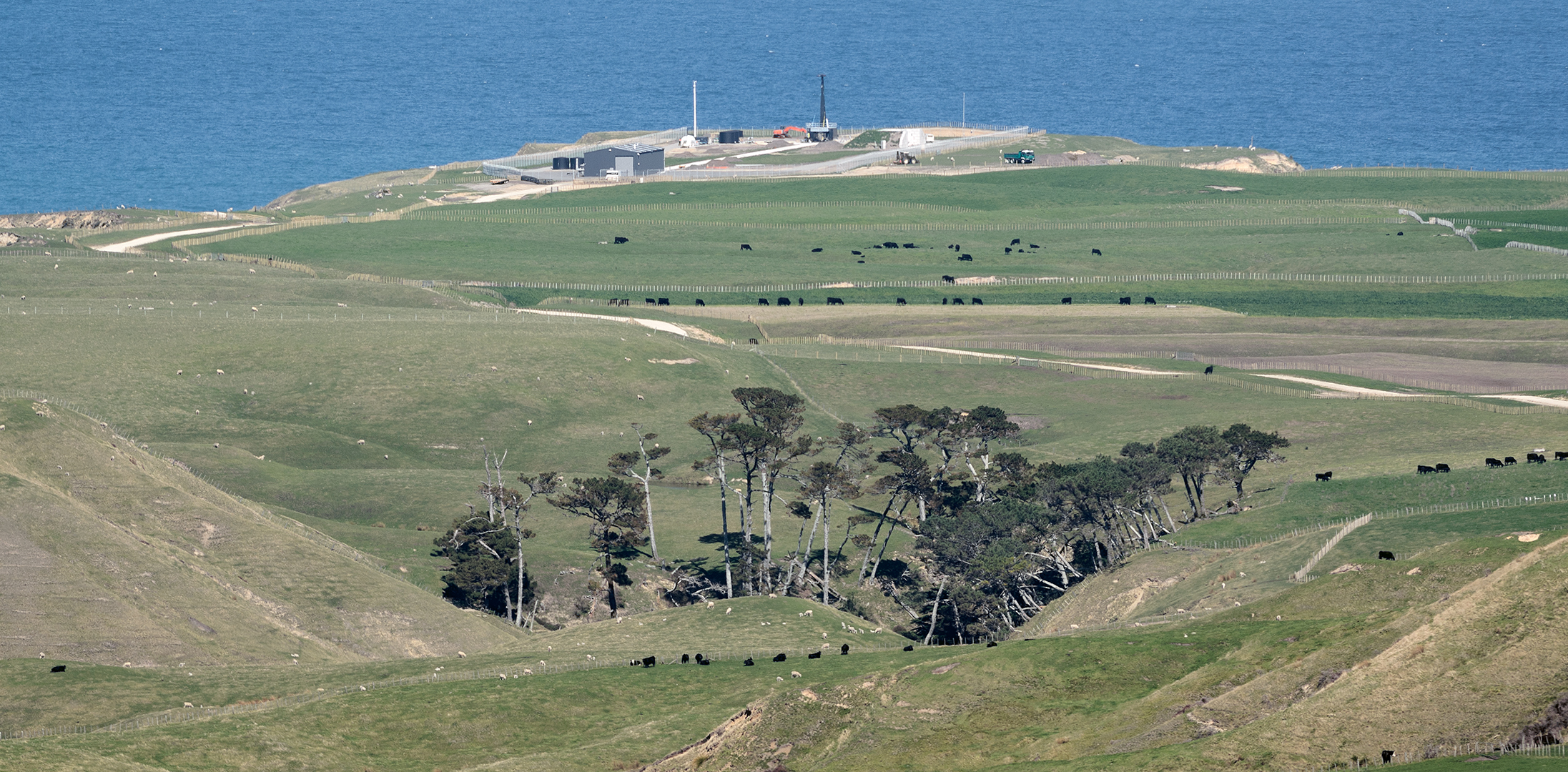
Electron is Rocket Lab's operational small satellite launch vehicle, designed specifically for the dedicated small satellite market. The two-stage vehicle features carbon composite structures and the company's proprietary Rutherford engines, which are the first electric turbopump-fed engines to reach orbit. Payload to LEO: 300 kg. Payload to SSO: 200 kg. First flight: May 2017. Success rate: Over 95% across 80+ missions. The vehicle launches from Launch Complex 1 in Mahia, New Zealand, and Launch Complex 2 at Wallops Island, Virginia. Electron can target a range of orbits including sun-synchronous, low Earth, and lunar trajectories.
Photon
Photon is Rocket Lab's satellite bus platform derived from Electron's kick stage. It provides power, propulsion, attitude control, and communication systems for small spacecraft missions. Photon has been used for Earth observation, technology demonstration, and deep space missions including NASA's CAPSTONE lunar pathfinder mission launched in 2022. The platform is available in several configurations supporting various mission profiles from LEO to cislunar space.
Neutron
Neutron is Rocket Lab's medium-lift reusable launch vehicle currently in development, designed to serve the constellation deployment, crewed, and deep space markets. Payload to LEO: 13,000 kg (reusable configuration). Payload to SSO: 8,000 kg. The vehicle features a composite structure, reusability via propulsive landing, and an 8-meter diameter fairing. First flight: Delayed to at least Q4 2026. Neutron will launch from Launch Complex 3 at Wallops Island and is intended to complement Electron by addressing larger payload requirements.
Lightning
Lightning is Rocket Lab's satellite platform designed for larger spacecraft, supporting missions requiring greater power, payload capacity, and operational complexity than Photon. The company is using Lightning for Space Development Agency missile-tracking satellites and U.S. Space Force GEO satellites, representing Rocket Lab's first geostationary satellite production contract awarded in May 2026.
Space Systems
Rocket Lab manufactures a range of spacecraft components including solar panels, separation systems, reaction wheels, star trackers, and radio frequency systems. These products support both Rocket Lab missions and third-party satellite manufacturers, contributing to the company's vertically integrated supply chain.
Track Record
Heritage
Rocket Lab was founded in 2006 in New Zealand by Peter Beck with the goal of democratizing access to space for small satellites. The company developed its Rutherford engine technology and built Launch Complex 1 on New Zealand's Mahia Peninsula, becoming the first private orbital launch site outside the United States.
Electron achieved orbit on its second test flight in January 2018 ("Still Testing") after a first-stage anomaly on the maiden flight in May 2017. The vehicle entered commercial service later in 2018 and rapidly established a reliable launch cadence. In 2019, Rocket Lab began testing recovery systems for Electron's first stage, successfully retrieving a stage from the ocean and, in 2020, performing a mid-air helicopter capture test.
In 2021, Rocket Lab went public via SPAC merger, trading on NASDAQ under ticker RKLB, and opened Launch Complex 2 at Wallops Island, Virginia, completing its first U.S. launch in January 2023. The company launched NASA's CAPSTONE mission to lunar orbit in June 2022 using a Photon spacecraft bus, demonstrating deep space capabilities.
Rocket Lab secured its largest defense contract to date in 2023, a $515 million award from the U.S. Space Force, later surpassed by an $816 million contract in 2025. The company completed 21 missions in 2025, a new annual record, and reached its 83rd launch in March 2026.
In May 2026, Rocket Lab announced plans to acquire a space robotics company and secured its largest launch contract in company history. The company also won its first GEO satellite production contract from the U.S. Space Force in May 2026. Despite delaying Neutron's debut to late 2026, Rocket Lab's 2026 launch sales already surpassed all of 2025 by the first quarter.
Roadmap
Roadmap
Rocket Lab's primary near-term objective is the inaugural flight of Neutron, the company's medium-lift reusable launch vehicle, now scheduled for no earlier than Q4 2026 following a delay announced in February 2026. Neutron testing and qualification activities are ongoing at the company's Long Beach facility and Launch Complex 3 at Wallops Island.
The company has secured strong launch manifest growth, with 2026 bookings exceeding the entirety of 2025 within the first quarter. Rocket Lab continues to expand its Space Systems business, including delivery of Lightning-based satellites for the Space Development Agency and the U.S. Space Force's first GEO satellites under a contract awarded in May 2026.
Rocket Lab is pursuing acquisition of an undisclosed space robotics company to enhance its spacecraft capabilities, announced May 2026. The company maintains active Electron launch operations from both New Zealand and Virginia launch sites.
Recent coverage on NovΔ mAInd
44 articles on Rocket Lab published by NovΔ mAInd.
Upcoming launches
Tracked in our own launch database. See the full launch tracker →