Dr. Slava Turyshev (JPL) frames debris solution as technical, regulatory and economic problem
Dr. Slava Turyshev of NASA’s Jet Propulsion Laboratory published a paper on arXiv arguing that solving the space debris crisis requires three coordinated levers: stricter disposal reliability and timelines, sharper situational awareness to reduce positional uncertainty, and economically sensible mitigation tactics for existing semi‑permanent debris.
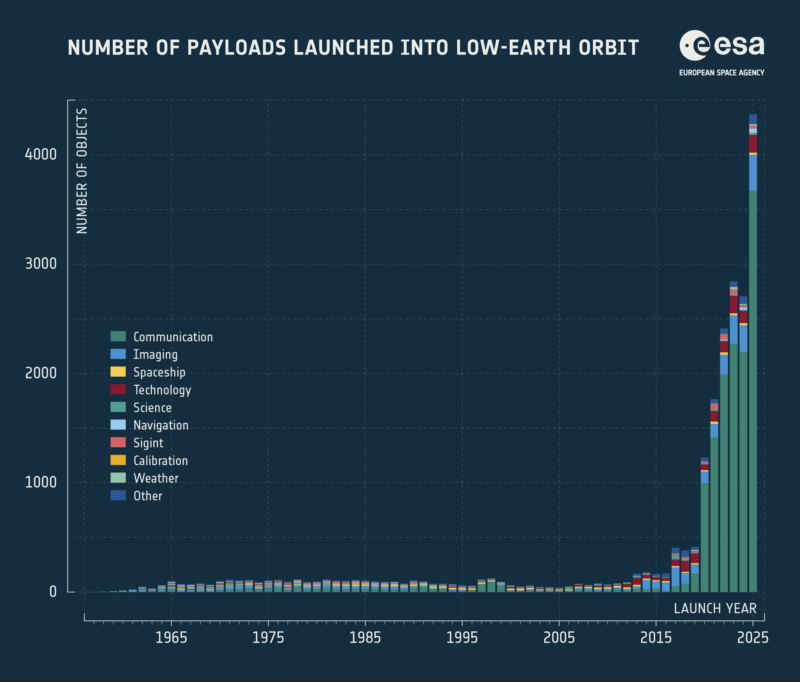
Turyshev notes that collision risk is concentrated in higher low Earth orbit. While megaconstellations such as SpaceX’s Starlink typically operate around 500–600 km — an altitude range with enough atmospheric drag that dead objects will burn up in a few years — objects near ~850 km include large, uncontrolled rocket upper stages that can persist for decades or centuries. Citing European Space Agency data, Turyshev states that about 96 percent of long‑term collision risk comes from these dead objects. He argues that, even with a cessation of launches, collisions among existing debris would generate more fragments faster than natural decay can clear them, driving an orbital cascade (Kessler Syndrome).
The first lever Turyshev recommends is regulatory enforcement of rapid post‑mission disposal. He highlights a recent FCC rule change requiring satellites to clear out within five years of retirement (down from the prior 25‑year guideline). His paper quantifies the impact: increasing disposal reliability from 90 percent to 99 percent and cutting allowable post‑mission lifetime to five years reduces the environmental hazard by a factor of 50.
The second lever is better vision. Turyshev emphasizes that current Space Situational Awareness (SSA) systems track large objects well but struggle with smaller fragments and suffer from positional “fuzziness” that forces operators to perform unnecessary collision‑avoidance maneuvers. He proposes concentrating effort on shrinking the uncertainty region around high‑risk conjunctions rather than attempting to catalog every millimetre‑scale particle. This approach aligns with operational upgrades such as NOAA’s Traffic Coordination System for Space (TraCSS), which Turyshev notes is expanding pilot coordination with commercial operators.
For the third lever—addressing semi‑permanent debris—Turyshev recommends cost‑effective, targeted interventions rather than attempting to remove every object. He outlines a “Just‑in‑Time Collision Avoidance” concept: when two uncontrolled large objects are predicted to collide, operators could intervene at the last moment using ground‑based lasers or small shepherd satellite swarms to nudge one or both bodies by only a few metres to avert the collision. While this tactic does not eliminate the object, Turyshev presents it as a practical, lower‑cost measure to prevent short‑term fragment generation that would increase long‑term risk.
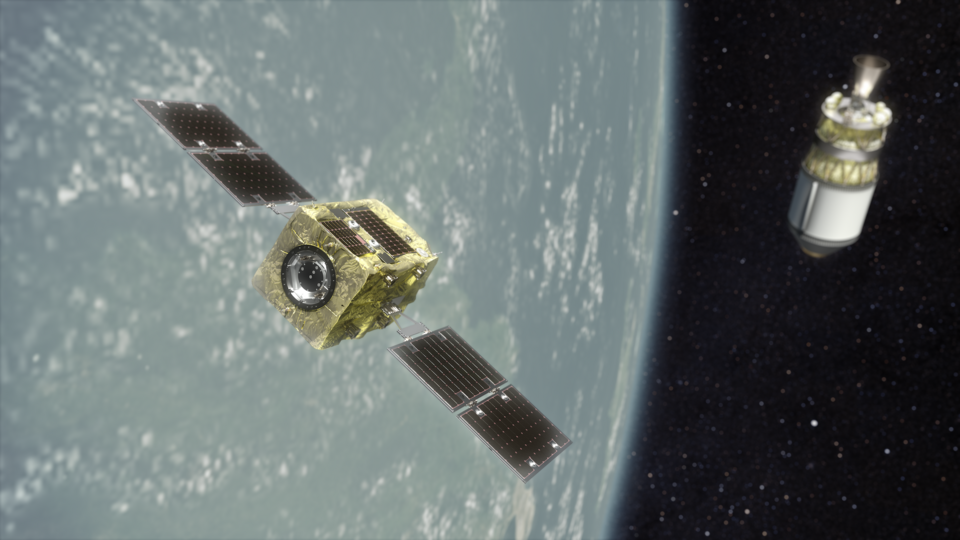
Turyshev also stresses that economic and legal structures must change. Under the 1967 Outer Space Treaty, debris remains the legal property of its original launcher, complicating private cleanup efforts. He points out a classic tragedy‑of‑the‑commons problem: a private actor removing a dangerous object creates benefits for all operators while bearing the cost alone. To fix incentives, Turyshev proposes creating contracts or markets that pay for verifiable reductions in long‑term collision risk, directing firms such as Astroscale to remove the most hazardous pieces first.
The paper also cites real‑world operational pressure: filings to the FCC show SpaceX Starlink satellites performed 144,404 collision‑avoidance maneuvers between December 2024 and May 2025, implying each satellite is averaging roughly one dodge per week during that interval. Turyshev uses that operational stress as evidence that better uncertainty reduction and targeted interventions could yield significant fuel and mission‑lifetime savings for operators.
In sum, Turyshev’s arXiv preprint argues that combining tighter disposal rules, improved SSA that reduces positional uncertainty on high‑risk conjunctions, and economically aligned, just‑in‑time mitigation tactics can deliver far greater reductions in long‑term collision risk than either blanket removal campaigns or continued status quo behavior.