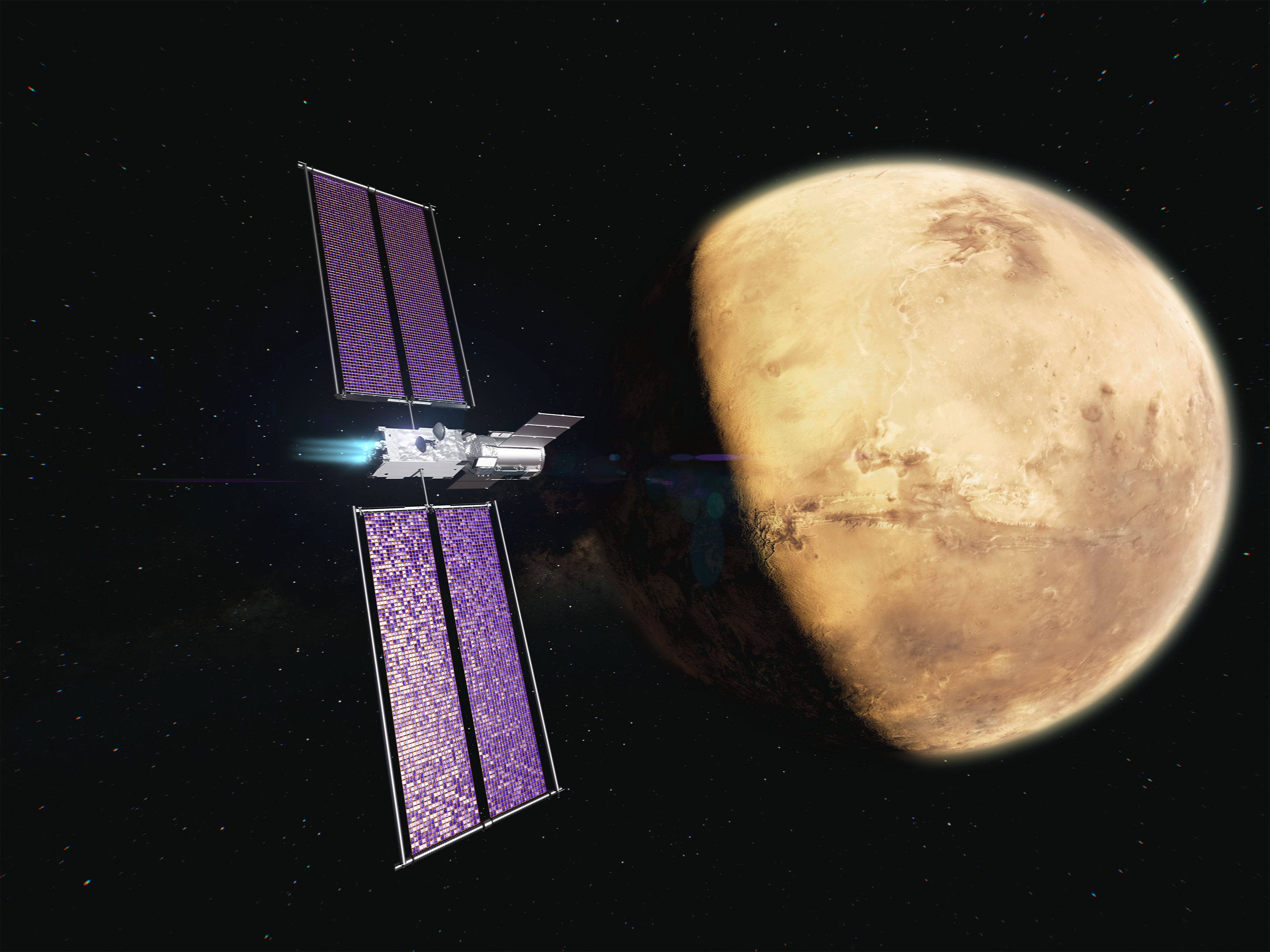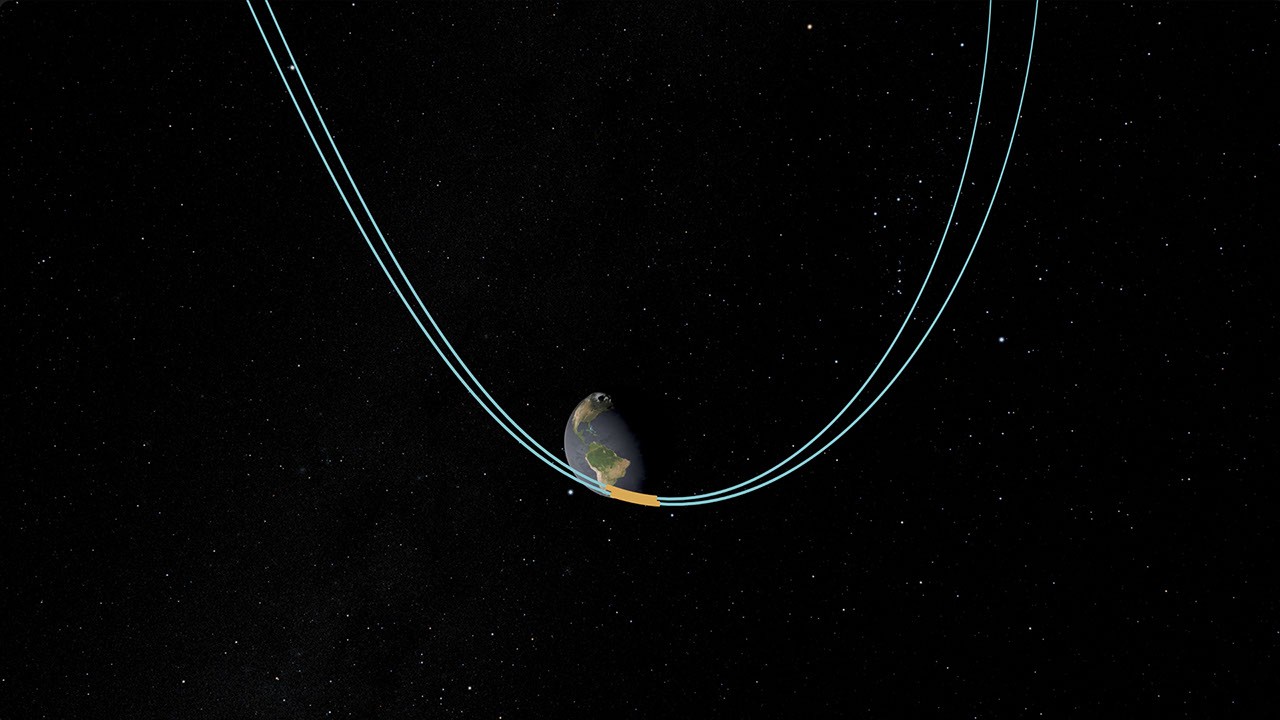
NASA’s twin ESCAPADE spacecraft — Red (also reported as Gold/Red in some outlets) and Blue — have successfully completed the powered Earth flybys they performed on Nov. 7 and Nov. 9, 2026. The maneuvers combined close Earth approaches with sustained engine burns (Oberth maneuvers) near perigee to add the velocity needed to send the smallsats onto interplanetary trajectories to Mars. NASA and multiple media outlets reported the burns went as planned and the probes are now on their 10-month cruise to the Red Planet.
According to mission statements and contemporaneous reporting, each spacecraft fired its main thruster for roughly nine minutes near closest approach, adding on the order of 1,600 km/h (about 1,000 mph) to their speeds. The dual flybys — spaced two days apart and timed to take advantage of Earth’s gravity and the rockets’ highest-energy point — constitute an efficient way for low-mass spacecraft to reach Mars after a near-Earth launch. That strategy was central to ESCAPADE’s design, which pairs smallsat platforms with carefully timed propulsion to achieve interplanetary transfer.
Outlets including SpaceNews, Space.com, Astrospace.it and others provided on-the-record confirmation and detail, and NASA issued a post-flyby update noting the twins are now en route to Mars with expected arrival dates in September 2027. The mission team will continue cruise-phase operations, including instrument checks, trajectory correction maneuvers if needed, and science calibration ahead of Mars approach. ESCAPADE’s science focus remains studying how solar wind and Mars’ magnetosphere and induced magnetic environment interact — measurements that will benefit from the spacecraft’s differing orbit insertions once they arrive.
The successful double-Oberth sequence is an early demonstration of how small, cost-conscious spacecraft can leverage gravitational assists plus propelled burns to reach other planets. ESCAPADE’s progress will be tracked by mission updates from NASA and coverage from space media as the twins head toward their planned Sept. 7 and Sept. 9, 2027 arrival windows at Mars, where they will begin coordinated measurements of plasma and magnetic activity around the planet.