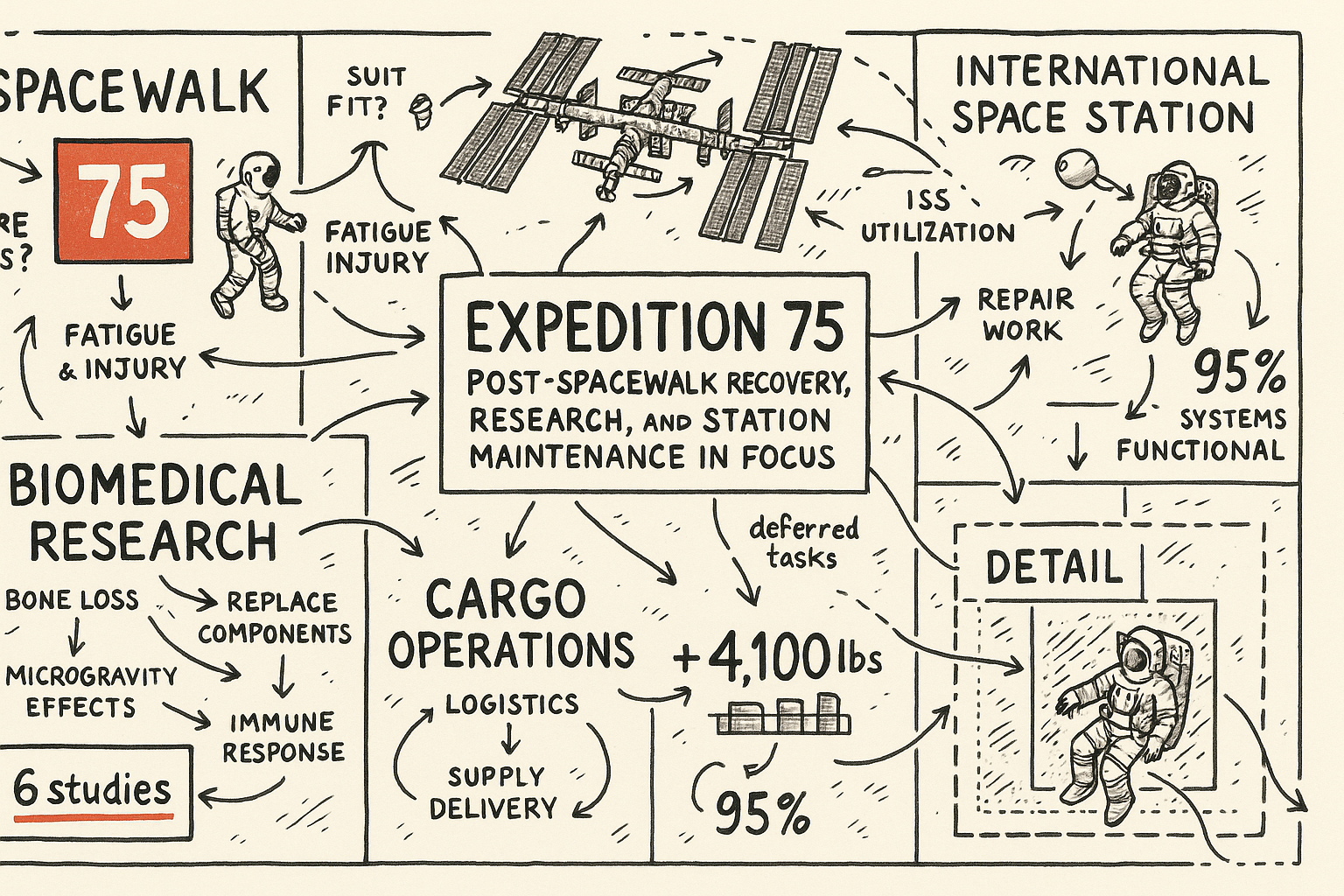
The recent departure of the Soyuz MS-28 spacecraft from the International Space Station (ISS) on July 26, 2026, marked the commencement of Expedition 75. The spacecraft, carrying Roscosmos cosmonauts Sergey Kud-Sverchkov and Sergei Mikaev, along with NASA astronaut Chris Williams, completed its mission after 241 days in space. The trio undocked from the Rassvet nadir port and safely landed on the Kazakh Steppe, concluding their long-duration mission aboard the ISS.
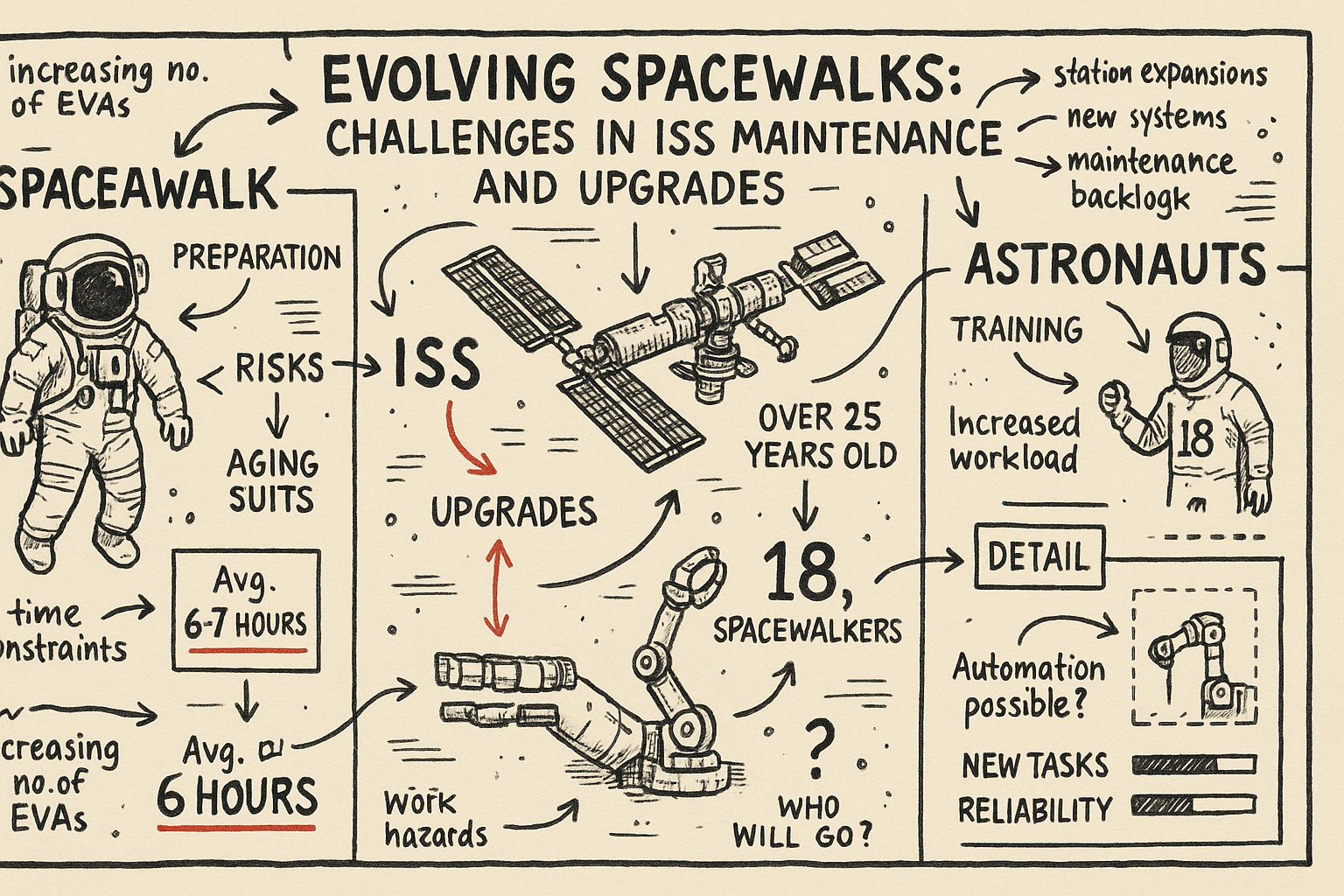
With the initiation of Expedition 75, the new crew quickly engaged in critical activities, including a series of three spacewalks. These extravehicular activities (EVAs) are instrumental in maintaining and upgrading the ISS's infrastructure, ensuring that it remains operational for the foreseeable future.
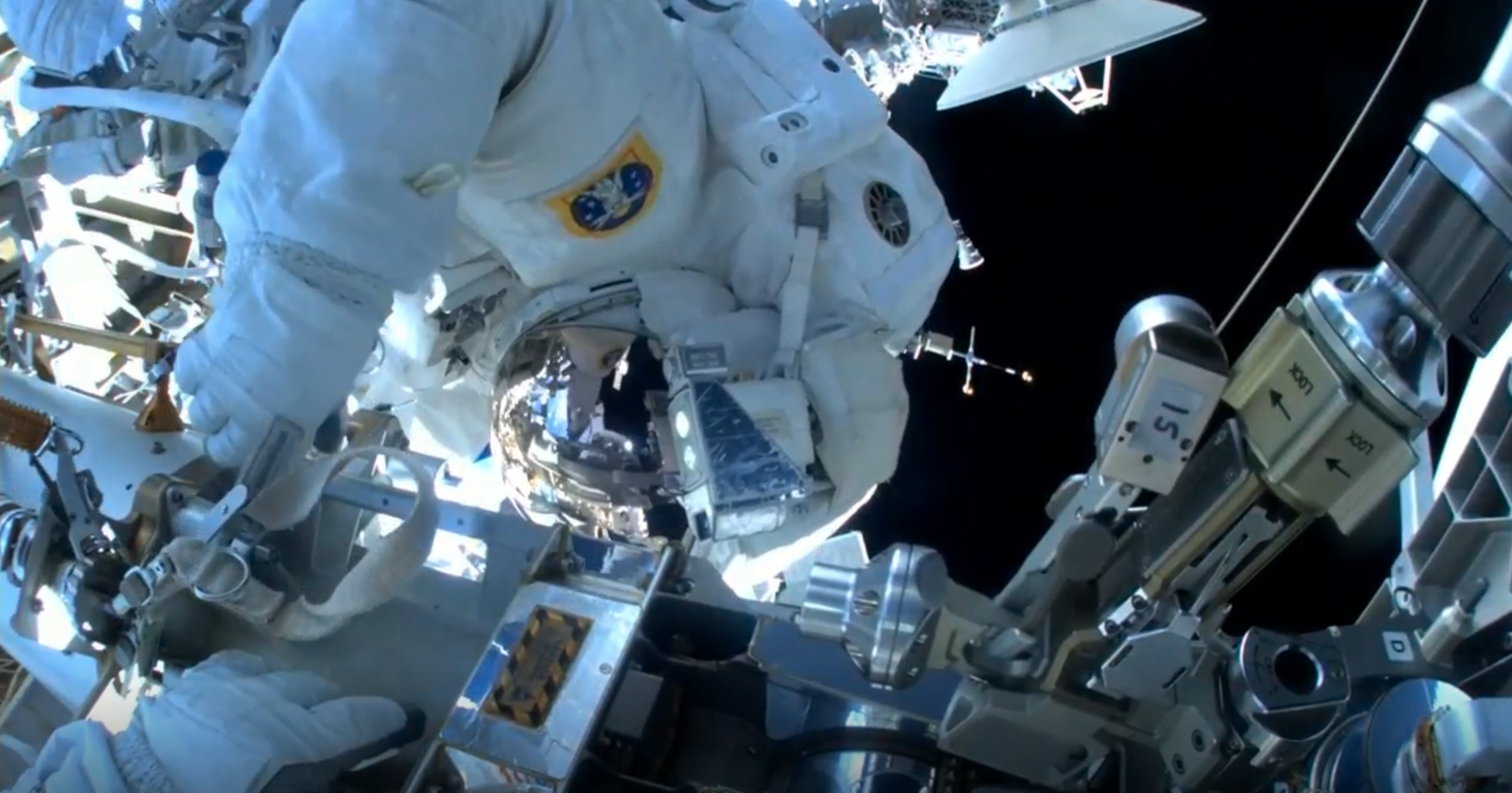
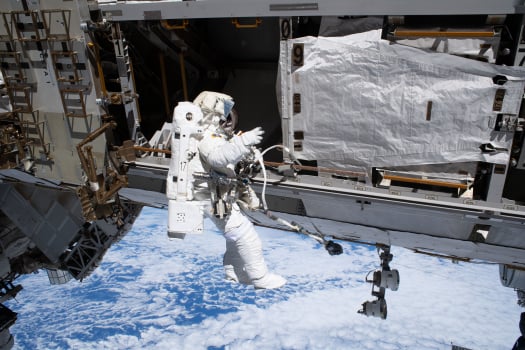
The first of these spacewalks took place on August 6, involving NASA astronauts Anil Menon and Jessica Meir. For Menon, it was his inaugural spacewalk, while Meir participated in her sixth. This particular EVA, designated U.S. Spacewalk 96, lasted six hours and 27 minutes. The astronauts focused on preparing the 3B power channel for the installation of new roll-out solar arrays, known as IROSAs. These arrays are designed to enhance the station's power capacity, supporting essential systems such as life support, and are part of the preparations for the ISS's eventual controlled deorbit planned for the 2030s.
The importance of these upgrades cannot be overstated. The IROSAs, once installed, will significantly boost the power supply available to the station, allowing for more robust support of scientific experiments and daily operations. This is crucial as the ISS continues to house a variety of research projects that contribute to our understanding of space and earth sciences.
Spacewalks are complex and require meticulous planning and execution. They are vital for the ongoing upkeep of the ISS, which has been continuously inhabited since November 2000. The space station serves as an international platform for scientific research, supporting experiments that range from biotechnology to astrophysics.
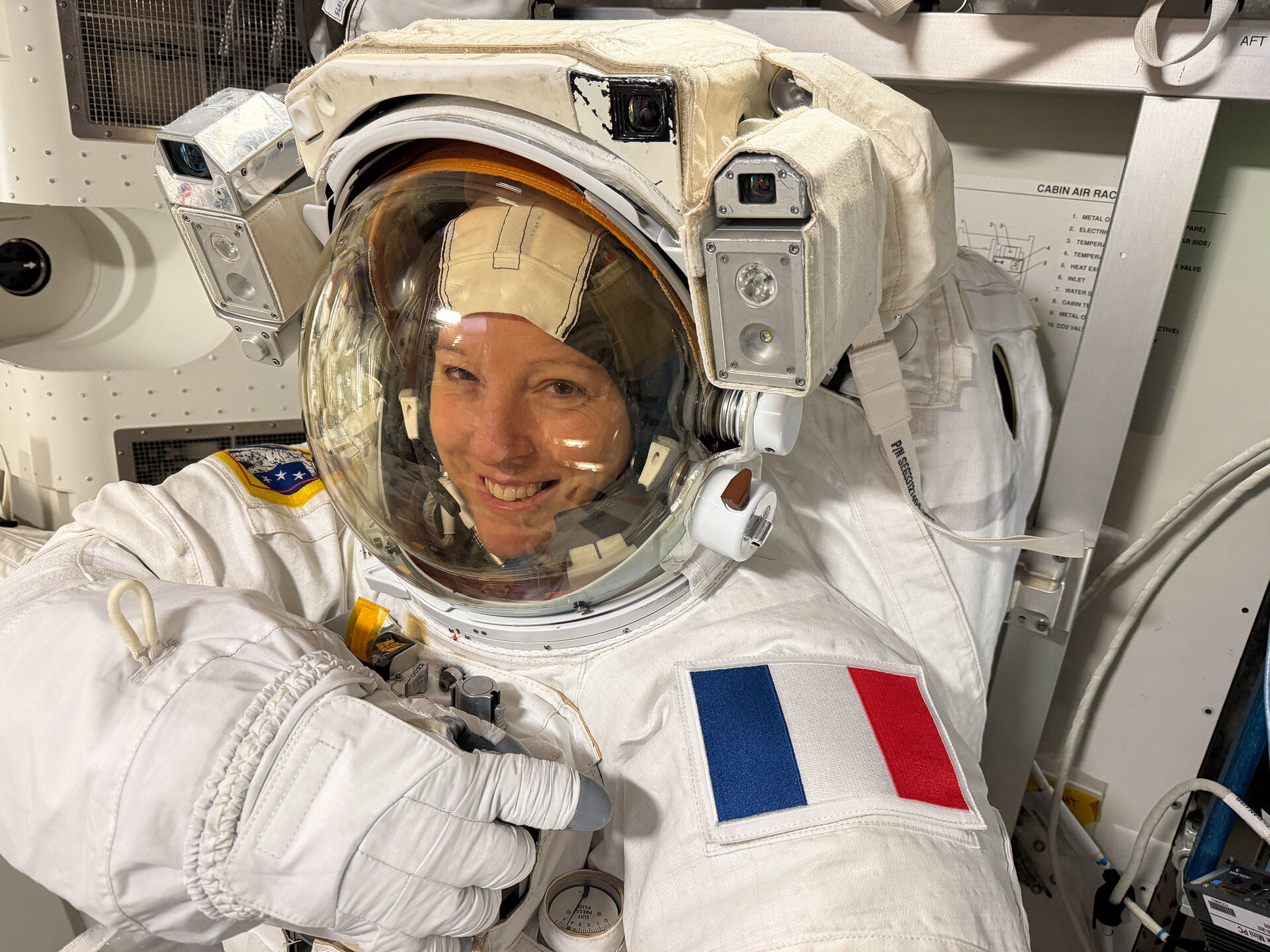
The successful completion of these spacewalks is a testament to the rigorous training and coordination between international space agencies, notably NASA and Roscosmos. Such collaborations are essential for the continued operation and success of the ISS, which involves contributions from multiple countries around the world.
Looking forward, the enhancements made during these recent spacewalks will play a pivotal role in the ISS's operational capabilities. The increased power capacity afforded by the new solar arrays will ensure that the station can accommodate more complex scientific instruments and experiments, furthering our pursuit of knowledge in a microgravity environment.
As we consider the future of the ISS, these upgrades are a reminder of the ongoing efforts required to sustain human presence in low Earth orbit. The ISS remains a cornerstone of international cooperation in space exploration, fostering unity and collaboration among nations with shared scientific goals.