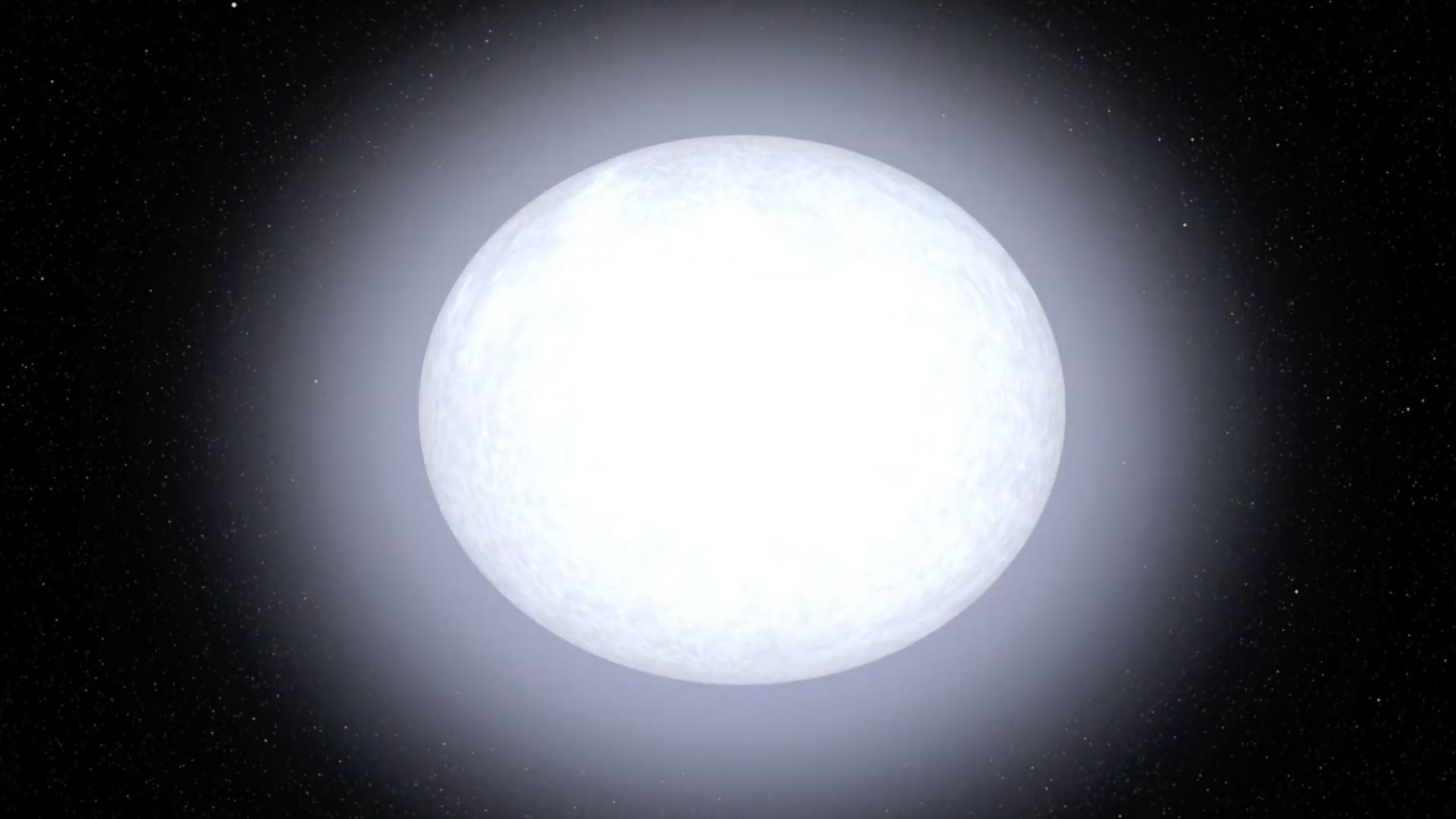
A team using TESS data reports a candidate giant planet, HD 156295 b, in the habitable zone of a hot A-type Delta Scuti star
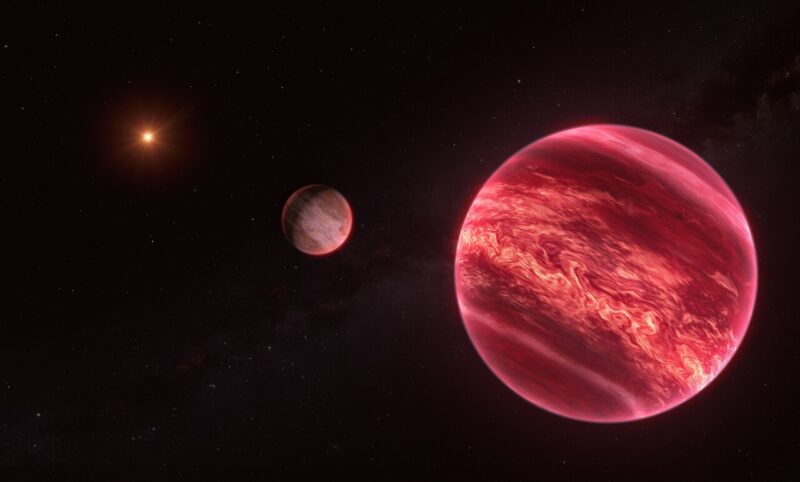
A group of astronomers analysing data from NASA's Transiting Exoplanet Survey Satellite (TESS) has identified a candidate exoplanet, HD 156295 b, that may reside in the habitable zone of an A-type star, HD 156295, according to a paper published in The Astrophysical Journal and reported by ScienceAlert on 30 September 2026. If confirmed, HD 156295 b would be the first known exoplanet in the habitable zone of a massive A-type star.
HD 156295 is a naked-eye-visible A-type star roughly 140 light-years from Earth. A-type stars are bluish-white, can be about twice the mass and size of the Sun, and are significantly hotter; the report states HD 156295 approaches 7,500 degrees Celsius (13,500 degrees Fahrenheit) and is about nine times brighter than the Sun. Crucially for the detection method used, HD 156295 is also a Delta Scuti variable, a class of pulsating stars whose regular brightness variations can be exploited as a precise timing reference.
The candidate, designated HD 156295 b, is estimated to be about six times the mass of Jupiter and to orbit at nearly 4 astronomical units (AU) from the star, completing one orbit in roughly 2,200 days (about six years). Because of the star's luminosity and the planet's orbital distance, HD 156295 b would receive around 60 percent of the solar irradiation that Earth receives from the Sun. The discovery emerged from a survey of nearly 16,500 Delta Scuti stars observed by TESS, which the authors narrowed down to nine systems of particular interest: one hosting the candidate planet and eight hosting candidate brown dwarfs.
Detection relied on measuring pulsation time delays in the host star at different frequencies. Delta Scuti pulsations, driven by waves travelling between the star's core and surface, act as a cosmic clock; the presence of an orbiting companion produces periodic time-delay signatures in those pulsations. The ScienceAlert article reproduces a figure showing the pulsation time delays of HD 156295 at different frequencies, which underpin the candidate identification.
There are several reasons to treat HD 156295 b as a candidate rather than a confirmed planet. The classification in the source is explicitly a candidate identified through timing signatures in stellar pulsations; the discovery paper and the ScienceAlert summary describe the object as a potential planet and note that eight of the other promising systems instead host candidate brown dwarfs. Additional follow-up observations — for example, long-term radial-velocity monitoring or direct imaging where feasible — will be needed to confirm the companion's planetary mass, refine its orbit, and rule out alternative explanations for the timing signal.
Placing a giant planet at ~4 AU around an A-type star into the habitable zone differs from the more commonly reported habitable-zone planets around smaller, cooler stars. A-type stars evolve and emit energy differently from Sun-like stars, and their habitable zones lie at larger orbital distances. The candidate's estimated mass — about six times Jupiter — would make it a gas giant, so habitability in the sense of a rocky surface is unlikely. However, such a planet could still be of interest for the potential of large moons or for studying planet formation and migration around massive stars.
Historically, planet searches have concentrated on cooler, smaller stars where transit and radial-velocity signals are easier to detect and where longer-lived habitable zones may favour the development and persistence of temperate conditions. The use of stellar pulsation timing to detect companions around pulsating stars such as Delta Scuti variables represents a complementary method that can probe systems where traditional techniques are challenged by high stellar temperatures and rapid rotation.
Future implications of this candidate include motivating targeted follow-up of massive, pulsating stars in TESS and other survey data, and guiding instrument teams planning long-baseline radial-velocity campaigns. Confirming HD 156295 b would expand the diversity of known planetary systems and provide a benchmark for the study of planetary environments around A-type stars. As the discovery paper emerged from a large, systematic search through nearly 16,500 Delta Scuti stars, it also underlines the value of mining survey archives for subtle timing signals.
NovΔ mAInd's launch database: Planet Labs — 0 launches tracked
Note on uncertainty: the report and paper present HD 156295 b as a candidate identified via pulsation timing; confirmation of its planetary nature, precise mass, and other properties remains pending further observations.