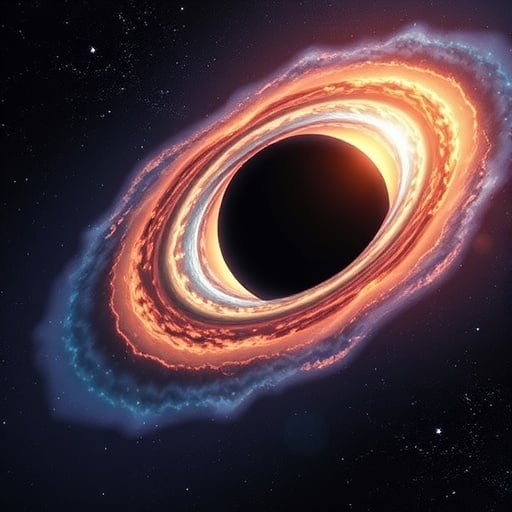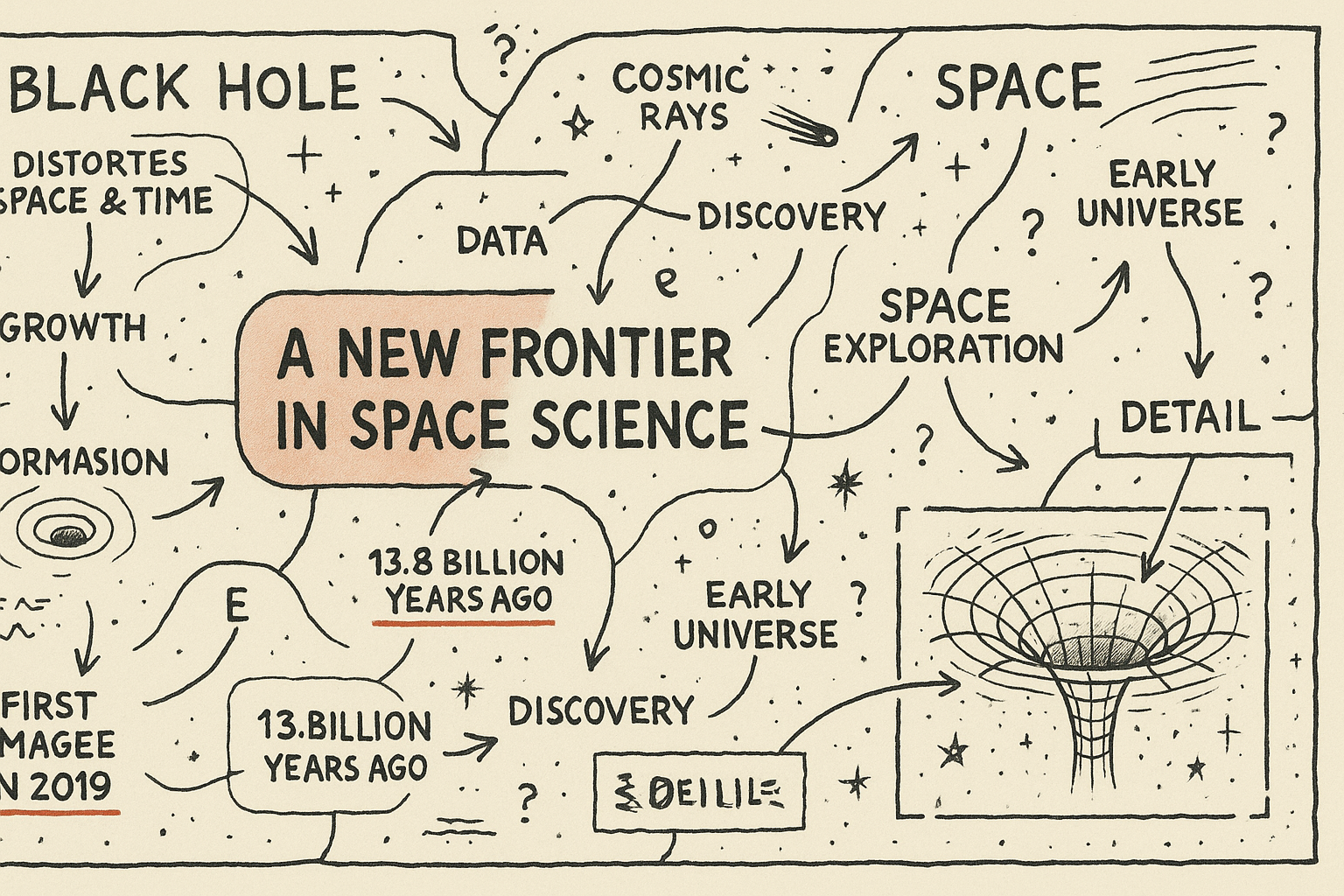
Black holes have long fascinated scientists and the public alike, serving as both cosmic enigmas and laboratories for testing the limits of our understanding of physics. Recent advances in observational astronomy and theoretical physics have provided new insights into these mysterious objects, challenging existing paradigms and opening new avenues for exploration.
The Enigma of Black Hole Symmetries
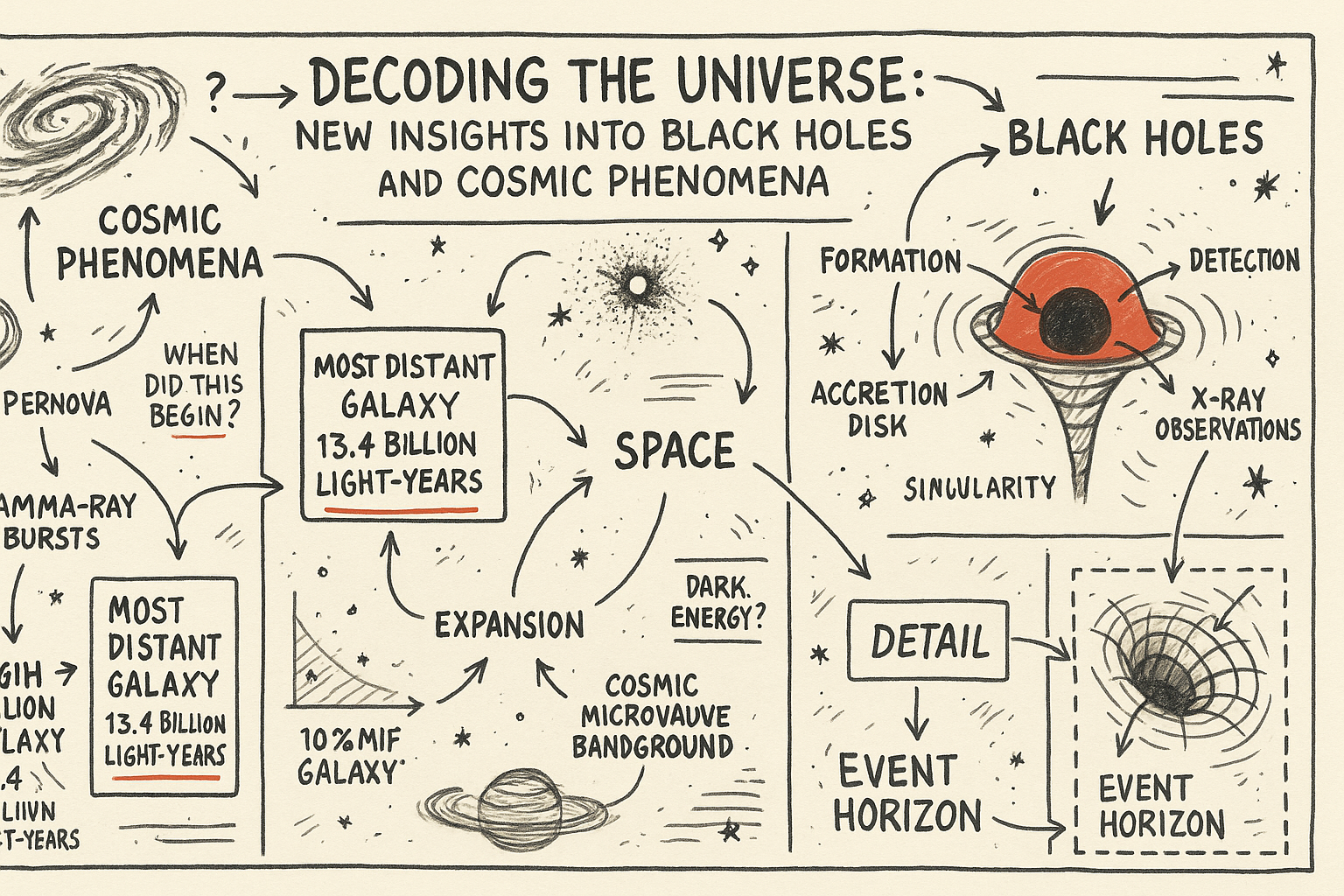
One of the most intriguing revelations comes from the study of higher-dimensional black holes, where an exact symmetry has been discovered in the way they 'ring' after merging. This symmetry, akin to the fading notes of a bell, is governed by the mass, spin, and the fundamental laws of gravity. However, theories inspired by string theory suggest that altering the gravitational laws could change these 'quasinormal modes,' potentially providing a new testbed for theories beyond Einstein's general relativity.
In parallel, scientists have developed a novel antimatter beam to probe the very fabric of spacetime, testing the limits of Einstein's theory. This experimental approach not only complements the theoretical insights but also promises to shed light on the interplay between matter and antimatter in the universe.
Seeds of the Cosmic Giants
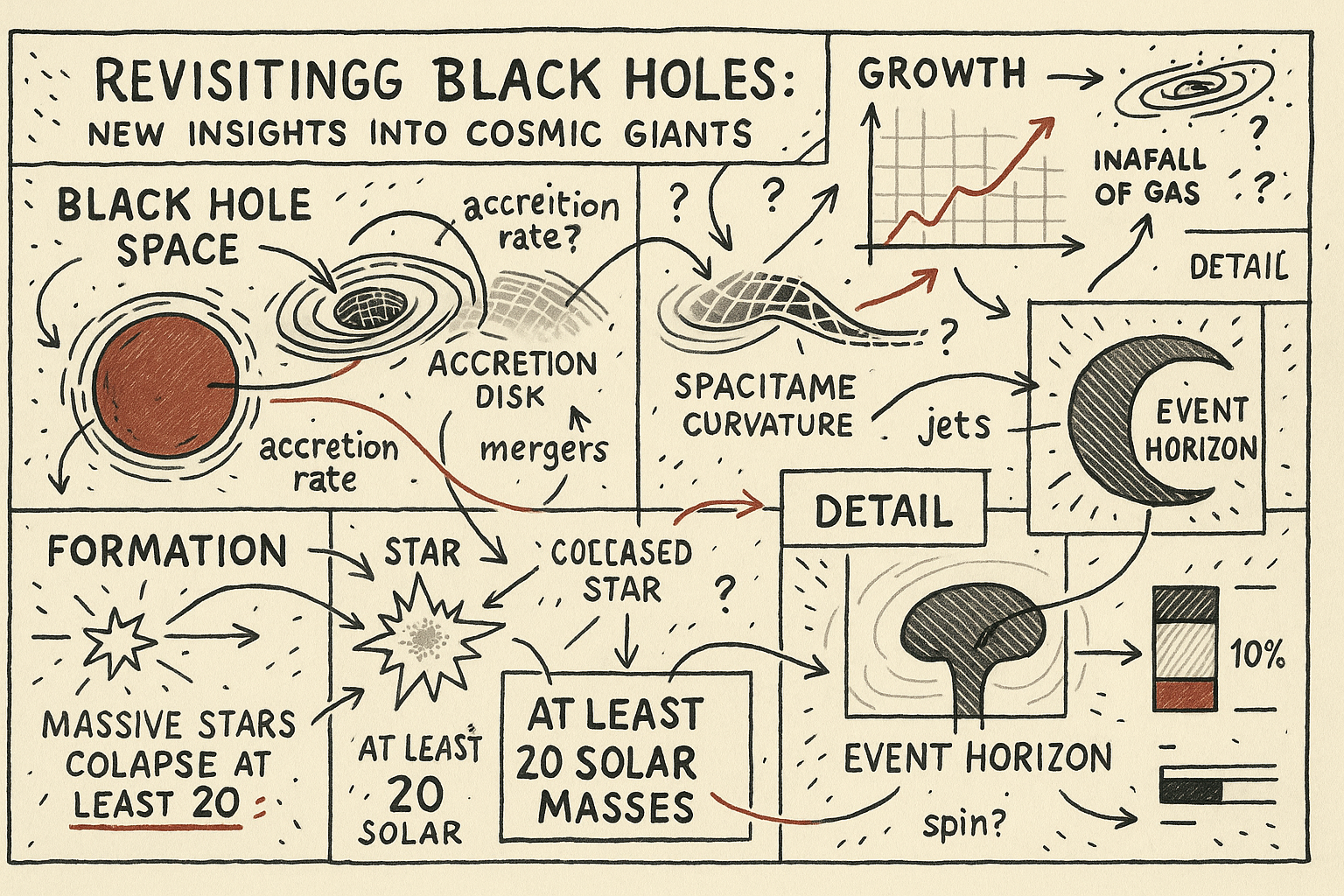
Computer simulations have identified 'Little Red Dots' as the precursors of quasars and supermassive black holes. These early universe phenomena provide clues about the rapid formation of massive black holes, which later evolve into the powerful quasars that illuminate the cosmos. Understanding these seeds is crucial for piecing together the cosmic timeline and the role of black holes in galaxy formation.
The Universal Rule of Black Hole Burps
A surprising discovery is the universal rule governing black hole 'burps,' or the powerful jets they emit after consuming stars. Regardless of their size, black holes follow the same threshold for launching jets, suggesting a fundamental aspect of their physics. This rule applies from stellar-mass black holes in our galaxy to the supermassive giants at the centers of distant galaxies, hinting at a unifying principle in their behavior.
Moreover, the phenomenon where black holes 'burp' identically, regardless of scale, suggests that the processes governing their accretion and jet formation are fundamentally similar across different environments. This insight challenges the notion that supermassive black holes are unique and points to a more universal mechanism at play.
Future Implications
The convergence of these findings points to a future where black holes are not just the enigmatic endpoints of stellar evolution but also vital components of cosmic structure and evolution. As scientists continue to uncover the hidden symmetries and behaviors of black holes, we inch closer to a more comprehensive understanding of the universe.
These advances also underscore the importance of interdisciplinary approaches, combining theoretical physics, computational modeling, and cutting-edge observational techniques. The synergy between these fields is likely to yield further breakthroughs, potentially revealing new aspects of spacetime and gravitational physics.
In conclusion, the study of black holes is entering a golden era, driven by technological advances and theoretical innovation. As we continue to explore these cosmic giants, we not only enhance our understanding of the universe but also confront the fundamental questions of existence, matter, and the nature of reality itself.