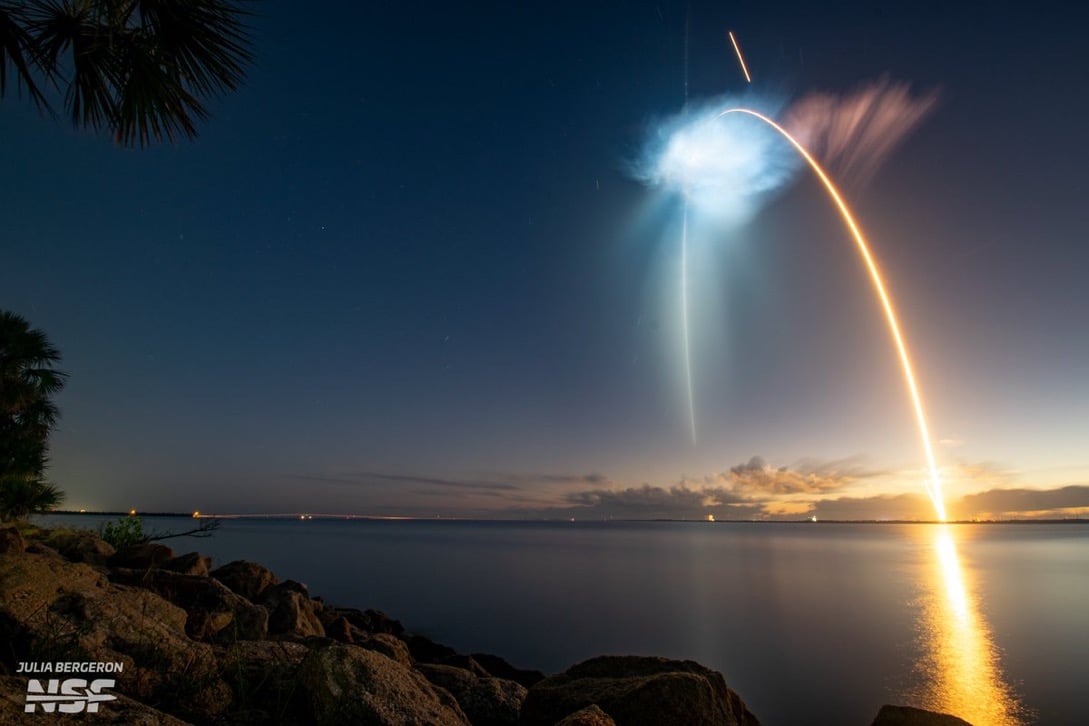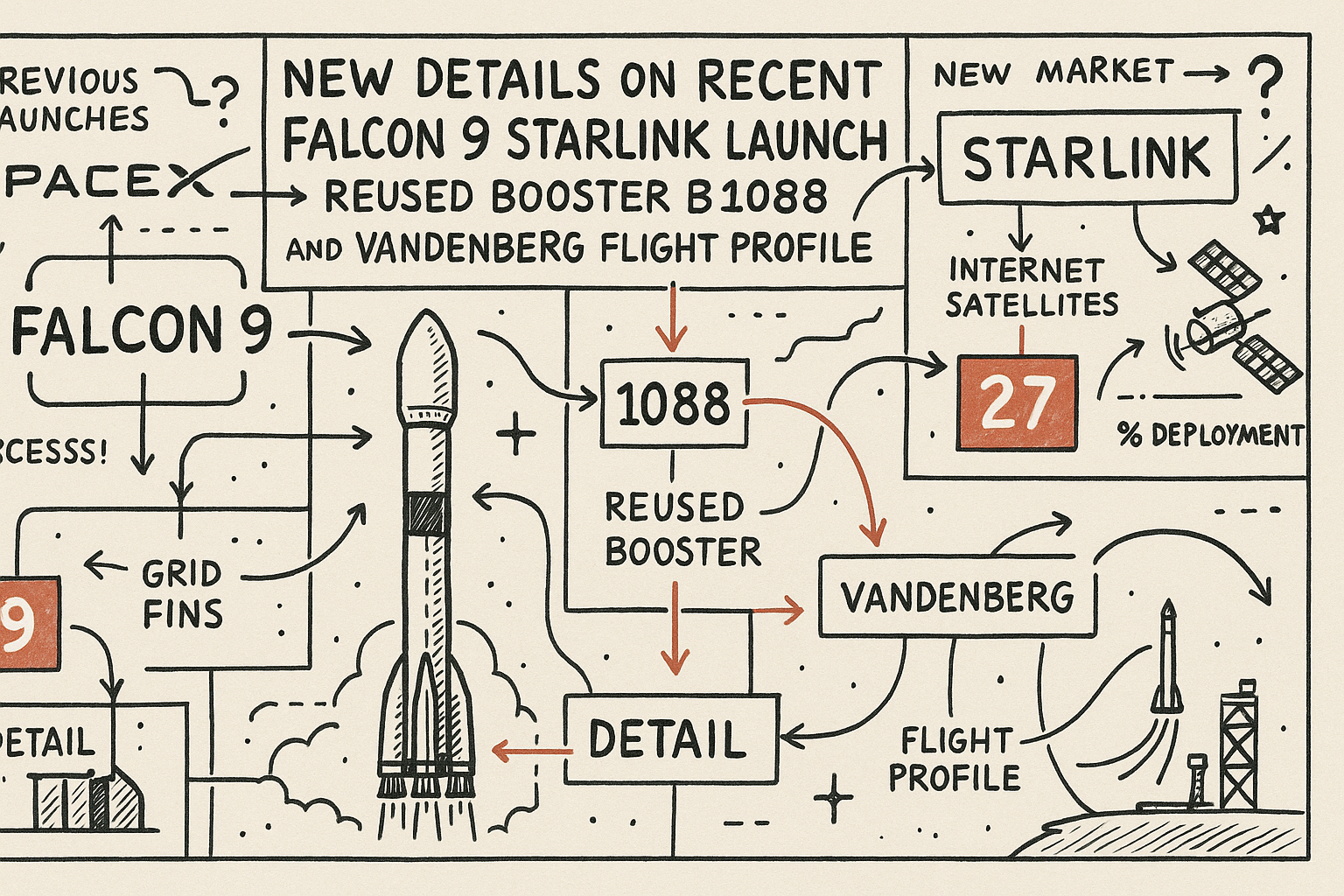
On Oct. 12, 2026 SpaceX launched a Falcon 9 from Vandenberg Space Force Base carrying another batch of Starlink satellites, a mission designated Starlink 15-25. Liftoff from Space Launch Complex 4 East occurred at 5:28 p.m. PDT (8:28 p.m. EDT / 0028 UTC), and the rocket flew a southerly trajectory down the California coast toward an orbital inclination of 70 degrees to the equator.
Booster reuse and landing details
The mission marked the 20th flight of first-stage booster B1088. That booster’s recorded flight history includes the NROL-126, Transporter-12, SPHEREx, NROL-57 and USSF-366 missions, plus 14 previous Starlink delivery runs prior to this launch. After stage separation the booster completed its return and landed on the autonomous spaceport drone ship Of Course I Still Love You nearly 8.5 minutes into the flight.
Payload and context
Spaceflight Now’s coverage states the Falcon 9 carried 27 Starlink satellites. The launch continued SpaceX’s ongoing cadence of Starlink deployments from California, adding another batch to the company’s low Earth orbit constellation.
How this complements earlier coverage
Earlier reporting this month and in late September focused on SpaceX’s first orbital Starship attempt and the company’s push to deploy next-generation Starlink V3 satellites. The Vandenberg Falcon 9 flight reported here is separate in vehicle and mission profile but sits alongside those broader developments: Starship’s attempted orbital Starship-Super Heavy flights and Falcon 9’s continued role deploying Starlink hardware.
Operational notes
The launch trajectory from Vandenberg toward a 70-degree inclination is typical for missions seeking higher-inclination coverage from California launch azimuths. The successful ASDS landing of a widely flown booster underscores SpaceX’s emphasis on high-rate reuse; B1088’s prior manifest of national security and commercial missions highlights how the company rotates hardware across different mission types.
This account draws on contemporaneous launch coverage from Spaceflight Now and places the mission in the context of SpaceX’s broader Starlink and Starship efforts as reported in September and October 2026.