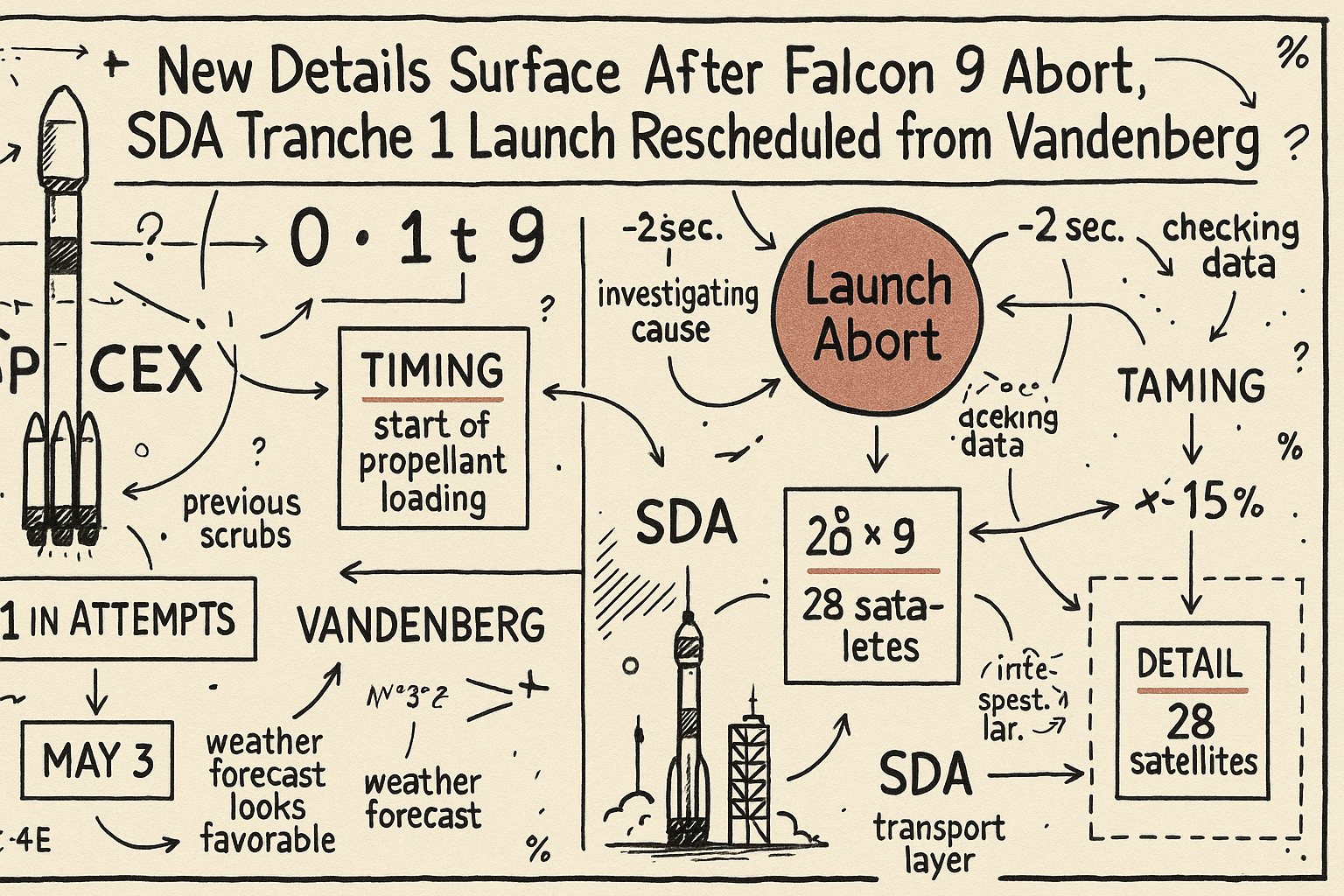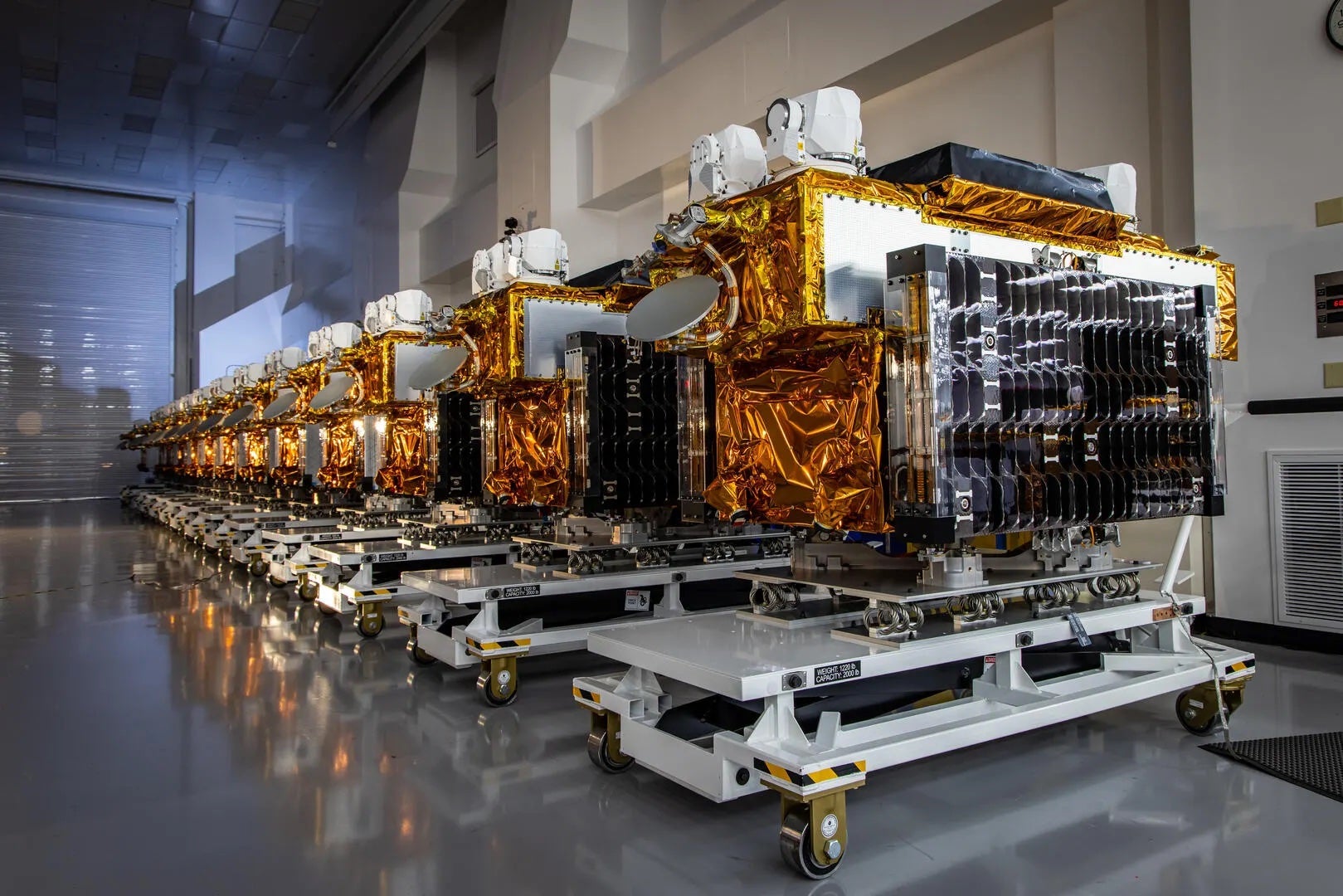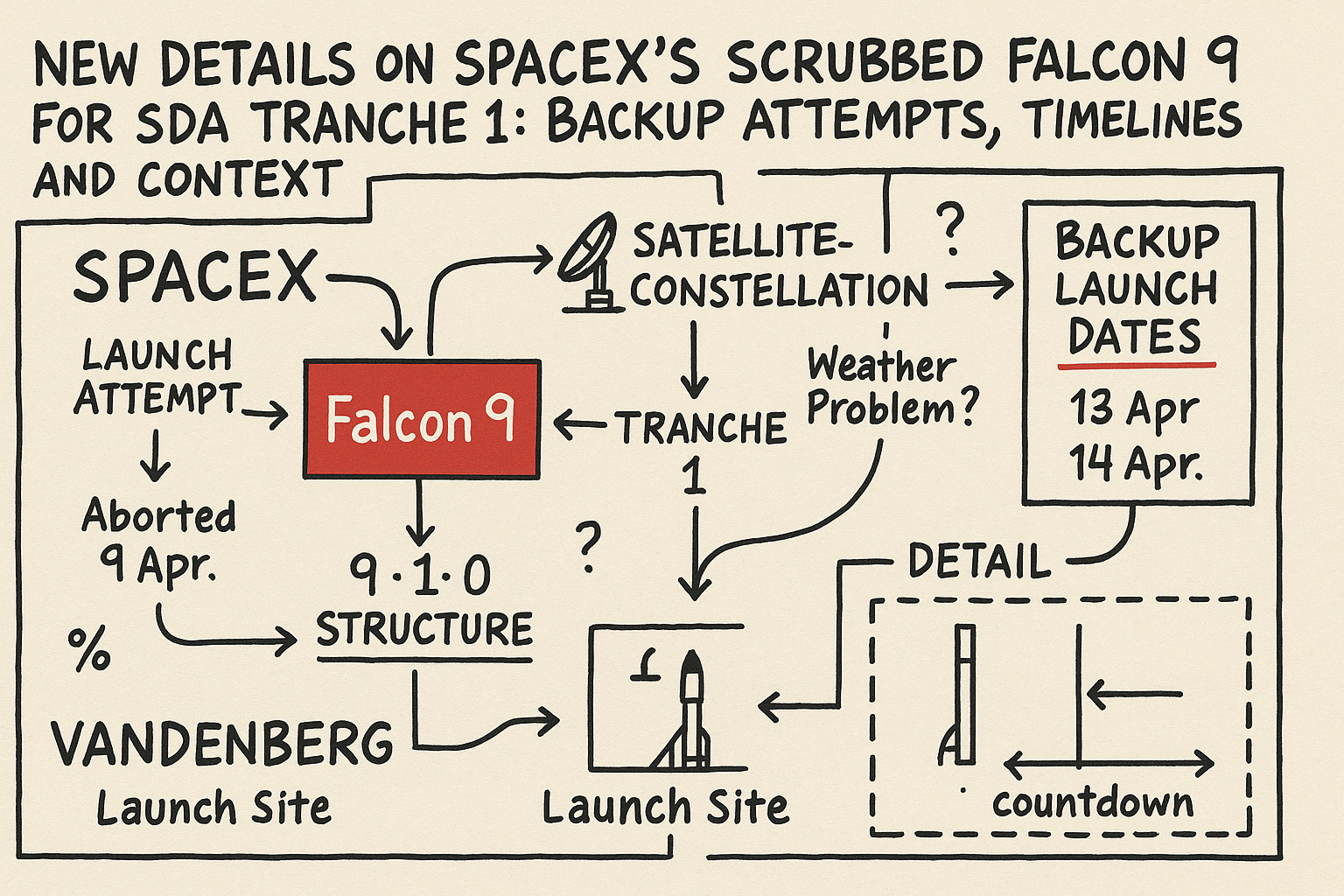
SpaceX’s Falcon 9 was set to lift from Vandenberg Space Force Base in early October on a mission to deliver another set of Space Development Agency (SDA) Tranche 1 transport layer satellites when the countdown ended in an automatic abort just prior to T‑0. SpaceX reported on X that the vehicle and payload were in good health and that teams were resetting for a new attempt.
Immediate backup opportunities and revised schedule
Following the auto‑abort, SpaceX said teams were targeting a launch attempt no earlier than October 6, with an additional backup window on October 7 at 1:02 a.m. PT. Vandenberg Space Force Base officials later provided an updated target for the mission, moving liftoff to 12:54 a.m. PT on Thursday, October 8, and noting the Falcon 9 was expected to return to a landing at Vandenberg about 10 minutes after launch.
Local and regional outlets subsequently reported additional postponements. One update noted a second postponement without a provided reason, while others reiterated the 12:54 a.m. PT October 8 launch alert as the currently scheduled attempt.
How this fits into broader West Coast launch activity
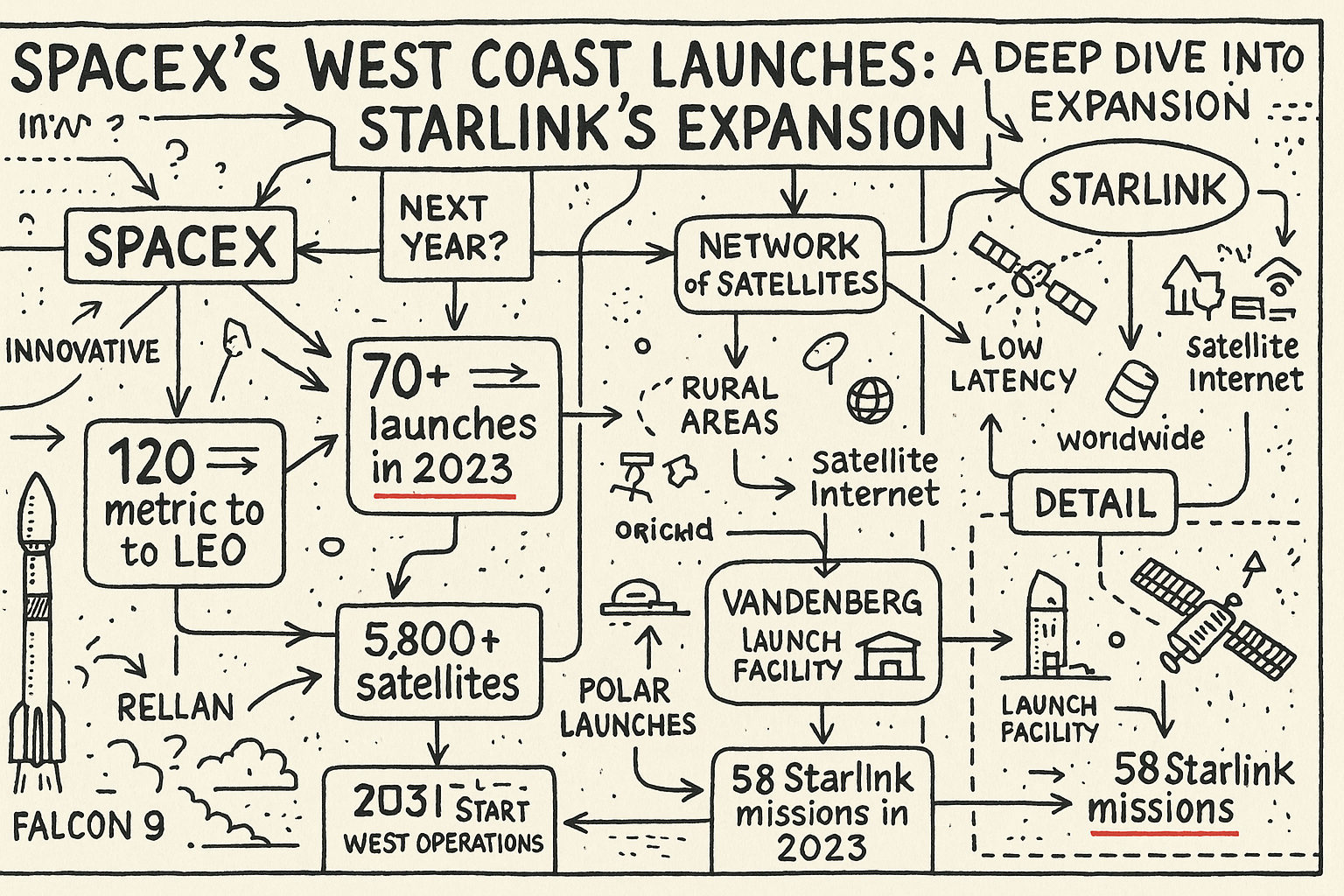
The SDA Tranche 1 mission is part of a broader pattern of classified and defense‑related launches from the U.S. West Coast. Separate coverage of another recent mission noted a Falcon 9 launching a classified U.S. Space Force flight (USSF‑385) from Vandenberg at dawn on a southerly trajectory; SpaceX withheld views of that rocket’s payload and second stage at the customer’s request. That mission’s liftoff time was reported as 7:00:54 a.m. PDT.
These reports together underscore that Vandenberg continues to be an active base for both SDA Tranche 1 deployments and other government and defense launches, some of which remain gated by customer restrictions on public telemetry and imagery.
What is known and what remains private
Public statements about the scrubbed SDA mission focused on operational status: SpaceX confirmed the abort was automatic and that the vehicle and payload were healthy. Vandenberg officials and launch alerts provided revised windows and a planned landing timeline. News outlets recorded at least one subsequent postponement where no reason was disclosed.
Beyond those operational and scheduling updates, reporting did not provide additional technical diagnostics for the abort, nor did the publicly available coverage release detailed payload imagery or second‑stage views for related classified missions. The combination of automatic abort reporting and repeated schedule adjustments is typical for complex, time‑sensitive national security launches where both safety and customer constraints shape public disclosure.
For readers tracking SDA Tranche 1 deployments and West Coast military launches, the immediate takeaways are simple: the scrub was an automatic abort prior to T‑0, the Falcon 9 and payload were reported healthy, and SpaceX and Vandenberg established sequential backup attempts with a later consolidated target of 12:54 a.m. PT on October 8 with a planned landing at Vandenberg about 10 minutes after liftoff.