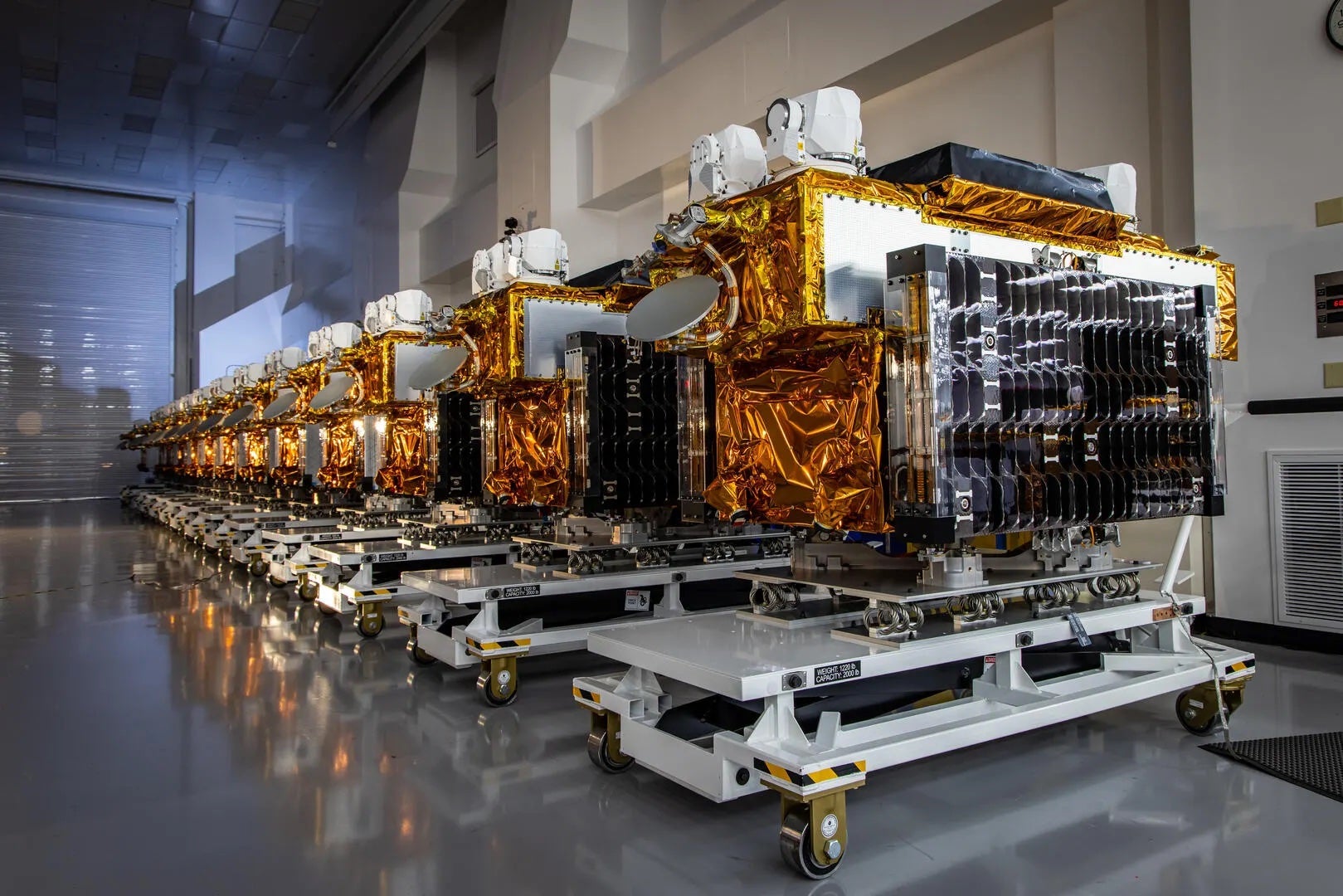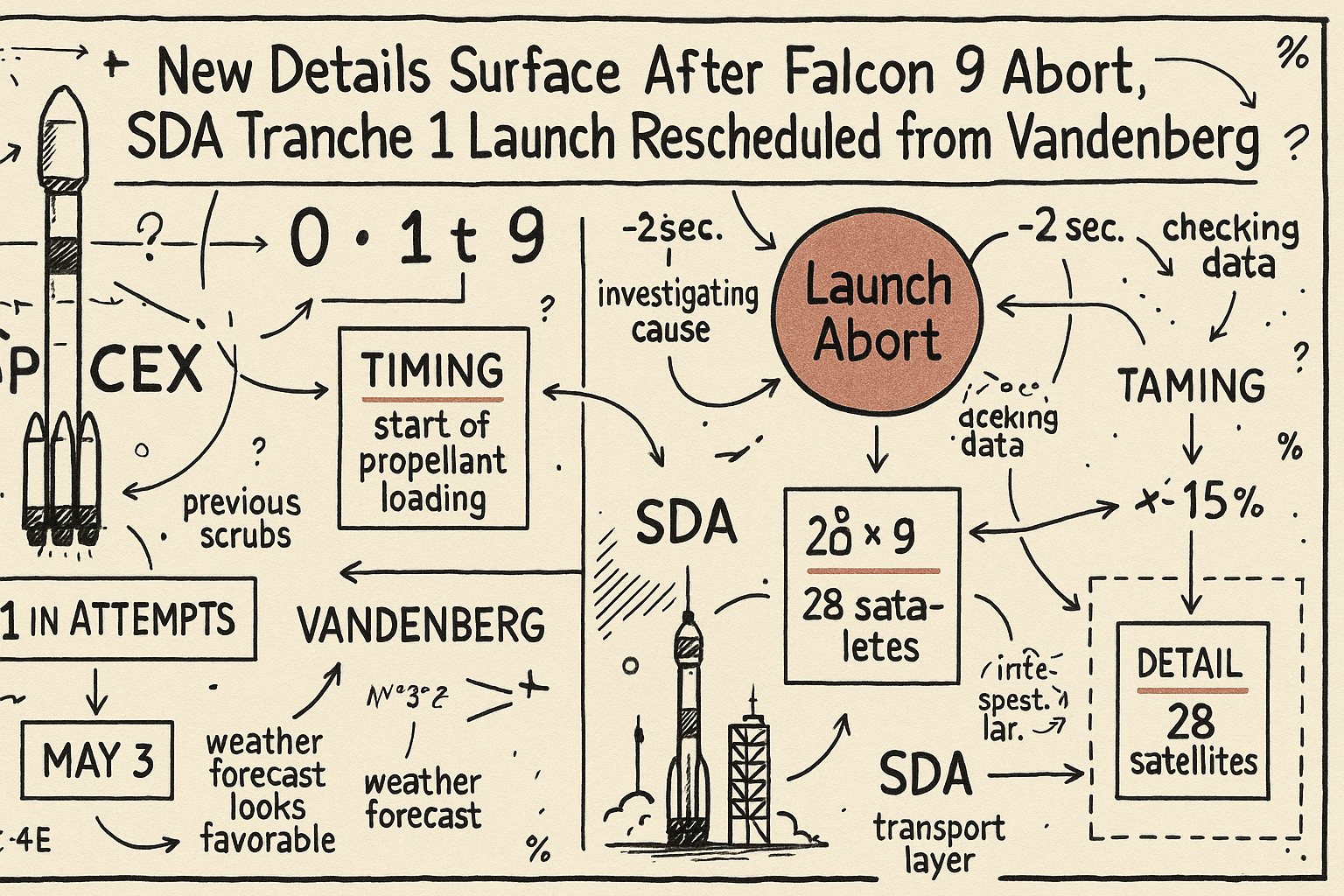
SpaceX’s planned Falcon 9 launch from Vandenberg Space Force Base to deliver satellites for the Space Development Agency (SDA) was halted by an automatic abort just prior to T‑0, new reporting shows. The company stated the vehicle and payload were in good health and that teams were resetting for another attempt, providing a sequence of backup opportunities over the following days.
According to updates published after the scrub, SpaceX said on X that the abort occurred early Monday morning and that teams were preparing for a new attempt no earlier than Tuesday, October 6. SpaceX also listed a Wednesday, October 7 backup opportunity at 1:02 a.m. should the Tuesday attempt be scrubbed.
Local officials at Vandenberg later set a revised liftoff time of 12:54 a.m. on Thursday, October 8, with an expected return to Vandenberg about 10 minutes after launch. The mission is part of SDA’s Tranche 1 data transport program and represents one of a series of launches to deploy the agency’s transport layer satellites.
What the new details add
These updates supply a clearer picture of post‑abort scheduling and range planning around the scrub. The initial public statement from SpaceX confirmed the automatic abort and emphasized that both vehicle and payload were in good condition. The company’s disclosure of sequential backup windows for October 6 and October 7 — and Vandenberg officials’ later announcement of an October 8 target — show a multi‑day cadence of reattempt options being coordinated between SpaceX and the range.
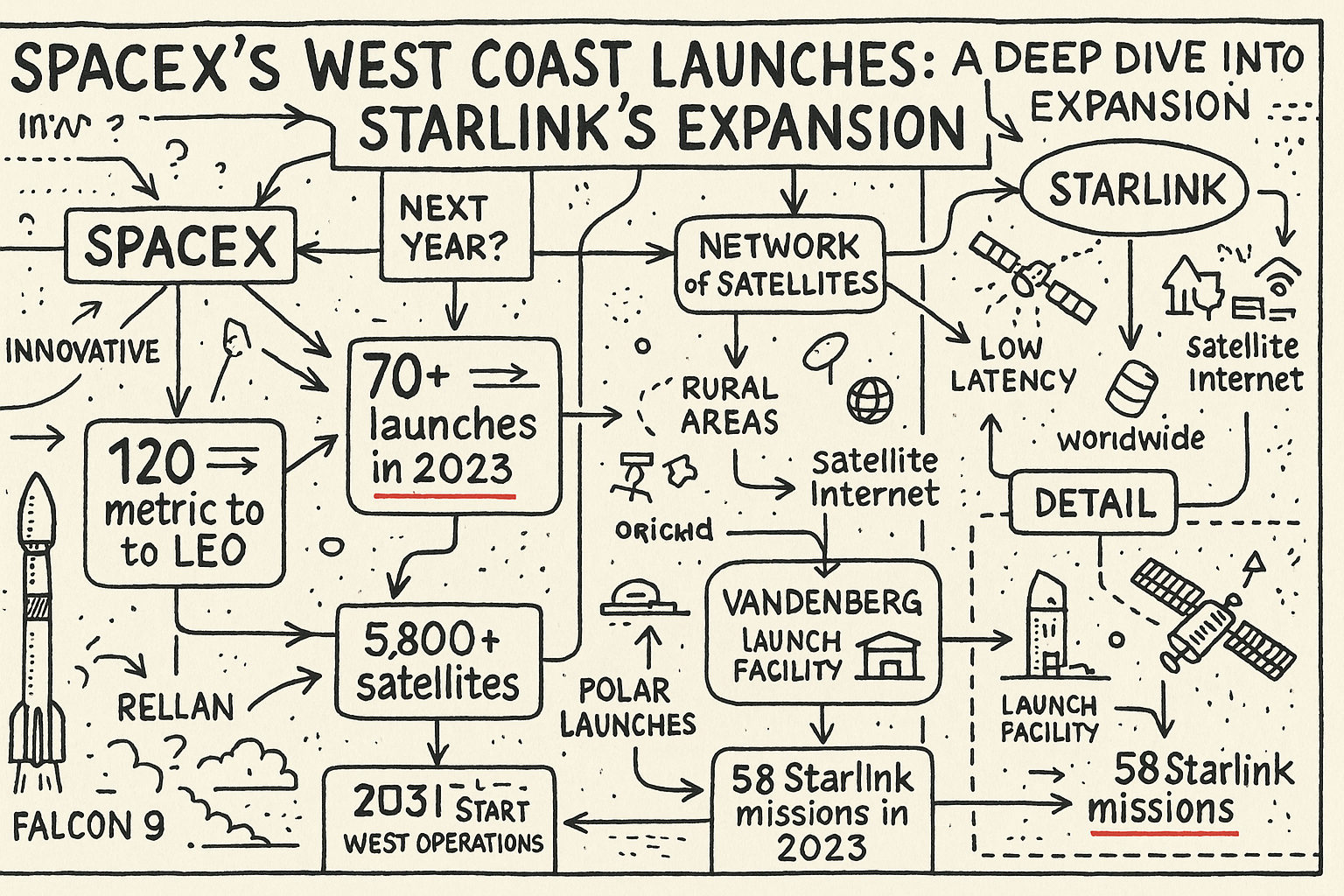
The mission joins a busy manifest across SpaceX’s two coasts. Other recent SpaceX activity included a classified U.S. Space Force launch from Vandenberg that lifted off at 7:00:54 a.m. PDT on a southerly trajectory, described in media coverage as part of a series of flights related to SpaceX’s Starshield government variant of its Starlink satellites. Separately, SpaceX proceeded with high‑profile launches elsewhere in the company’s schedule, including efforts with Starship/Super Heavy and Falcon Heavy vehicles reported around the same timeframe.
While the abort drew immediate attention, SpaceX’s statement that the vehicle and payload remained healthy suggests the scrub was a protection of flight safety or due to an automated prelaunch parameter outside acceptable limits. Officials and SpaceX did not provide additional technical specifics in the publicly available updates reviewed for this report.
The SDA Tranche 1 transport layer program continues to be rolled out via multiple launches; the revised schedule from Vandenberg indicates teams were pursuing the earliest practical opportunities following the abort while keeping later contingency dates on the range calendar.
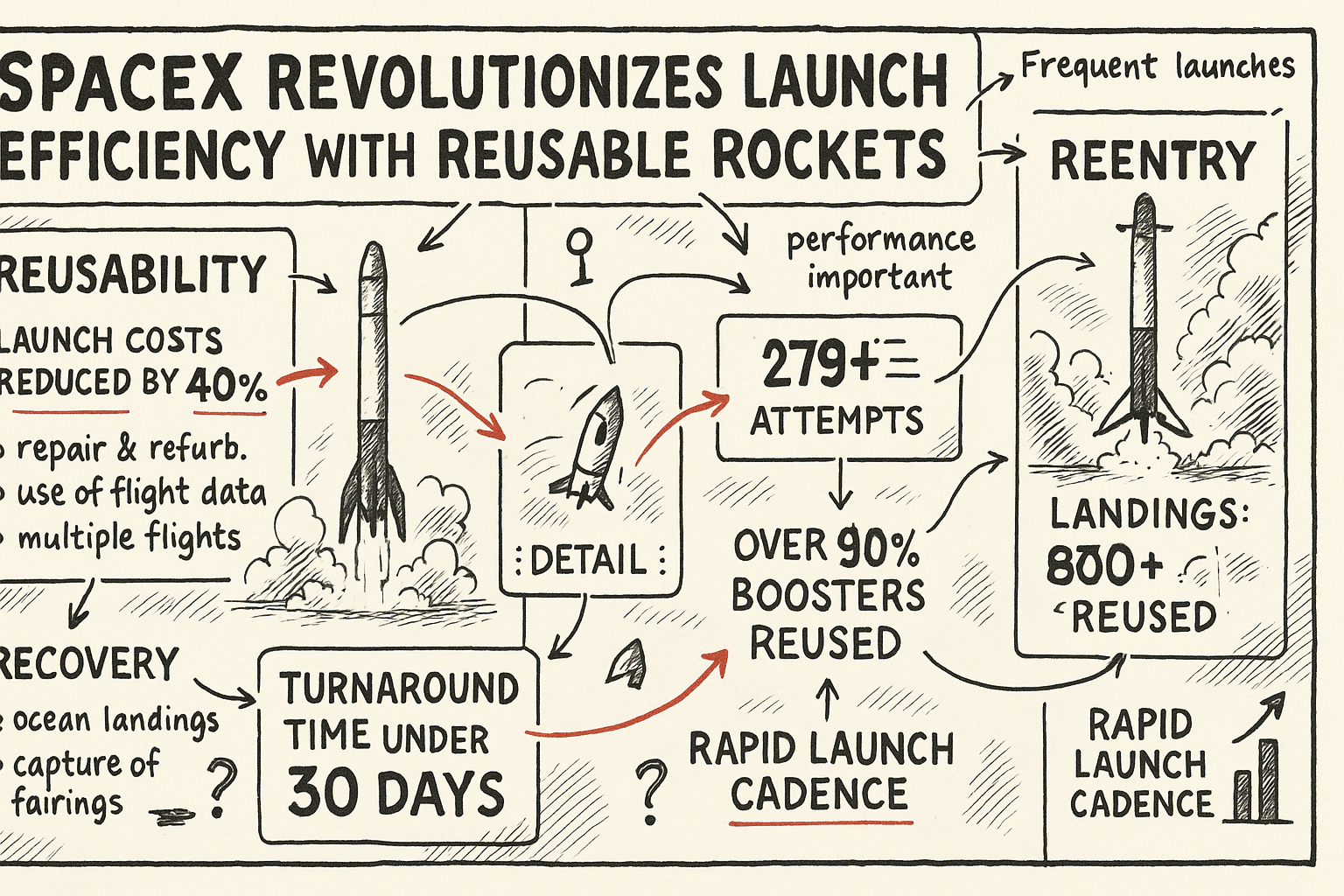
As with many rapid‑cadence launch campaigns, rapid retargeting and multiple backup opportunities are a routine part of how SpaceX and range authorities manage scrubs and reattempts. The new reporting around this mission documents that process in action for an SDA Tranche 1 flight and provides the updated timetable range watchers and local communities rely on for launch tracking.