JAXA’s MMX spacecraft set for H3 launch on 19–20 October 2026
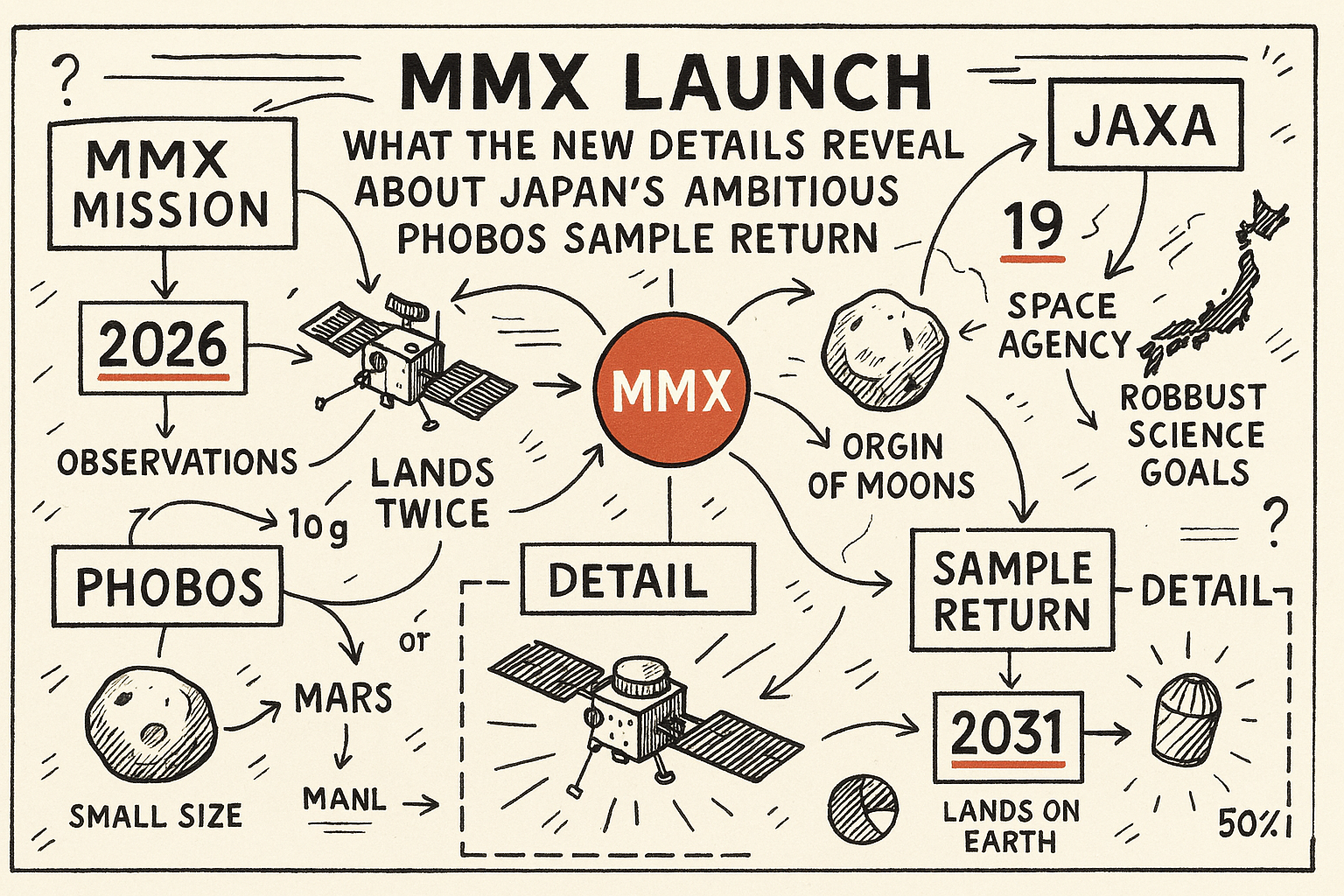
Japan Aerospace Exploration Agency (JAXA) has scheduled the launch of the Martian Moons eXploration (MMX) spacecraft aboard H3 Launch Vehicle flight No.10 (H3 F10) from the Yoshinobu Launch Complex at Tanegashima Space Center for 04:41:03 Japan Standard Time on 20 October 2026. That corresponds to 21:41 CEST / 20:41 BST on 19 October 2026. JAXA notes a reserved launch period running from 21 October through 7 November 2026 and warns the precise launch time may vary during that window.
The MMX mission is led by JAXA in partnership with the National Aeronautics and Space Administration (NASA), the French space agency CNES, the German Aerospace Center (DLR) and the European Space Agency (ESA). The mission will be the first to collect and return samples from one of Mars’s moons, Phobos, and the first spacecraft to enter a quasi-satellite orbit around Phobos.
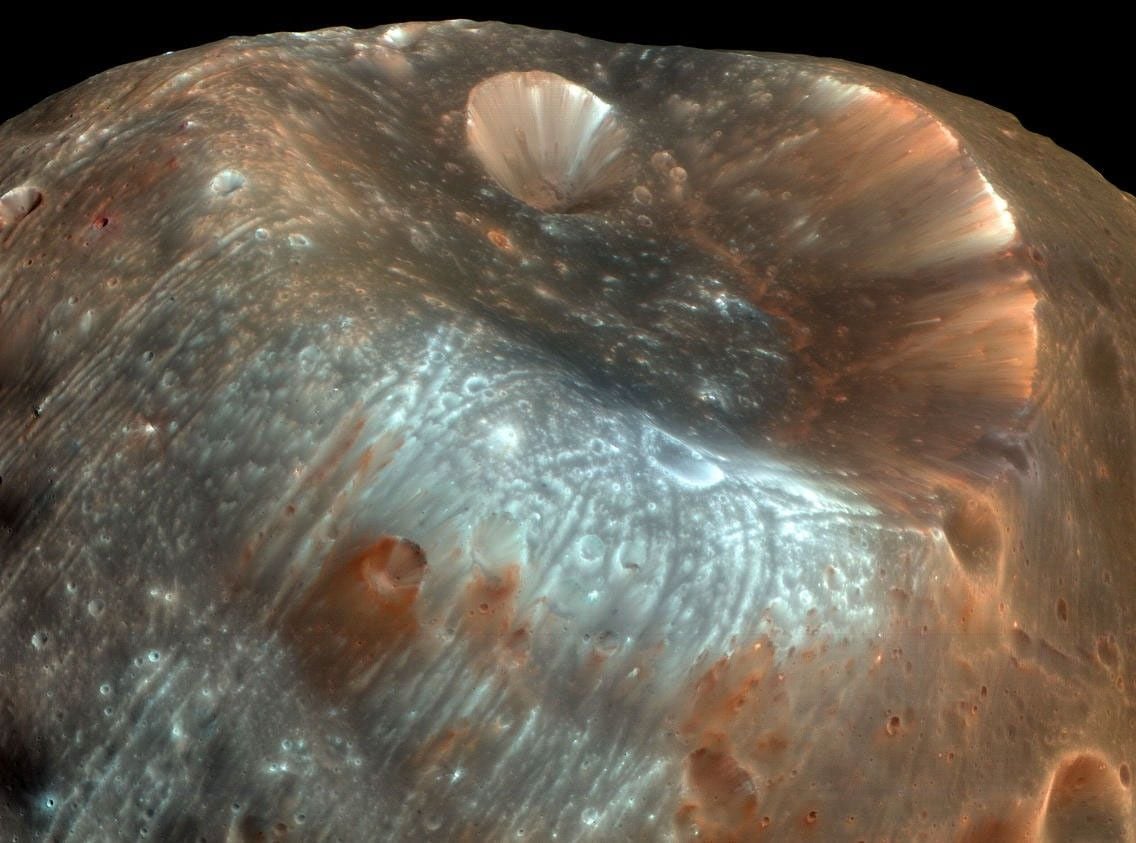
MMX’s scientific goals focus on resolving the long-standing mystery of the origin and composition of Mars’s two tiny moons, Phobos and Deimos. Despite decades of Mars exploration, the moons remain poorly understood: they could be captured asteroids or the outcome of a giant impact that produced orbiting debris. As ESA MMX Project Scientist Elliot Sefton-Nash is quoted in ESA material, “The data and samples returned by MMX are a window to study the evolution of Mars and the Solar System.”
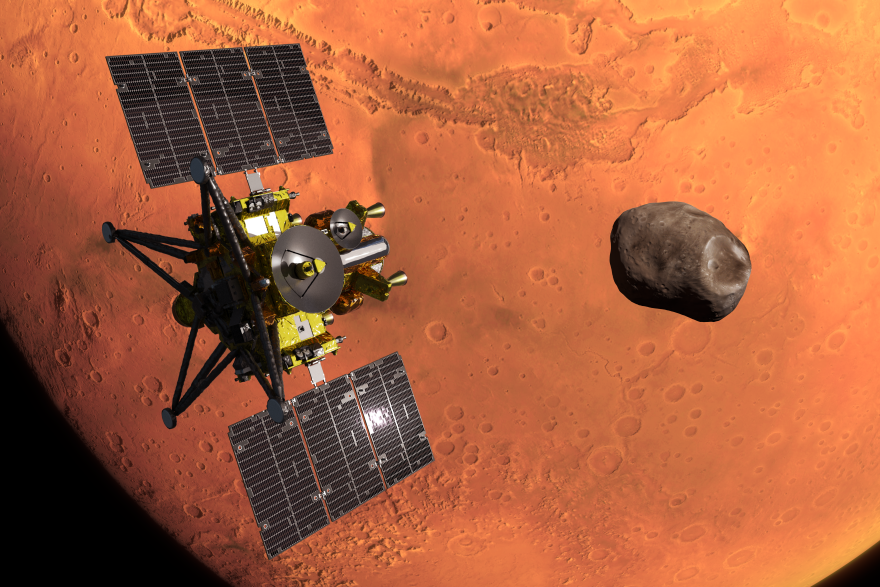
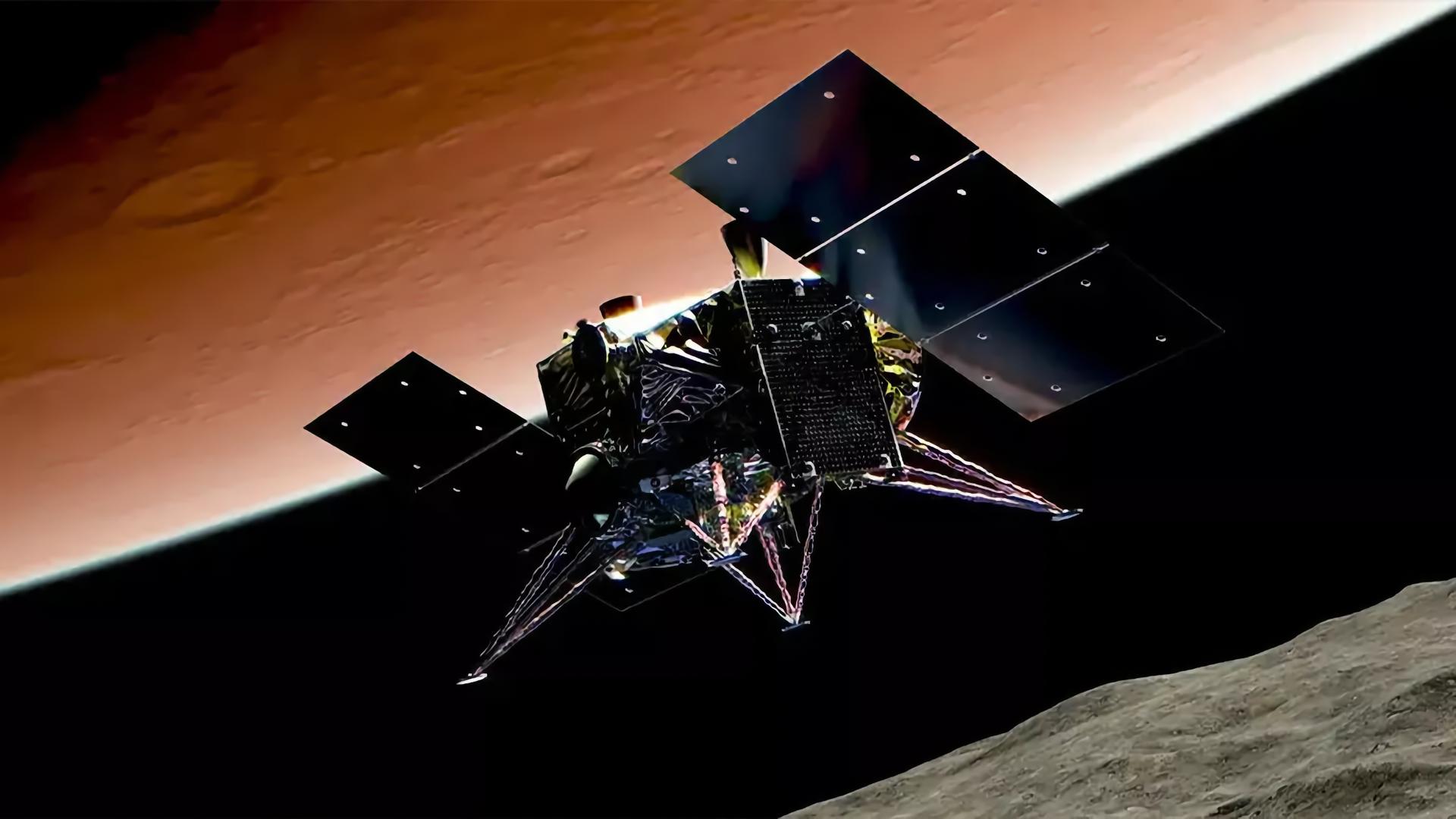
The mission architecture combines remote sensing, surface mobility and sample return. The main MMX spacecraft carries 11 science instruments—seven on the orbiter and four on the rover—plus a radiation monitor and multiple high-resolution cameras. JAXA and partners have also developed special technology for landing and sampling in Phobos’s extremely low gravity. Two different sampling devices are on board the main spacecraft, and after orbital reconnaissance MMX will deploy a 25-kg rover named Idefix to Phobos’s surface to help characterise candidate sampling sites and assist with navigation. The orbiter will then perform at least one surface contact to collect samples that will be returned to Earth. On its way home the spacecraft will also fly past and investigate Deimos and take observations of Mars itself.
European contributions are significant: ESA describes its role as scientific collaboration and instrument provision supporting the mission’s objectives to study the moons’ composition and the broader history of the Mars system. CNES and DLR also participate, and NASA has publicised a media briefing highlighting its contributions to the mission.
French outlet Futura-Sciences places MMX as JAXA’s largest solar-system mission to date and gives a clear timeline: after the October 2026 launch MMX will take under a year to reach Mars, with Mars orbit insertion scheduled for August 2027. The spacecraft is expected to spend approximately three years in the Martian system, using progressively closer observations to select two landing zones on Phobos for the sample-collection campaign; samples are planned to return to Earth in 2031, according to the published mission schedule.
MMX is also notable for operational firsts. It will be the first spacecraft to orbit Phobos in a quasi-satellite orbit and the first mission to collect samples from a moon other than Earth’s. The capability to return material from the Mars system is described by ESA as a technology and operational stepping-stone for future sample-return missions to Mars and, in the longer term, human exploration.
Technical launch details published by JAXA specify flight No.10 of the H3 vehicle, with the precise liftoff epoch given above. ESA’s briefing materials and Futura-Sciences both note a 19-day launch window that closes on 7 November 2026. NASA’s public communication highlights the agency’s role and the forthcoming briefing outlining its contributions.
Context and implications: MMX addresses fundamental questions in planetary science about how small moons form around terrestrial planets. If Phobos and Deimos are captured primitive bodies, their material could shed light on the conditions in the outer asteroid belt and the delivery of volatiles to the inner Solar System. If they are impact-generated debris, their samples could provide direct evidence about Mars’s early crust and collisional history. The mission’s combined use of a small rover, orbital reconnaissance and sample return will test low-gravity operations that are relevant to future robotic endeavours at small bodies and to architectures for returning material from Mars proper.
Longer-term, the MMX sample cache—if returned as planned in 2031—will become the object of detailed laboratory analysis by an international team, offering new constraints on Solar System formation models and the evolution of Mars. The mission’s multinational structure also provides a case study in cross-agency collaboration for complex sample-return campaigns.
NovΔ mAInd's launch database: H3 | MMX (Mars Moons eXploration) — scheduled 2026-11-02, it has NOT flown yet — no outcome exists, do not state one, orbit Planetary Probe, operator JAXA
MMX’s launch on an H3 vehicle is a high-profile test of Japan’s new H3 launcher in an interplanetary context, and the mission timeline through 2031 will be watched closely by the international planetary-science community.