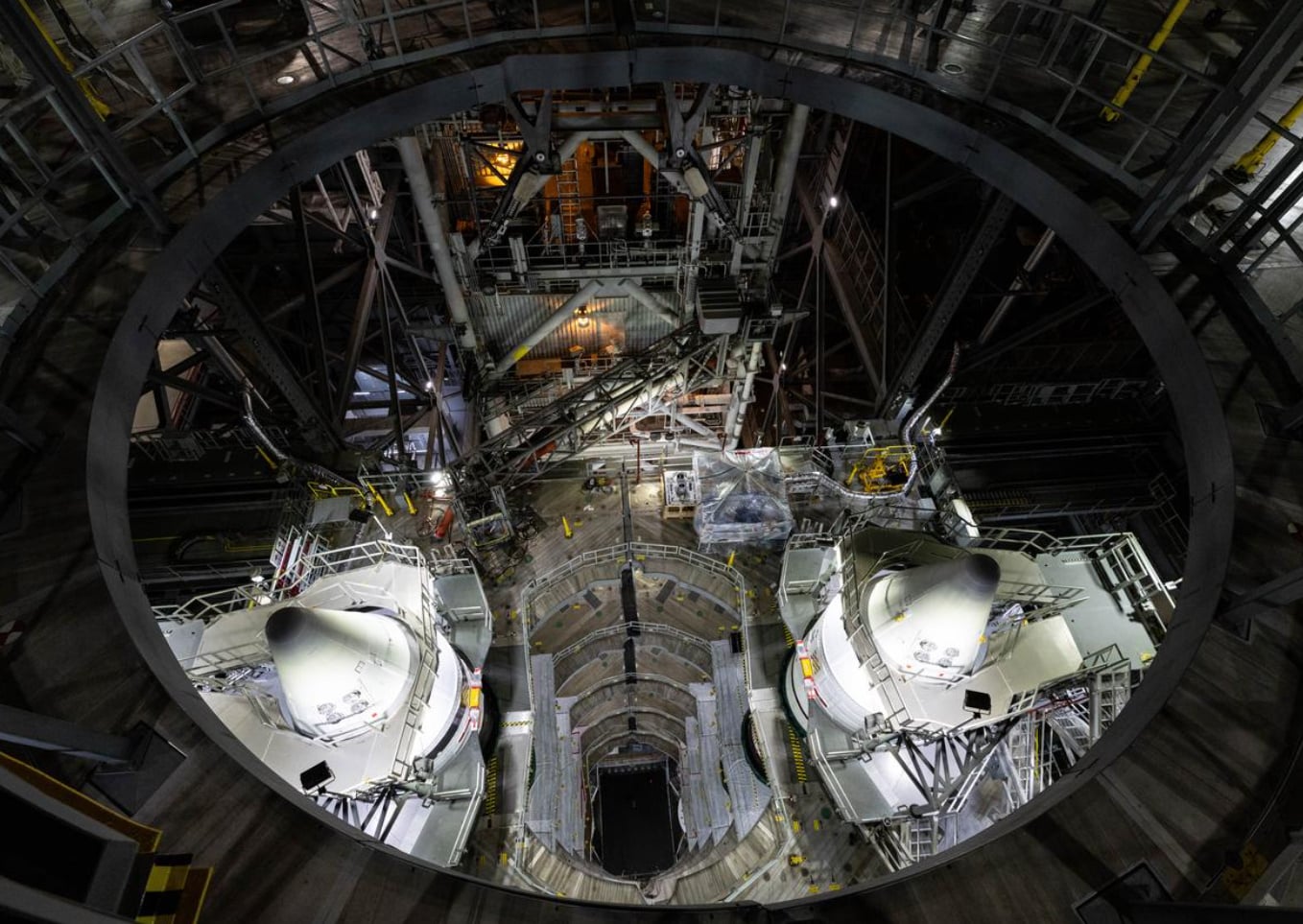
NASA completes assembly of Artemis III SLS solid rocket boosters at KSC
NASA technicians completed assembly of the two five-segment, solid-propellant side boosters for the Space Launch System (SLS) vehicle that will fly Artemis III, with work carried out inside the Vehicle Assembly Building (VAB) at Kennedy Space Center. The agency reports that the booster stacking reached completion on 30 September 2026, and engineers have also installed the four RS-25 engines on the rocket's core stage as part of the launcher's build-up ahead of a planned tanking test.
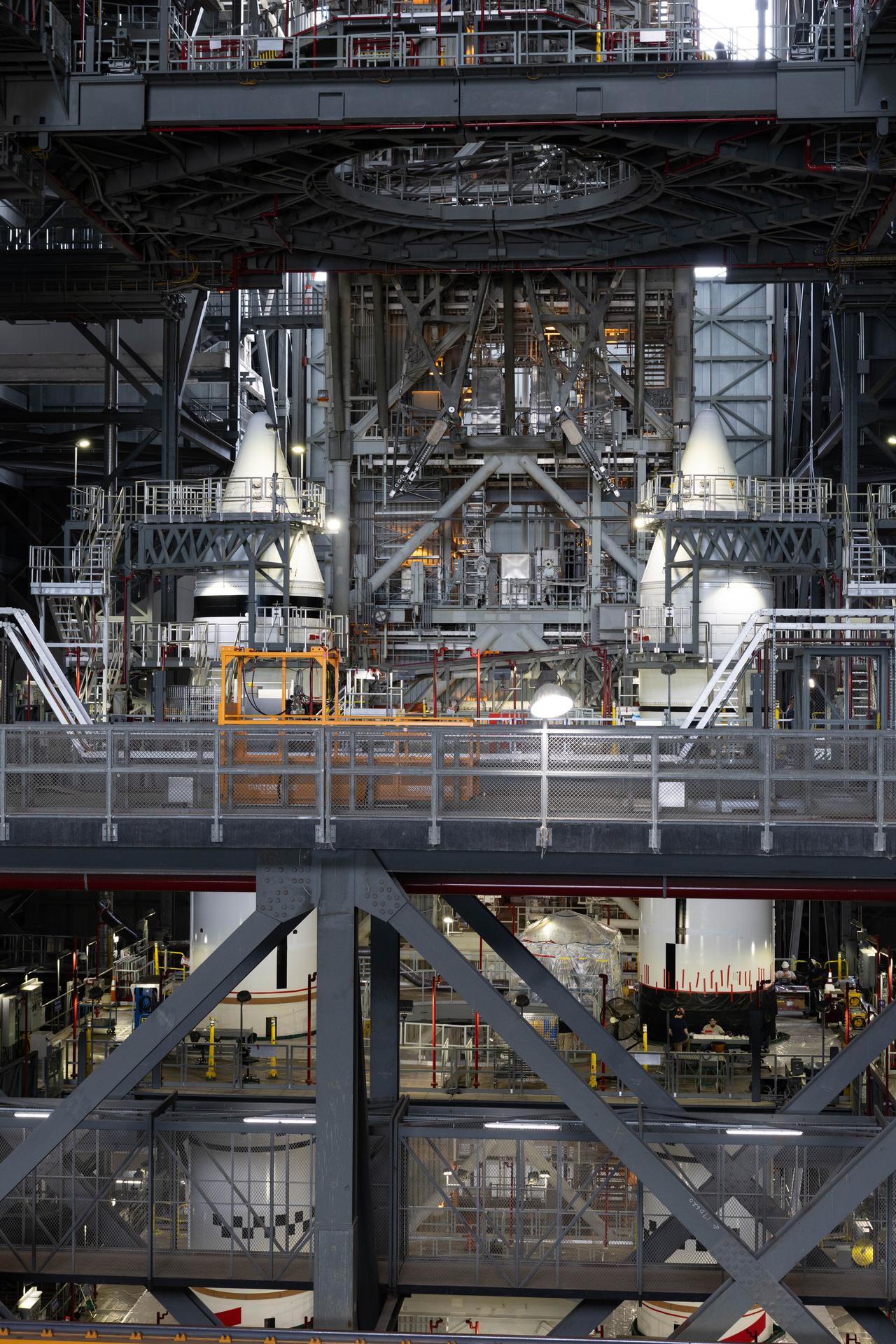
Stacking of the twin boosters began earlier in the summer, with initial placement of aft segments on Mobile Launcher 1 inside the VAB. According to NASASpaceFlight, the first pair of aft segments went on 13 July, the right aft-center segment followed on 12 August, and center segments were lifted for stacking on 20 August, first for the right booster and then the left. Each booster will ultimately include five segments; two motor segments remain to be fitted on each booster and will be capped by nose cones and forward skirts that are already staged inside the VAB awaiting installation.
Work in the VAB has proceeded in parallel in separate high bays. While booster stacking has been concentrated in High Bay 3, teams in High Bay 2 prepared the SLS core stage: its tank section arrived from New Orleans in spring and was mated to the engine section, and RS-25 engine installation has been underway. NASA imagery released with the progress updates shows the RS-25 engines installed in the core stage ahead of mating with the two solid rocket boosters on Mobile Launcher 1.
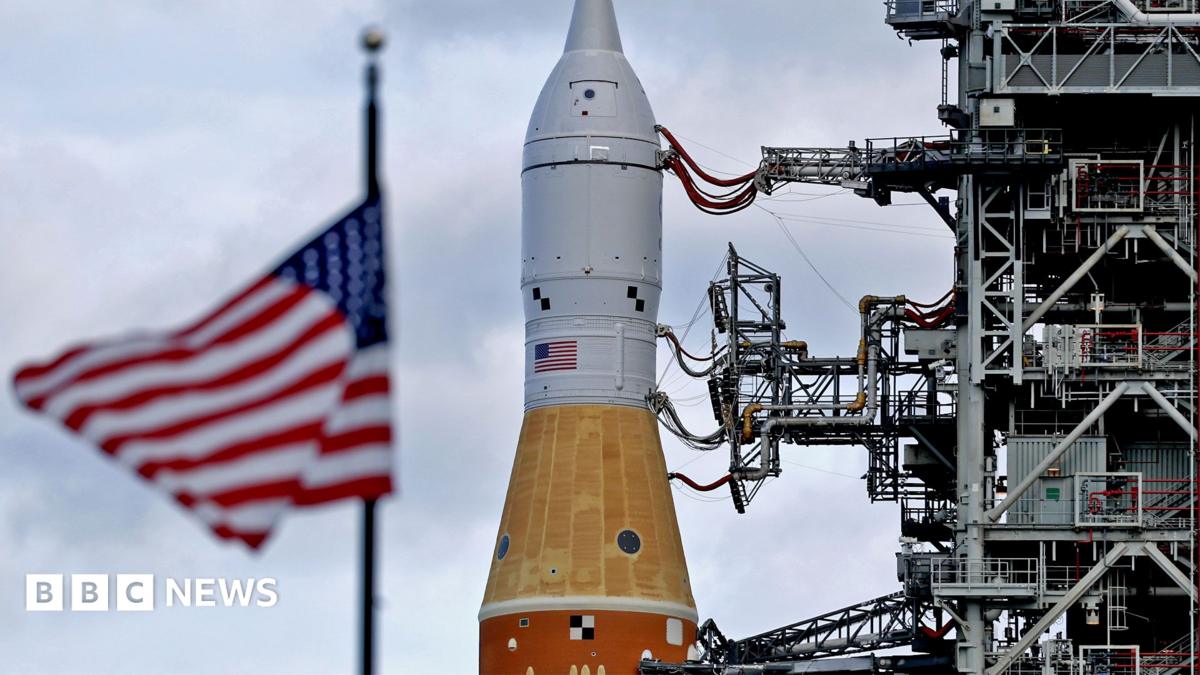
After the boosters and core stage are joined to form what NASA characterizes as a "short stack," the vehicle will be used to perform a propellant loading exercise. The short-stack configuration pairs the core stage with the two solid boosters but omits the upper elements; the test will exercise tanking procedures and timelines rather than a full launch dress rehearsal. Once the short-stack testing is complete, the rocket will be transferred from the VAB to Launch Complex 39B for a dedicated tanking test and associated operations.
Teams will also install an external tunnel along the core stage that houses some of the wired connections used during launch operations before final mating. During the planned stay on pad 39B, NASA has scheduled an exercise that will include the four Artemis III crewmembers: Randy Bresnik, Frank Rubio and André Douglas of NASA, together with ESA astronaut Luca Parmitano. The crew will rehearse day-of-launch procedures such as suit-up, transfer to the pad, and ingress onto the mobile launch platform.
At the Operations and Checkout Building, engineers completed umbilical connections between the Artemis III Orion crew module and its European Service Module; the crew module was powered through those umbilicals for the first time, confirming electrical connection and ground-support interfaces, NASASpaceFlight reports.
Artemis III remains scheduled to be a crewed mission that will carry Orion and a four-person crew and is targeted for no earlier than June 2027, according to NASASpaceFlight's reporting. While Artemis III will not travel to a lunar landing on this flight, NASA will use this mission to test elements of the lunar architecture alongside Orion.
Planned onboard crew activities and pad rehearsals reflect the continuing choreography required to integrate vehicle hardware milestones with astronaut training and ground systems checks. The completion of the booster assembly and the RS-25 installations represent discrete, measurable assembly milestones in a program whose elements are large, complex and proceed in parallel across multiple Kennedy Space Center facilities.
Historically, stacking and integration activities in the VAB have been central to NASA's heavy-launch programs, from Saturn V on Apollo through the Shuttle era and into SLS. The five-segment solid rocket boosters used on SLS are derived from heritage Shuttle-era SRBs but have been modified and extended for the SLS architecture, and RS-25 engines are flown again in a new configuration on the core stage.
Looking ahead, the short-stack tanking test on Launch Complex 39B will be a focal point for launch-vehicle verification: it will exercise propellant loading sequences, ground support equipment, and the interfaces involving the crew module and service module umbilicals. Success in these tests is required to progress toward later milestones such as a full stack configuration and, ultimately, mission launch operations.
NovΔ mAInd's launch database: The SLS Block 1B vehicle for Artemis III is scheduled for 2027-09-15 and has NOT flown yet; it is listed as a Crewed Spacecraft launch operated by NASA.
As NASA continues assembly and ground testing, the agency will balance technical checkouts, crew rehearsals and pad operations to meet schedule windows. The ongoing integration work documented in recent images and reports underscores the stepwise approach NASA is using to mitigate risk on one of its most complex launch vehicles.
Sources: NASA imagery and press updates as reported by AstroSpace.it; NASASpaceFlight reporting by Alejandro Alcantarilla Romera and Chris Bergin.