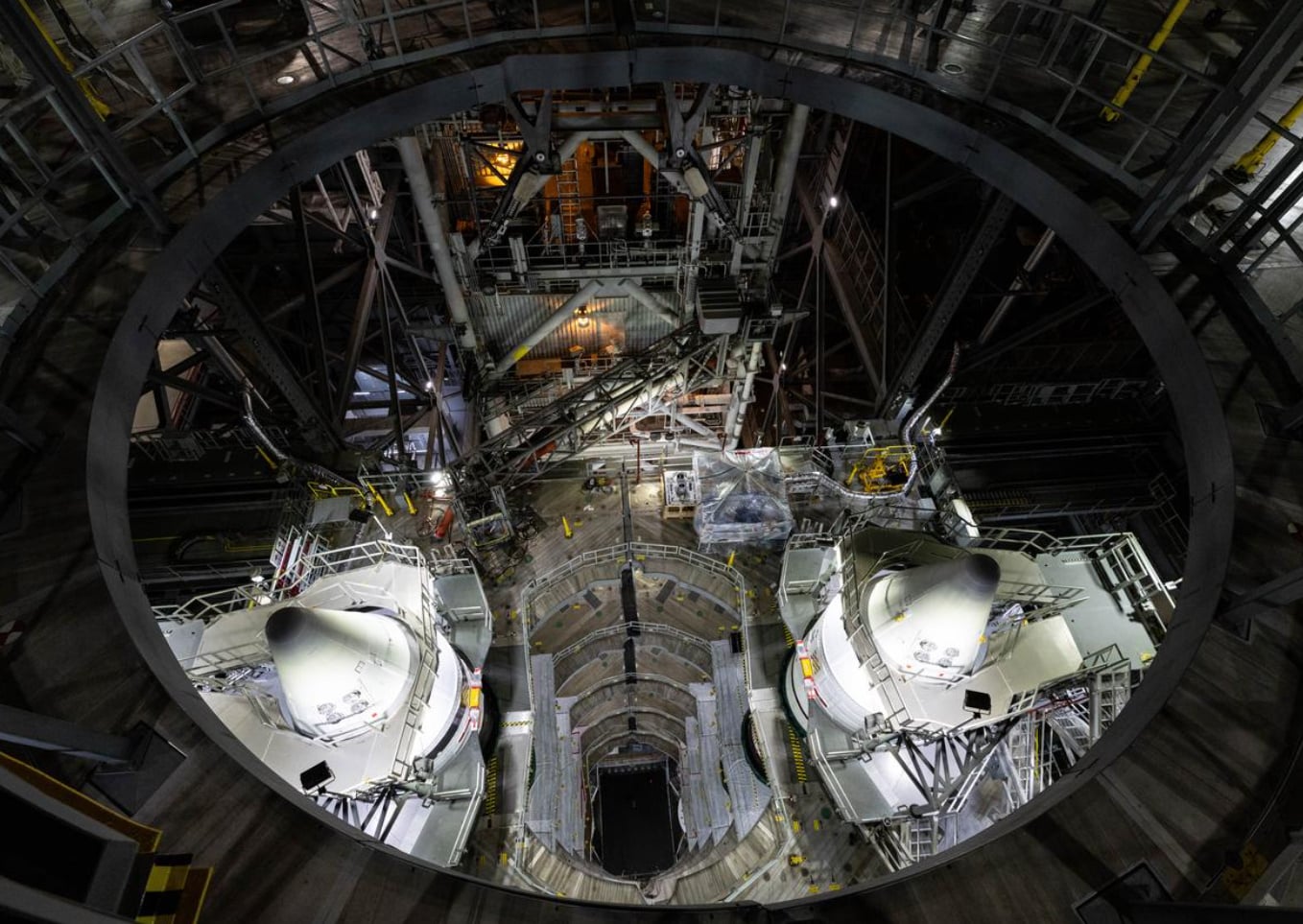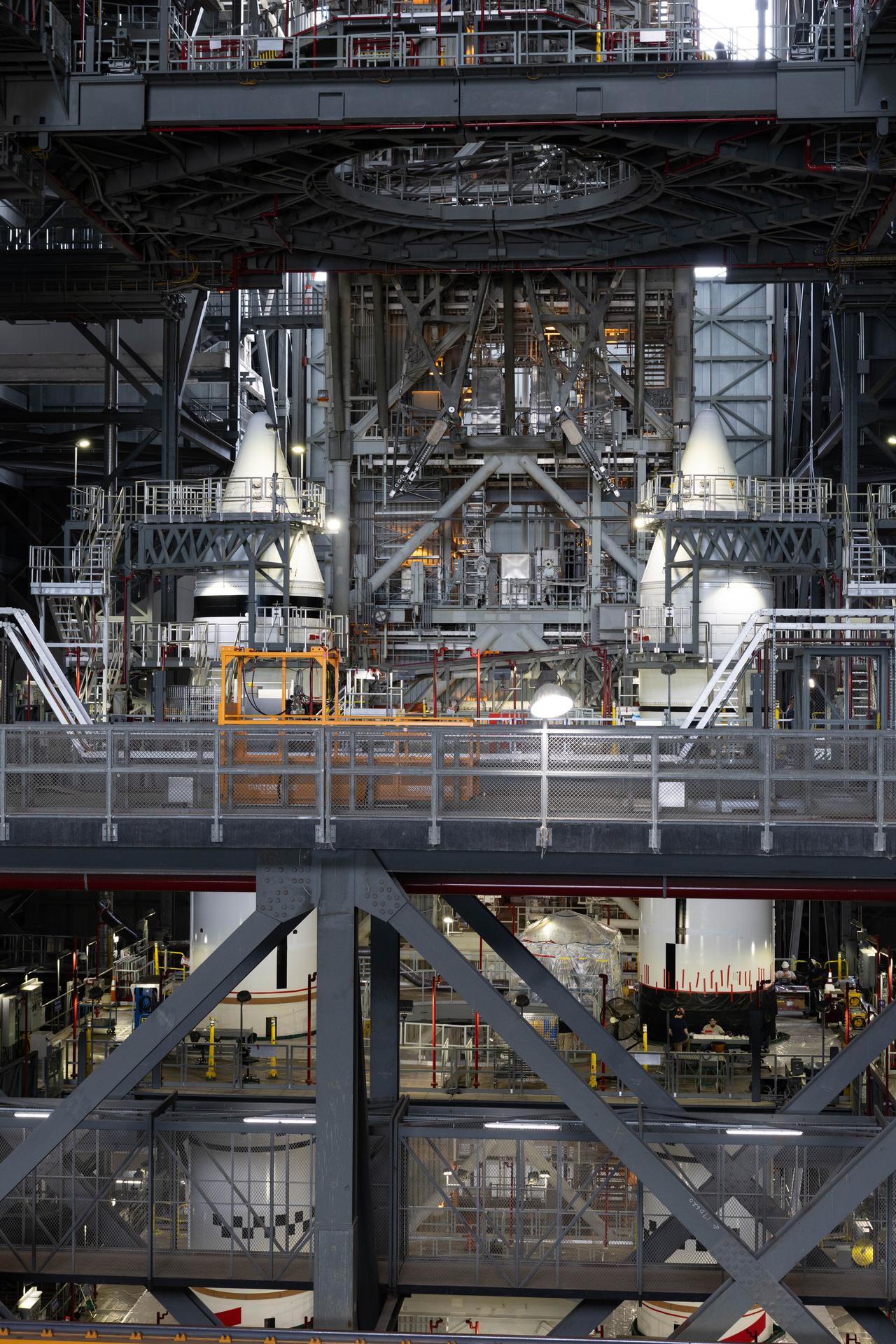
NASA has advanced Artemis III processing at multiple centers with two notable developments that push the Space Launch System closer to pad testing. On Oct. 28 technicians moved the 212-foot core stage into Vehicle Assembly Building High Bay 3 and integrated it alongside the previously completed twin five-segment solid rocket boosters. Separately, test teams at Stennis Space Center conducted a full-duration, 500-second firing of RS-25 development engine No. 10001 on Oct. 21, validating performance for the engines already installed on the Artemis III core stage.
Inside the VAB, the core stage lift used a custom lifting beam to place the stage adjacent to the booster stack for the “short‑stack” configuration that will undergo a pad tanking test. That short stack — consisting of the boosters and the core stage but without the interim cryogenic stage and Orion — is being readied to validate ground systems and cryogenic propellant loading procedures ahead of a transfer to Launch Complex 39B.
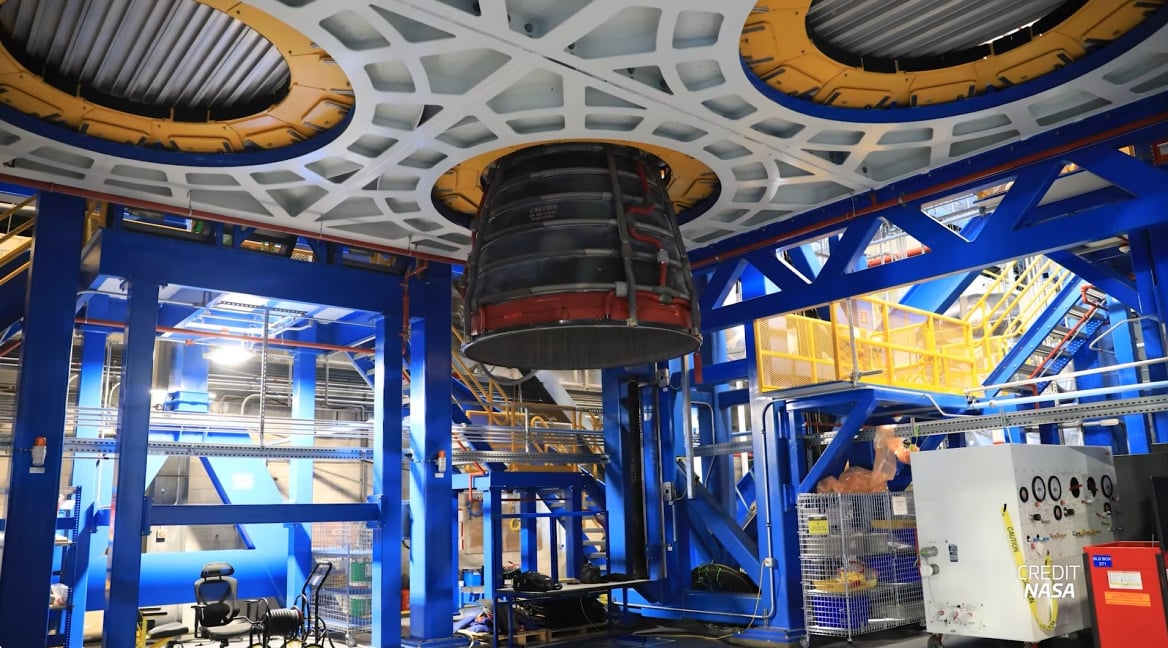
At Stennis, RS-25 engine 10001 fired for roughly eight-and-a-half minutes, matching the burn time the engines see in an actual SLS launch. The test completed planned steady-state and performance objectives, providing additional confidence in engine hardware and the flight-like conditions the RS-25s will face during Artemis III. NASA has already installed four RS-25 engines on the Artemis III core stage inside the VAB.
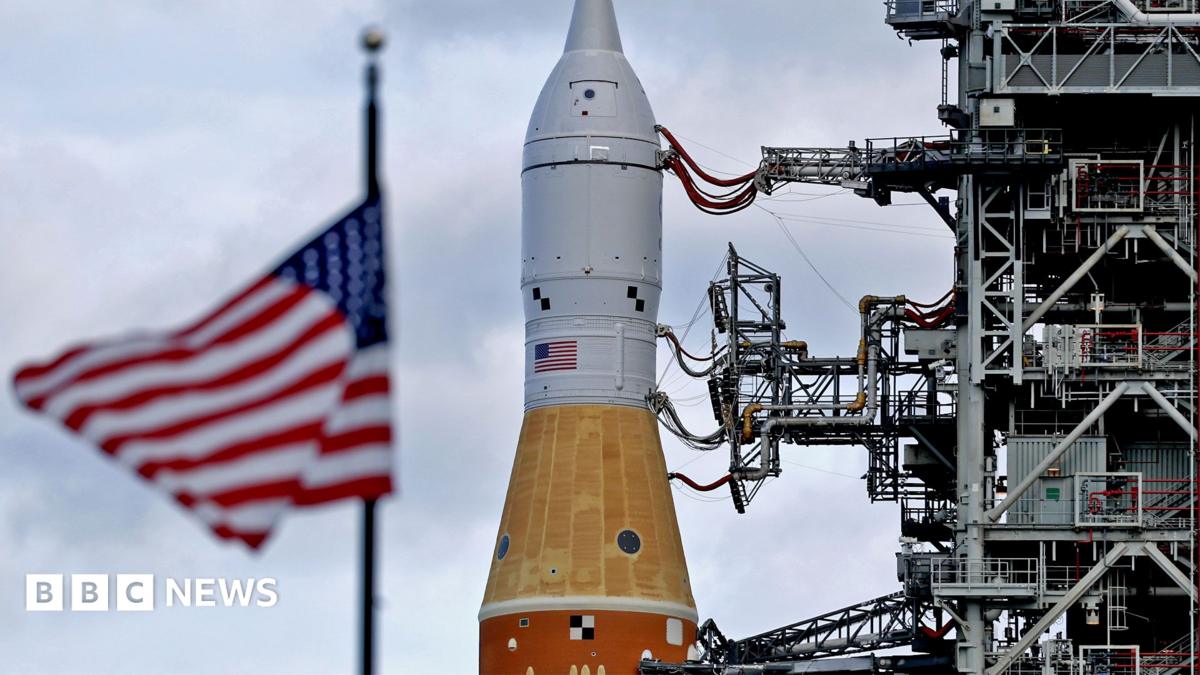
Together these steps — core stage integration beside the stacked boosters and the full‑duration RS-25 test — represent meaningful progress toward the short‑stack tanking demonstration and eventual rollout to LC‑39B. NASA teams will now focus on completing the short‑stack checks, conducting the tanking test to validate propellant loading and ground systems, and preparing for the next milestones en route to Artemis III launch operations.