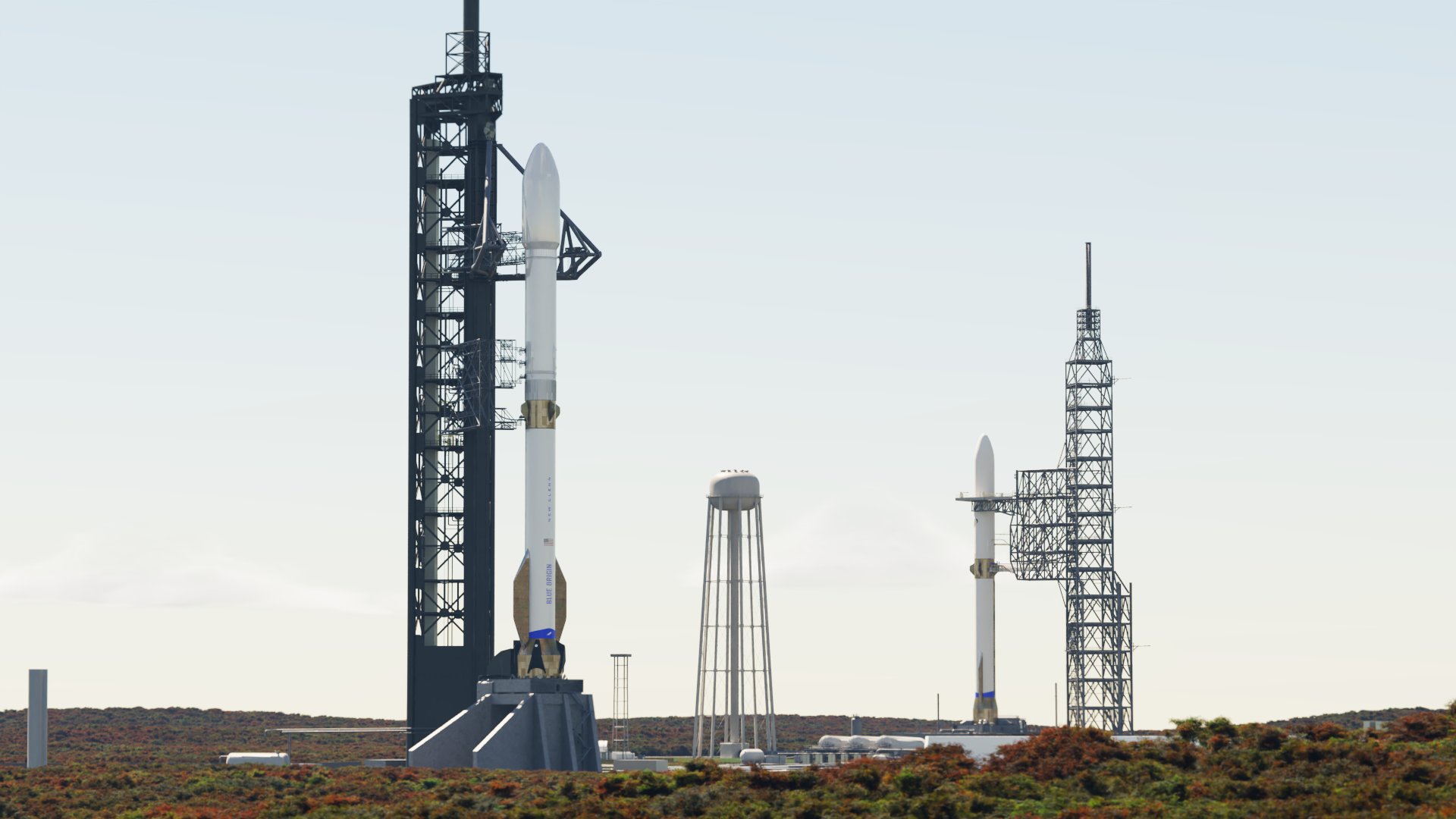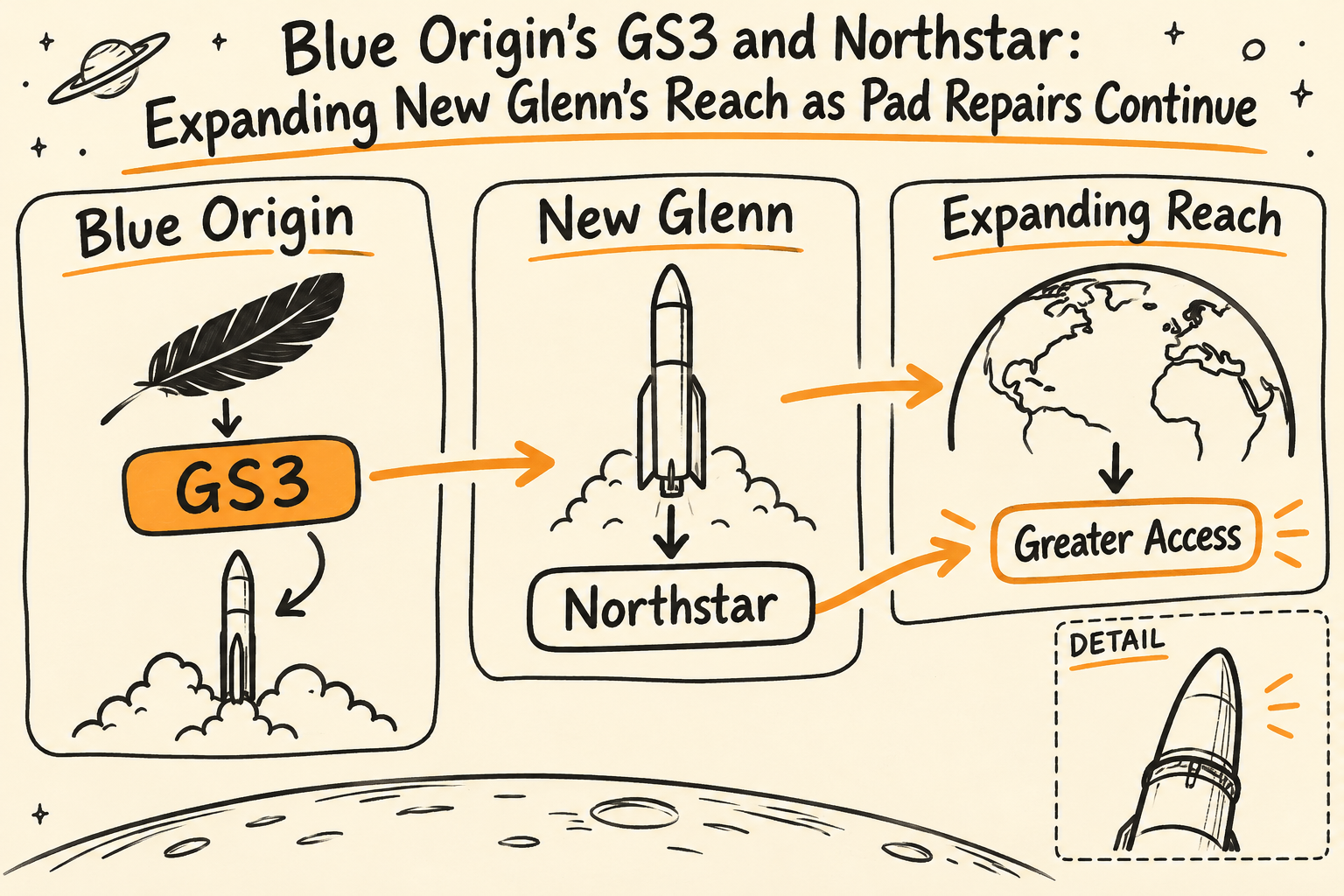
Blue Origin used an invite-only Up.Summit event at Kennedy Space Center to reveal two major additions to the New Glenn family: Glenn Stage 3 (GS3), a BE-7‑powered third stage designed for direct geostationary and Earth‑escape insertions, and Northstar, a new liquefied natural gas/liquid oxygen (LNG/LOX) first‑stage engine rated at 715,000 pounds of thrust.
What GS3 brings
GS3 is presented as a high‑energy toolkit that fits inside an interstage so that payloads retain full fairing volume and existing fixed payload adapters remain unchanged. Blue Origin lists mission options including direct insertion to medium Earth orbit (MEO) and geostationary orbit (GEO), multi‑payload deployment, extended coast phases and multiple precision burns. The company said GS3 is meant to cover missions the current two‑stage stack is not intended to handle, specifically direct GEO injection and Earth‑escape trajectories.
Performance figures published by Blue Origin show GS3 capability differences depending on the New Glenn configuration. On the 7×2 vehicle — the seven‑BE‑4, two‑upper‑engine configuration that has flown to date — GS3 is quoted at up to 8 metric tonnes to GEO and 10 metric tonnes to trans‑lunar injection (TLI). On the larger 9×4 variant Blue Origin previously outlined, GS3 is quoted at up to 14 metric tonnes to GEO and 20 metric tonnes to TLI.
Blue Origin said it already has a government customer booking for a cis‑lunar mission using GS3, with launch targeted for 2028. The company also noted that the stage is not required for its Blue Moon lander missions, but that delivering more mass directly to TLI could enable faster transit times and preserve propellant for on‑orbit operations, supporting sustained activity around the Moon.
Testing of GS3 hardware has already taken place at Blue Origin’s Launch Site One in Texas. The company reported pressurizing a composite liquid hydrogen tank to 100 percent of its stated Maximum Expected Operating Pressure (MEOP) for 2.5 hours and to 150 percent of MEOP for 10 minutes. Blue Origin said it expects the GS3 tank to be the first composite LH2 tank flown in space.
Northstar engine details
Northstar is a LOX/LNG staged‑combustion first‑stage engine Blue Origin says is compatible with New Glenn. The company published a thrust rating of 715,000 pounds for Northstar, compared with 640,000 pounds for the BE‑4. Blue Origin stated Northstar went from program approval to development testing in 11 months and retains an LNG‑fueled, oxygen‑rich staged combustion cycle and single‑shaft turbopump architecture similar to prior developments.
Reporting by multiple outlets cited Blue Origin comments that Northstar will sit alongside the BE‑4 in the company’s propulsion line up; one source noted BE‑4 would still power the return‑to‑flight mission that follows the late‑May pad explosion. Blue Origin did not name which specific New Glenn variants will fly Northstar or give a flight timeline for the new engine in the materials released.
Context: New Glenn’s operational picture
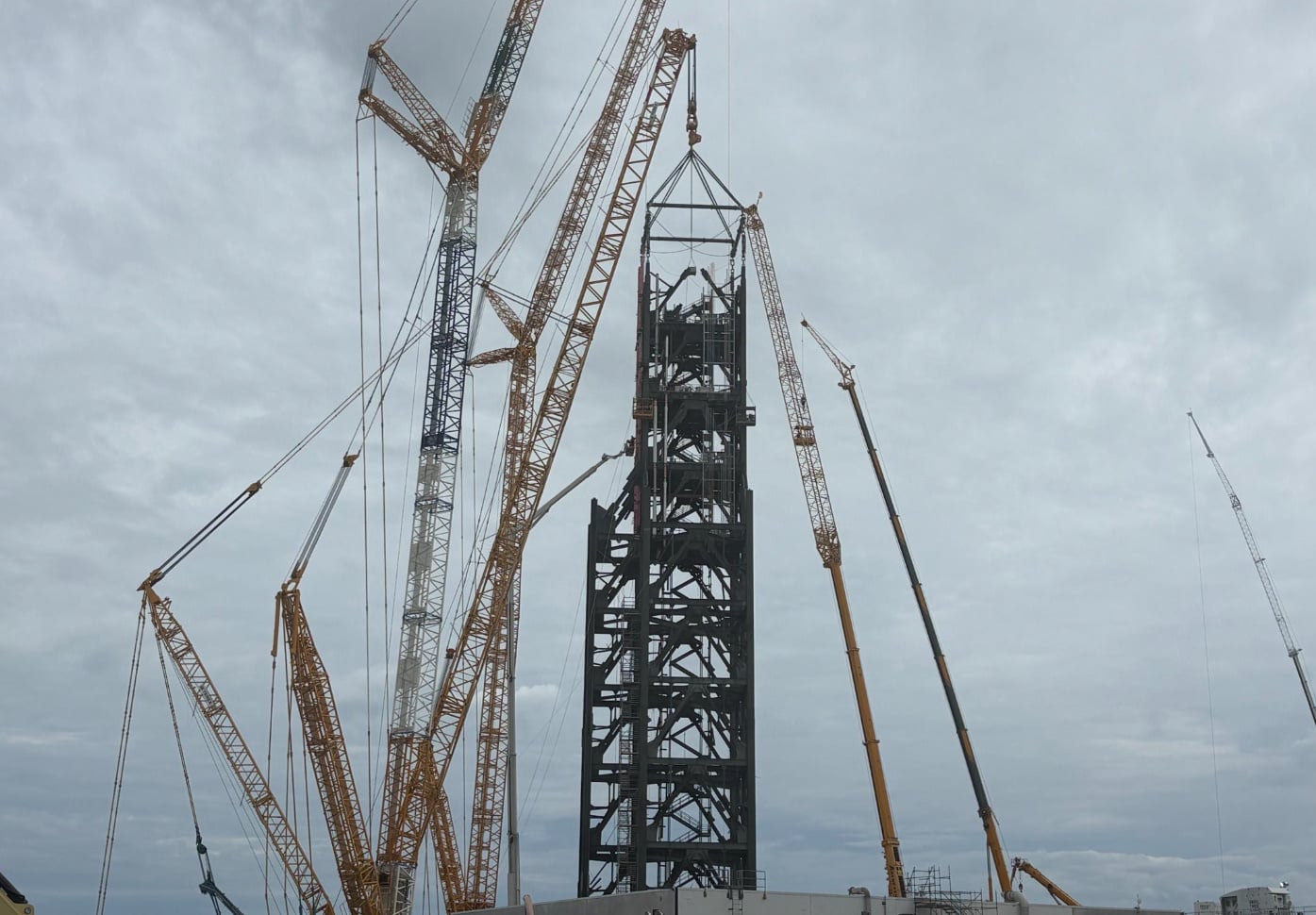
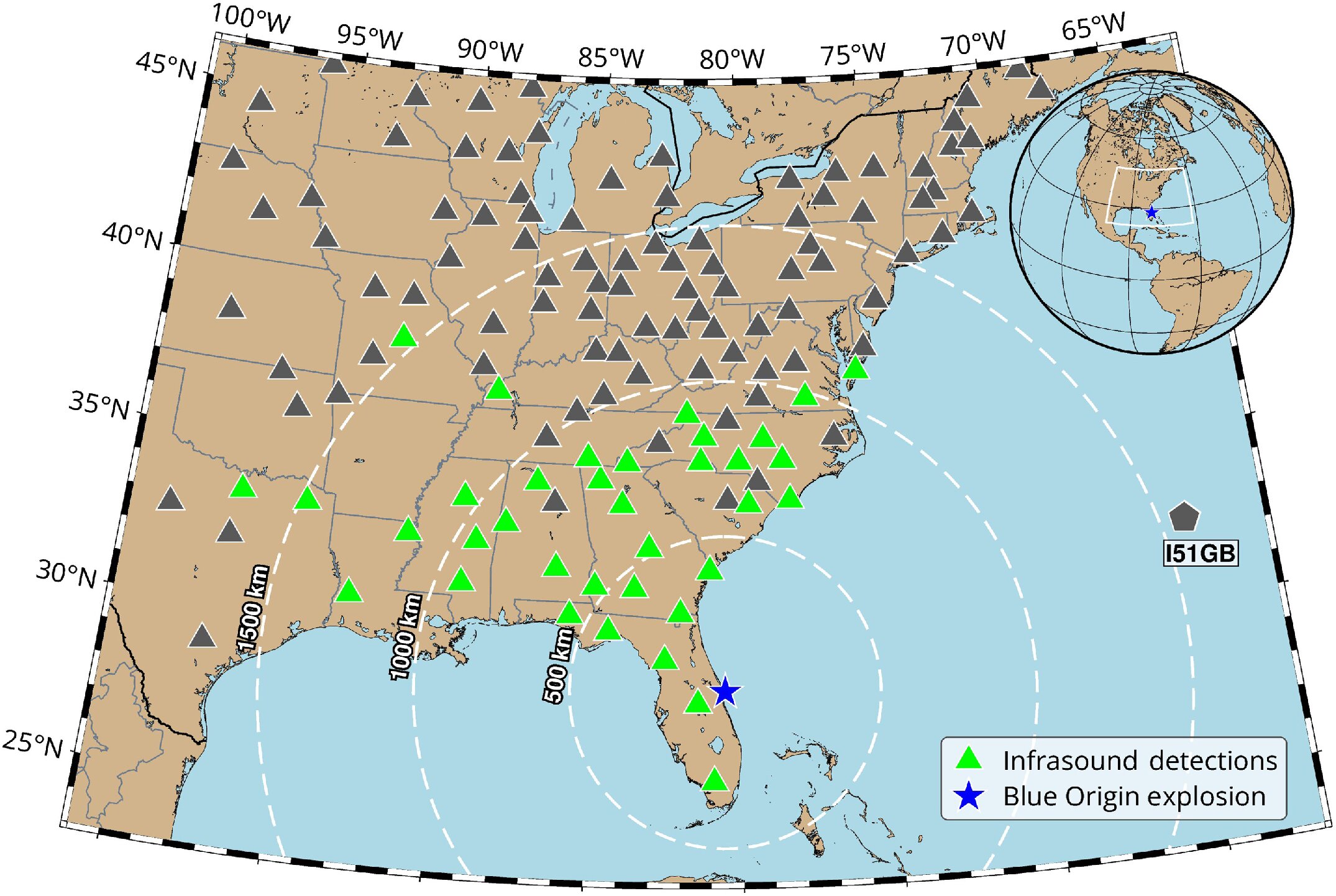
The announcements come as Blue Origin continues work to return New Glenn to flight after a static‑fire pad explosion on May 28 destroyed the NG‑4 vehicle on LC‑36. New Glenn has flown three times to date in the 7×2 configuration, and Blue Origin has been preparing a return‑to‑flight mission that company messaging and industry reporting place in 2027 while rebuilding Cape Canaveral pad infrastructure.
GS3 adds a capability that changes typical post‑launch tracking signatures by enabling direct insertion to GEO rather than depositing satellites into geostationary transfer orbit for their own propulsion to complete the climb. That capability, combined with Northstar’s higher thrust rating, signals Blue Origin’s bid to broaden New Glenn’s market into heavy GEO and cislunar payloads, including work for government customers.
Blue Origin characterized GS3 as built on proven New Glenn hardware to preserve the customer payload experience, and multiple reports reiterate that a government cis‑lunar booking is already on the manifest for 2028, though the customer was not named in company materials.