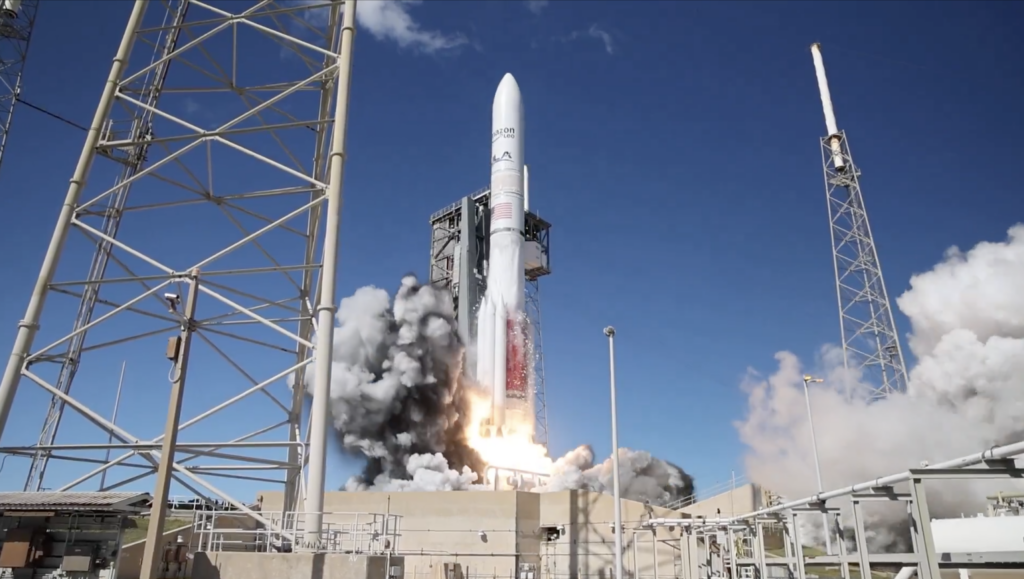
United Launch Alliance (ULA) reported on Nov. 17 that early data indicate low booster performance in Vulcan’s core first stage caused the failure of the company’s Nov. 15 Vulcan Centaur flight carrying 40 Amazon Leo satellites.
According to ULA, the anomaly began just after liftoff. The underperformance resulted in stage separation occurring when the vehicle was “low in altitude and below minimal velocity to reach orbit.” Telemetry and mission control appear to have been lost roughly 10 minutes into flight, by which time the Centaur upper stage had been operating but could not compensate for the shortfall.
Vulcan’s first stage is powered by two BE-4 engines built by Blue Origin. ULA’s statements stopped short of assigning blame to the engines, saying it is very early in the investigation and that the company wants to avoid speculation. Blue Origin said it is supporting ULA with data and analysis from the BE-4s. The Federal Aviation Administration (FAA) will oversee the ULA-led mishap investigation and must approve the final report and any corrective actions.
ULA added that the six Northrop Grumman solid rocket boosters (SRBs) appeared to perform nominally on this flight; those SRBs had been the source of nozzle problems on two earlier Vulcan missions. The Centaur V upper stage—equipped with two L3Harris/Aerojet Rocketdyne RL10 engines—“started nominally” and its engines operated as planned but were unable to recover the vehicle’s lost performance.
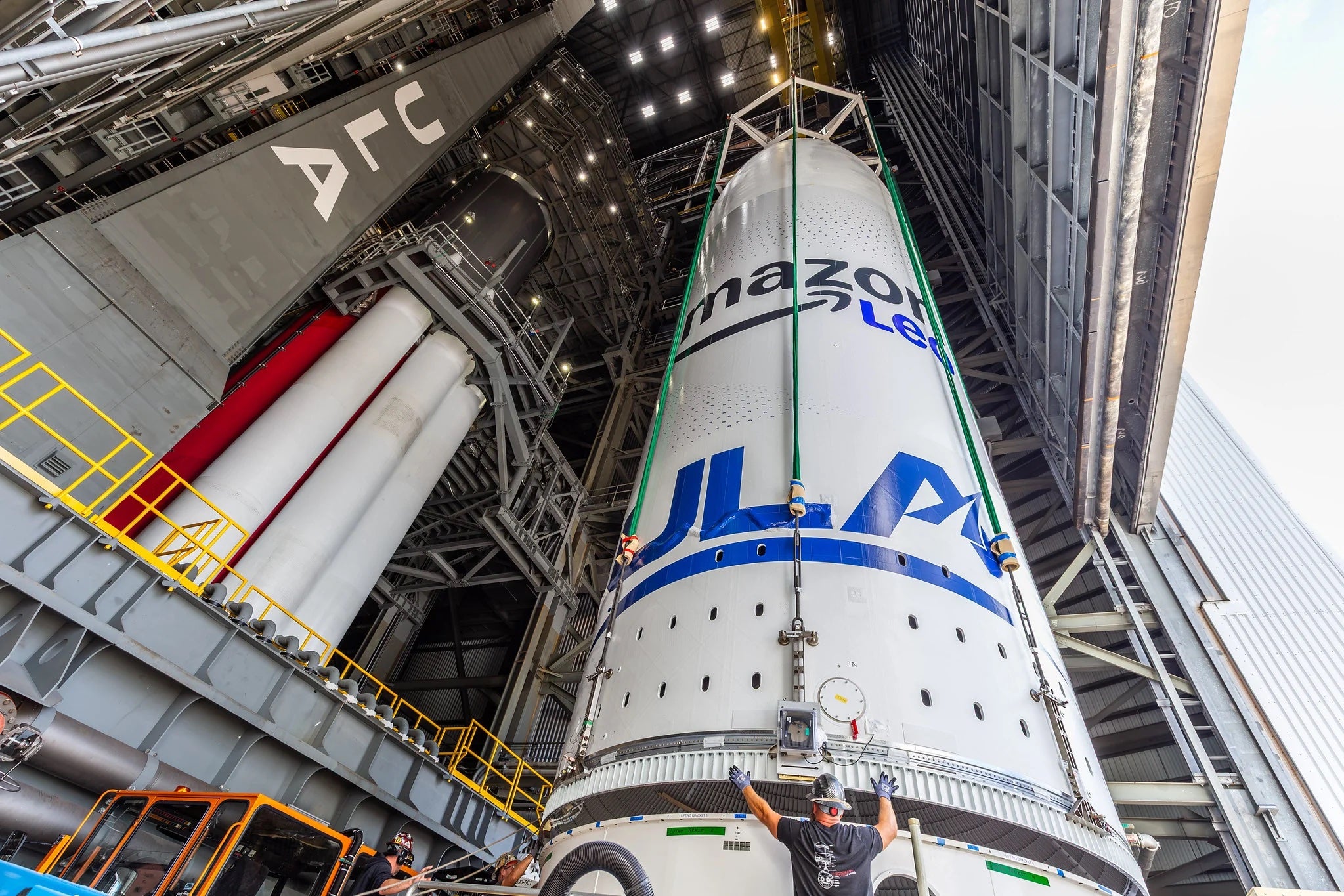
The lost payload comprised 40 satellites for Amazon’s Leo broadband constellation (formerly Project Kuiper). This was the first of 38 Vulcan launches Amazon has contracted to carry more than 1,500 of its first-generation satellites. Amazon has previously launched 396 Leo satellites across 14 successful missions on other rockets; the company has also reserved 24 New Glenn launches and slots on Atlas V, Falcon 9 and Ariane 6. Amazon said launching carries risk, particularly for inaugural missions, and expressed confidence ULA will learn from the flight.
Before the Vulcan flight, Blue Origin had retrofitted BE-4s with a kit intended to address a May ground-test failure of New Glenn traced to a BE-4 oxidizer-valve issue; ULA CEO Mark Peller had said those retrofits were installed for this mission. ULA and industry sources note, however, that an investigation is required to determine whether the BE-4s, propulsion-feed hardware, or another element of the booster caused the shortfall.
The failure marks the first total mission loss in ULA’s history. Vulcan had flown five times, with prior flights overcoming SRB nozzle anomalies on two occasions to reach orbit. ULA said it understands the impact on customers and is committed to returning the vehicle to flight “as safely and quickly as we can.” The FAA will be involved in every step of the mishap review.