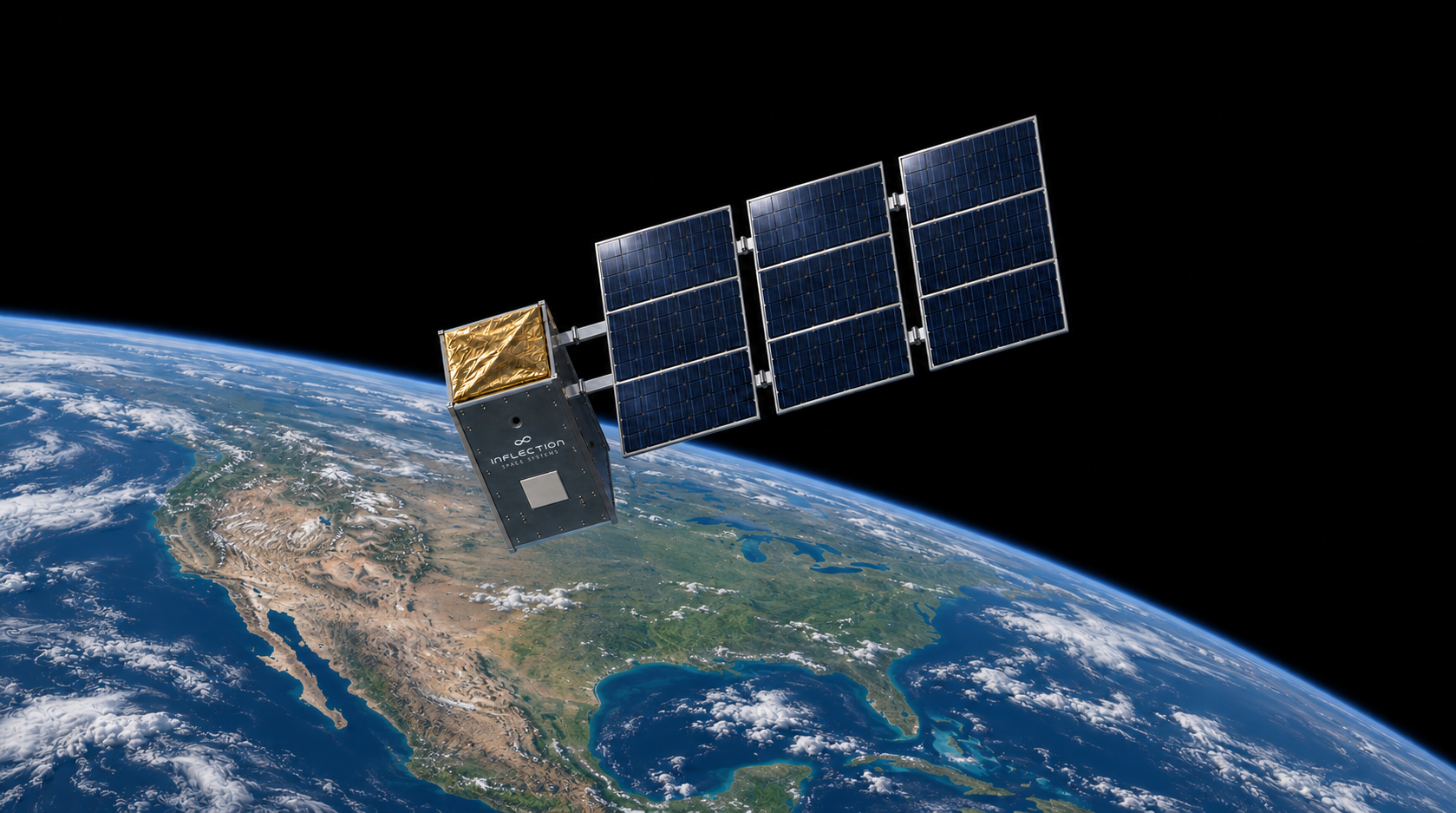
Inflection Space Systems books first orbital mission for Pax cubesat, NET 2028
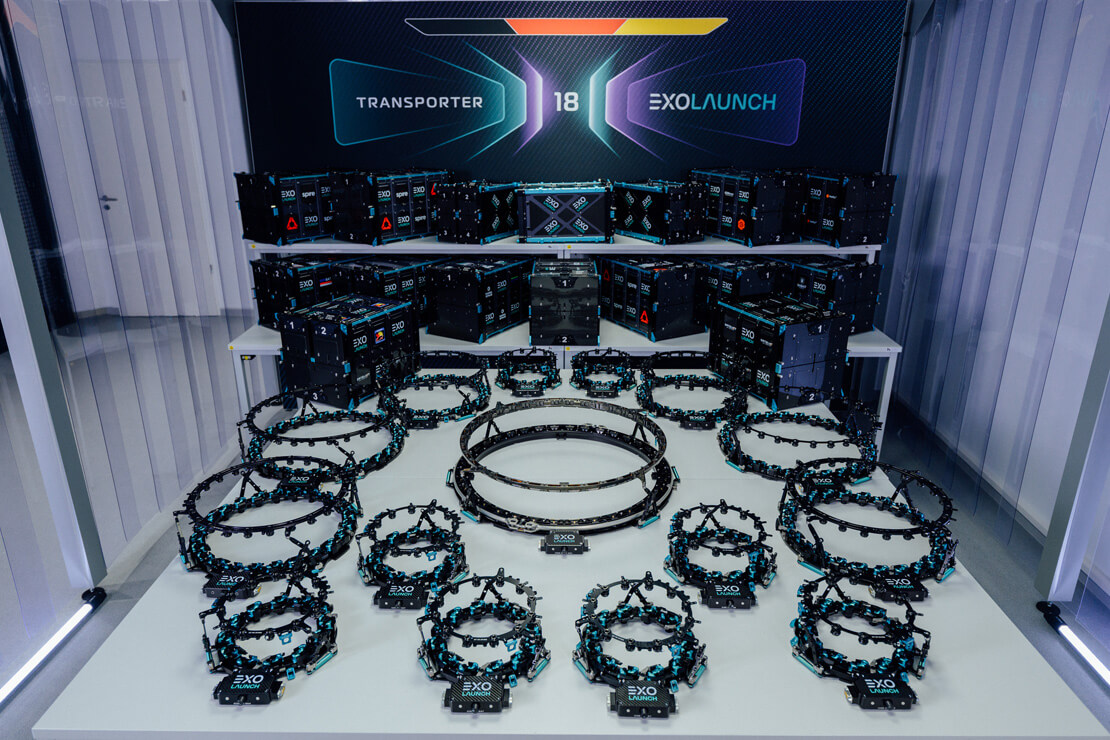
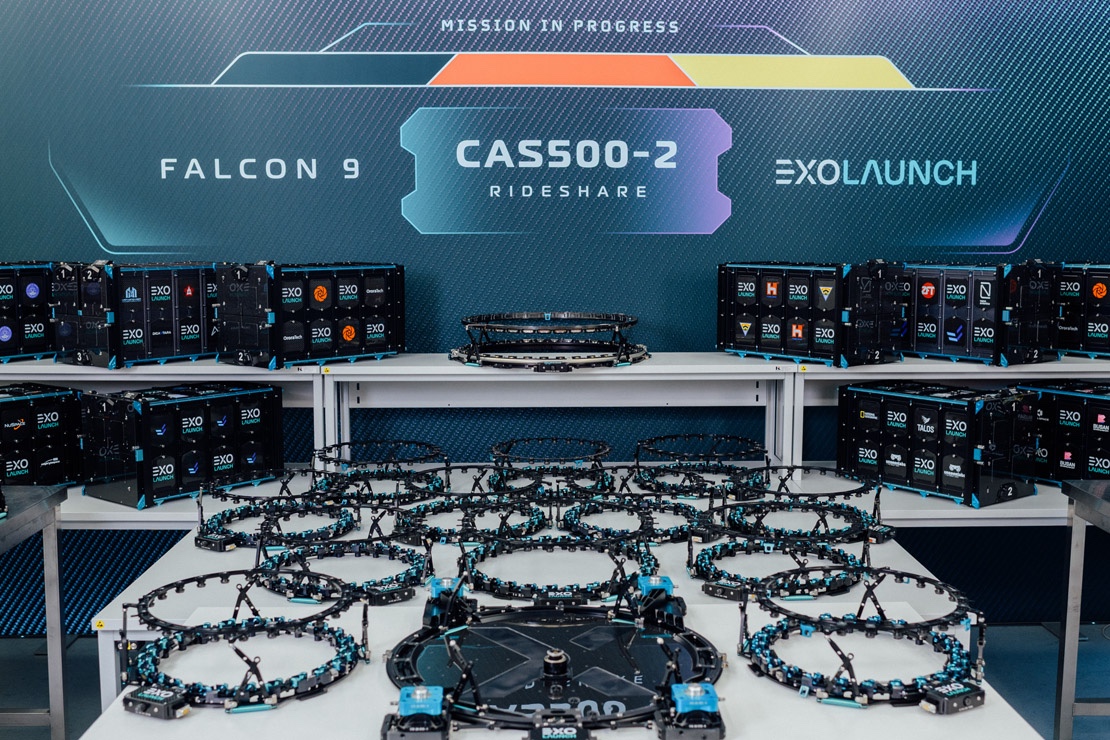
Inflection Space Systems has booked its first orbital mission: the Pax pathfinder cubesat will fly NET 2028 on a rideshare provided by Exolaunch, the company announced in an exclusive report by Payload on 2026-11-18.
Pax is a 16U, 36-kg cubesat designed to gain flight heritage for avionics, sensors, power systems and spacecraft structures that Inflection plans to scale into a standardized production bus called Exponent. Exponent is planned to be substantially larger than Pax—up to 300 kg at launch, carrying 100 kg of customer payload and delivering 1.5 kW of power.
Inflection, backed by Y Combinator, frames its business model around high-volume, low-mix manufacturing. Alex Lisso, Inflection’s CEO and cofounder, told Payload that the company’s goal is to move the space sector away from “high-mix, low-volume” production—where most satellite makers build a handful of tailored designs—toward producing a single design in bulk to serve anticipated demand for constellations such as orbital data centers, Golden Dome and satcom applications. Lisso said "30,000 [satellites] is a trivial number compared to the number of drones or boats or cars or iPhones we’ve built."
Pax will serve both technology and manufacturing validation roles. The mission will test Inflection’s manufacturing readiness level (MRL) as well as technology readiness level (TRL); the company aims to complete Exponent’s critical design and build a first Exponent unit by the end of 2027, then to ramp production in 2028.
The Pax payloads include an on-orbit radiation testbed from The Radiation Team and Indiana University’s Center for Reliable & Trusted Electronics. After commissioning, that radiation experiment will remain powered for the remainder of Pax’s planned three-year mission, a company spokesperson told Payload: "The longer it operates, the better for them," Lisso said. Pax will also carry a second customer tech-demo payload to be named later.
Inflection’s roadmap ties the small Pax demonstrator to a much larger ambition: build Exponent spacecraft by the thousands to meet projected needs for large constellations. The Pax flight is explicitly positioned as a ‘‘taste test’’ of both the company’s hardware and its ability to manufacture at scale.
Details in the Payload report note the rideshare is booked through Exolaunch and that Pax’s mission is scheduled NET (no earlier than) 2028. The report does not specify a launch provider or precise launch date.