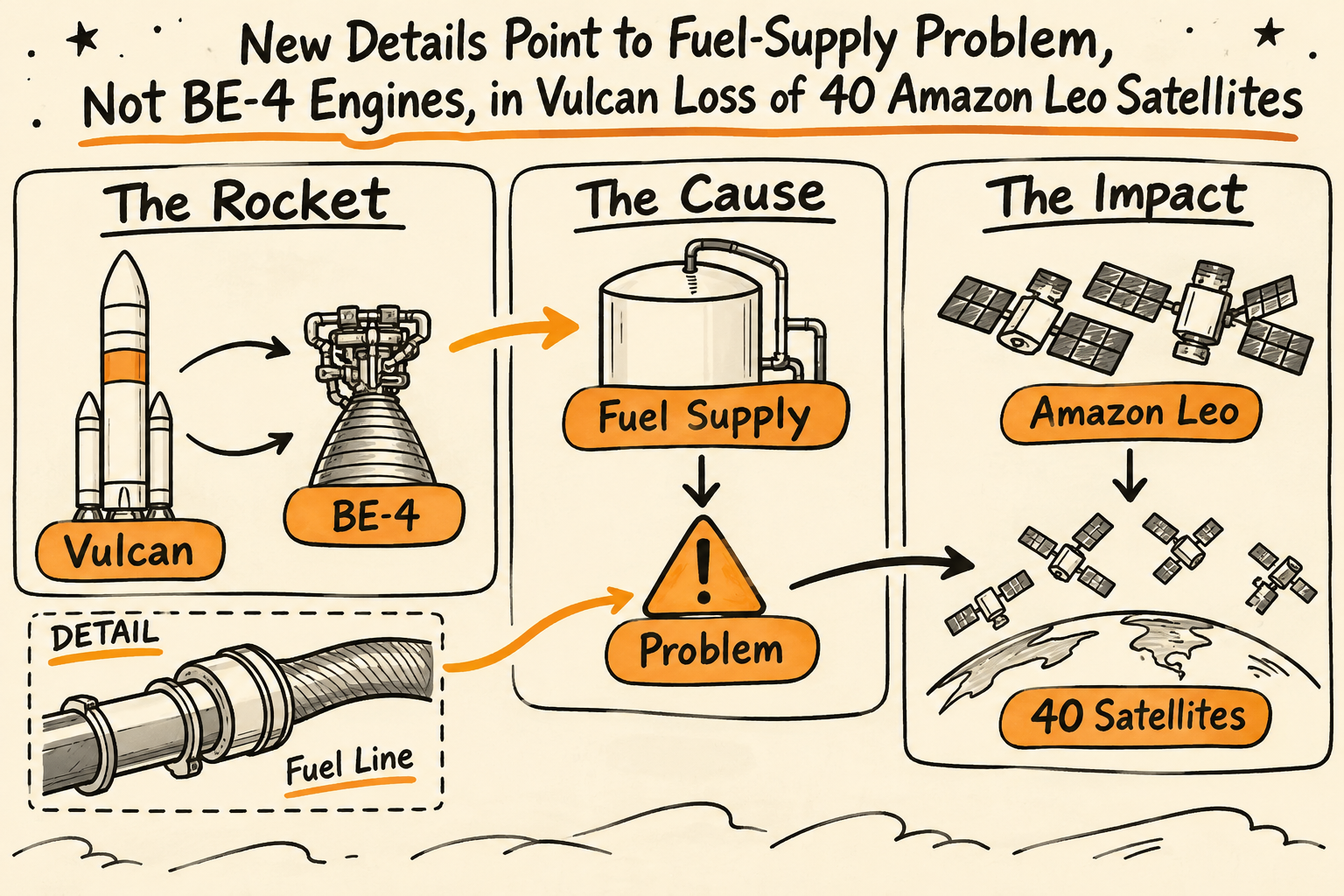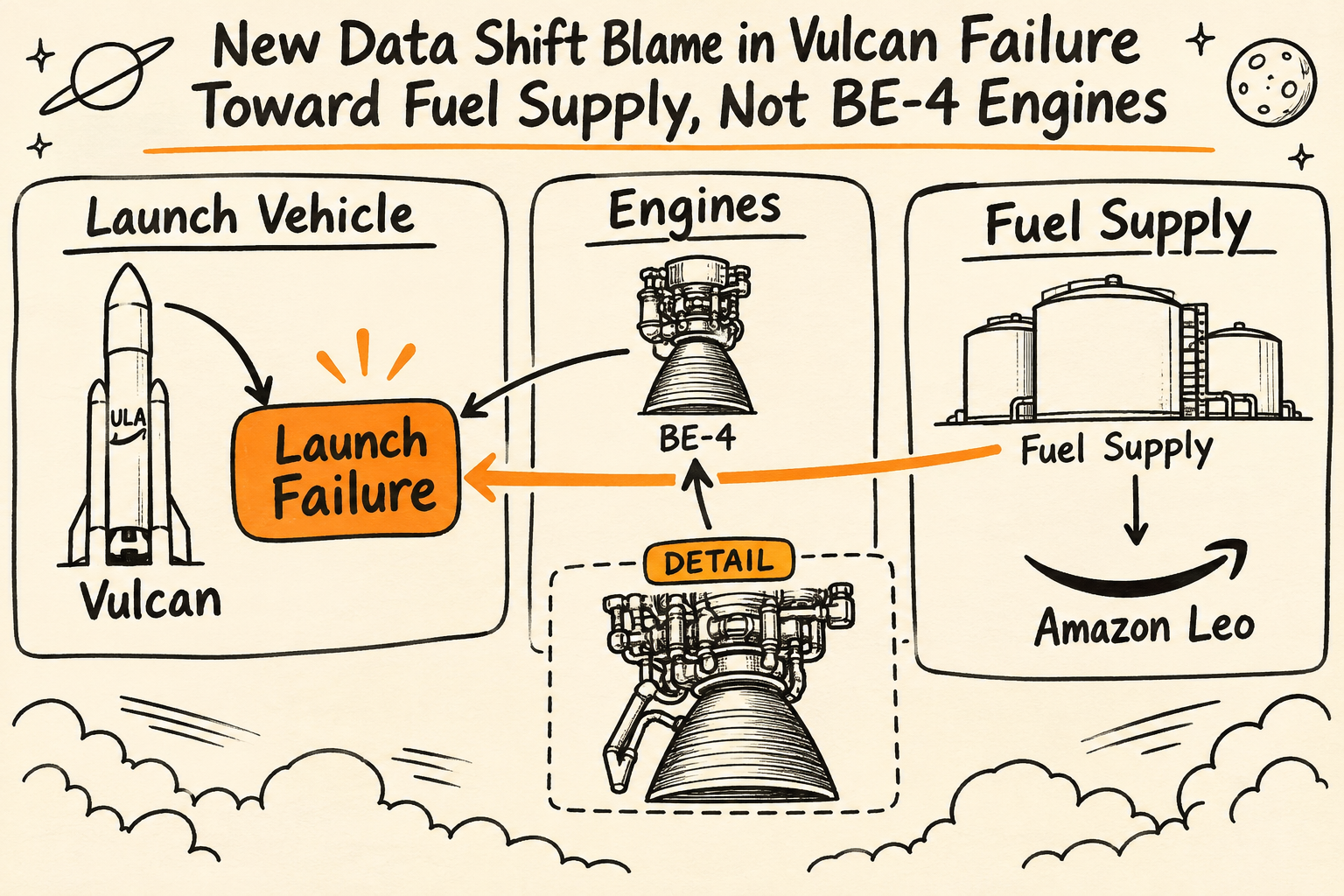
United Launch Alliance (ULA) has moved the focal point of its investigation into the Nov. 15 Vulcan Centaur failure from an engine malfunction to the vehicle’s fuel supply system. In a preliminary integrated review of flight data released Nov. 18, ULA said the rocket’s first stage produced low thrust because of an "inadequate fuel supply from the vehicle to the BE-4 engines," rather than poor performance of the engines themselves.
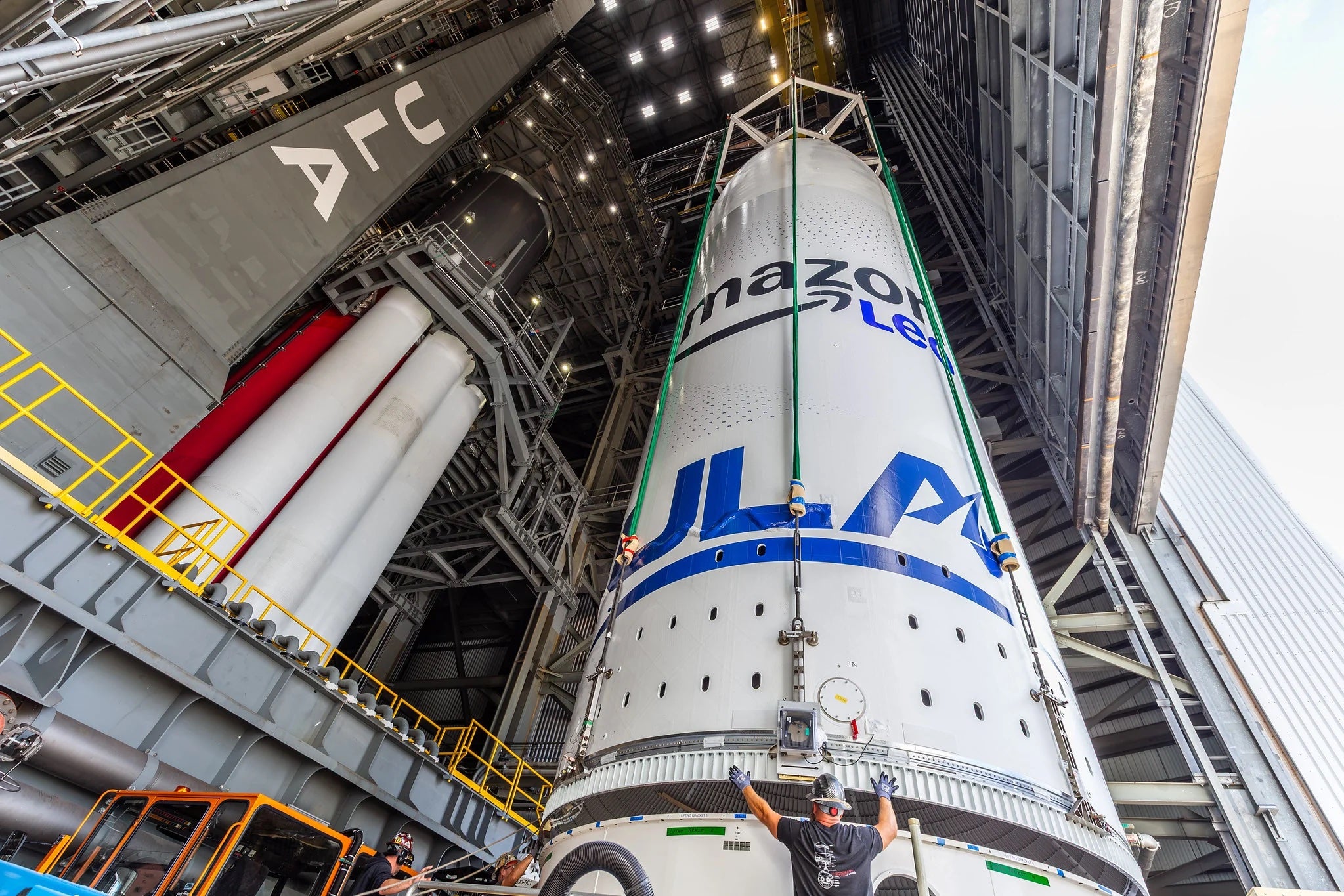
The launch, designated Leo 1, lifted from Cape Canaveral and carried 40 satellites for Amazon’s Amazon Leo broadband constellation. About 10 minutes after liftoff ULA confirmed it had lost the vehicle and payload. ULA traced the anomaly to the first stage — the central core that is powered by two BE-4 methalox engines built by Blue Origin — and said that low booster performance left the vehicle too low and too slow to reach orbit. The Centaur V second stage appeared to start nominally and its Aerojet Rocketdyne RL10 engines operated as planned, but could not recover from the first-stage performance shortfall.
Multiple outlets reporting on ULA’s update emphasized the distinction ULA drew between engine health and fuel delivery. ULA’s statement, cited by SpacePolicyOnline, Space.com, GeekWire and Scientific American, noted that preliminary indications point to inadequate fuel supply from the vehicle to the BE-4s. ULA also said that the six strap-on solid rocket boosters (SRBs) used on this mission performed nominally; those boosters had been the source of nozzle problems on earlier Vulcan flights, and nozzle modifications implemented for this launch appear to have worked.
The finding relieves, at least provisionally, some immediate pressure on Blue Origin and its BE-4 engines. Blue Origin’s BE-4s are used both on Vulcan’s first stage (two engines) and on Blue Origin’s own New Glenn rocket (seven or more engines depending on configuration). New Glenn suffered a catastrophic failure during a May 28 test that was linked to a valve problem, and Blue Origin subsequently has been working to return that vehicle to flight. ULA said the engines themselves did not display performance anomalies in the preliminary review, and Blue Origin confirmed it is collaborating with ULA on the investigation.
ULA has characterized its review as preliminary and said work remains to determine the root cause. The Federal Aviation Administration (FAA) is overseeing the ULA-led investigation and will follow each step, including approving the final report and required corrective actions before Vulcan returns to flight. ULA warned that the investigation and FAA oversight will determine when the rocket can fly again.
Context within Vulcan’s early flight history
The Nov. 15 flight was the fifth flight of the Vulcan Centaur, the successor to ULA’s Atlas V. Vulcan debuted in January 2024. Two earlier Vulcan flights experienced SRB nozzle burn-through and detachment around 30 seconds into flight; those missions nonetheless reached orbit. The SRB nozzle problems led to design tweaks by ULA and Northrop Grumman, and ULA noted that the SRBs on the Nov. 15 flight performed normally, suggesting the nozzle fixes implemented after prior incidents were effective.
Including the Nov. 15 loss, three of Vulcan’s five flights have had anomalies, and this was ULA’s first total mission failure in roughly 20 years of operation. The lost payload represented a major blow to Amazon’s Amazon Leo deployment: Amazon had previously booked additional Vulcan and New Glenn launches to support its constellation rollout.
Until the investigation concludes, ULA has urged against speculation and emphasized reliance on flight data. The company said the second stage’s apparent nominal behavior and the solid boosters’ performance leave the core, and specifically the vehicle’s fuel supply to the BE-4s, as the principal area of focus. The FAA’s oversight will shape the investigation timeline and the conditions under which Vulcan may return to flight.