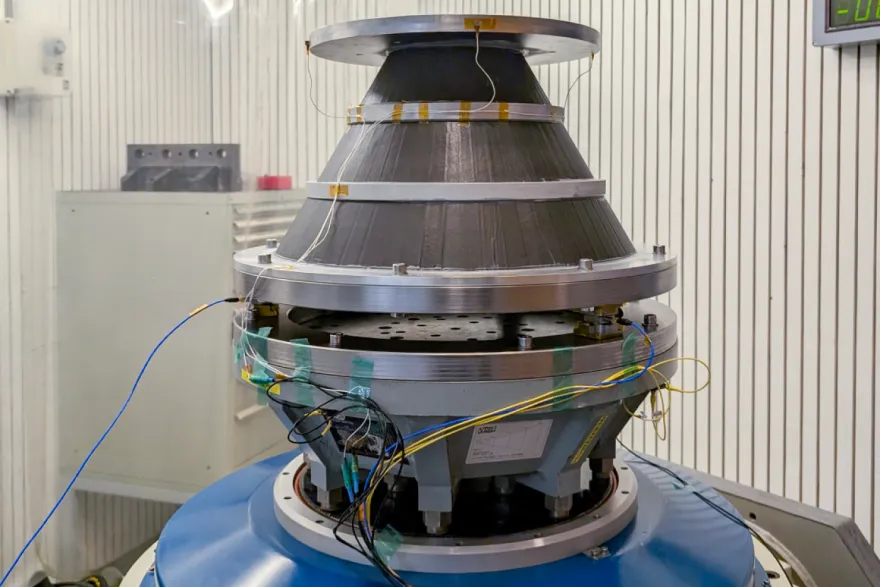
Verde Technologies has signed a contract to send its lightweight, ultra-thin perovskite solar cells to the International Space Station no earlier than June 2027, company officials told Payload. Payload corrected its original report to say that Verde signed the ISS agreement with a contractor, not with another party as first stated. The experiment is part of NASA's Materials International Space Station Experiment (MISSE), which tests new materials and components on the orbital lab.
The cells will be bolted to the outside of the station for six months and then returned to Earth for analysis. The research aims to validate Verde's perovskite technology in space for the first time. If it succeeds, Verde wants to begin producing and selling solar cells to spacecraft operators at scale.
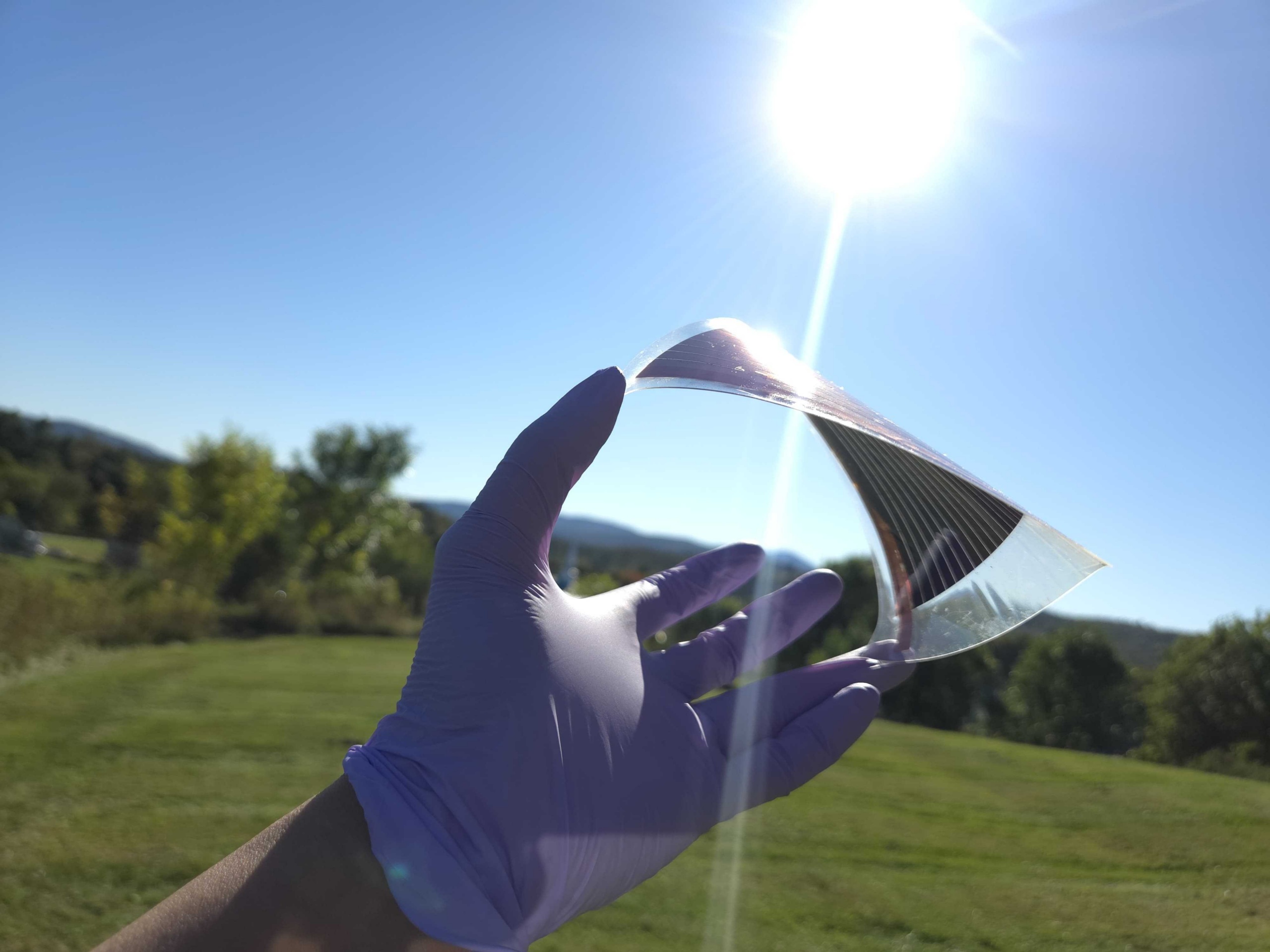
Verde's cells are perovskite-only. They are printed directly onto a lightweight, flexible substrate, whereas other manufacturers print perovskite onto silicon or glass. The cells can be folded or rolled tightly for launch and then deployed into extra-large structures, with partners helping to keep the whole array rigid.
"The plan for us is to validate the technology completely, then start entering the market in steps," CEO Jean-Noel Poirier told Payload. He said the company would start with "satellites [and] high-altitude drones that actually really value that type of material," then move to "smallsats and big sats, constellations [and orbital] data centers."
Verde was founded to serve the terrestrial solar market. The ISS mission comes one year after it pivoted to space and high-altitude applications. The company says the goal is to lighten the solar-cell load on satellites and drones, which cuts vehicle weight and, in space, total mission cost. A surge in demand from satellite builders also drove the pivot, according to Verde officials.
The space industry projects tens of thousands of new satellites in orbit over the next five years. Many will serve higher-energy applications such as power beaming and orbital data centers, so demand for satellite solar panels is growing even faster than demand for spacecraft.
Poirier said builders have few options for lightweight cells. "You have two solutions: One is gallium arsenide, which is the cells used by NASA for long-term exploration. They work great…but there is no [production] capacity," he said. "Two, you have silicon. Silicon is plentiful on Earth…but it is not a good solution for space. It degrades…it's inefficient…It's heavy, it's clunky, and the transparent elephant in the room right now is that [most] silicon comes from China."
Verde pitches perovskite-only cells as a third option. Without silicon, the company says it can avoid international supply-chain problems and directly serve the US defense market. "The industry needs American-made or European-made—let's say non-Chinese dependent solutions—that work great in space, at low cost, at scale, etc. And that's what we do," Poirier said.