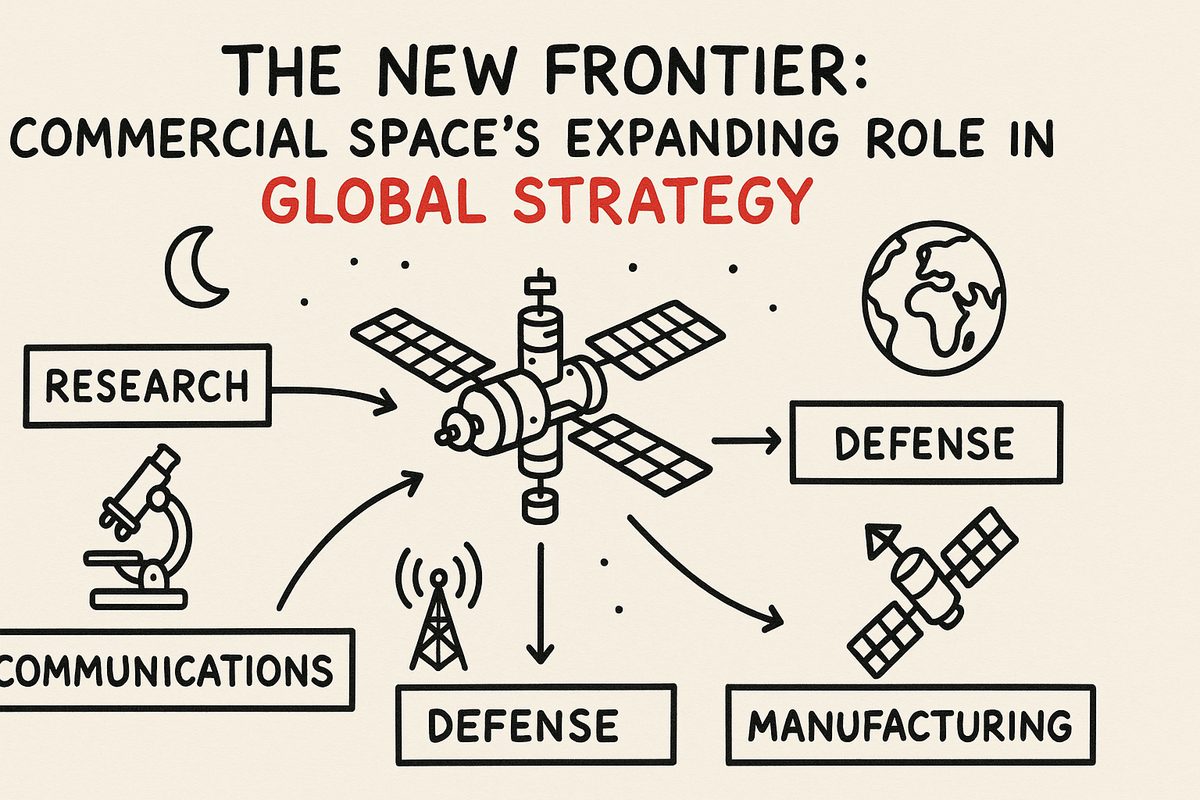
The commercial space sector is rapidly evolving, reshaping not only economic landscapes but also geopolitical strategies. Recent developments highlight how commercial entities are increasingly integral to national space agendas, influencing everything from defense intelligence to environmental regulation.
Commercial Partnerships and National Interests
The agreement between Vast and the French government to send two French astronauts to the Haven-1 space station marks a significant shift in how nations are leveraging commercial partnerships to fulfill their space ambitions. This move underscores a broader trend where governments are tapping into commercial capabilities to enhance their space activities. Such collaborations enable countries to expedite their space missions, reduce costs, and focus on strategic objectives without the burden of developing indigenous capabilities from scratch.
Moreover, NASA’s decision to revert to its original Commercial LEO Destinations (CLD) procurement plan further emphasizes the reliance on private companies to build and maintain the next generation of space stations. This strategy is not merely about outsourcing but is indicative of a paradigm shift where commercial expertise is seen as a cornerstone for future space exploration and habitation.
Commercial Space's Role in Defense and Intelligence
As commercial space companies continue to innovate, their influence extends into national defense and intelligence sectors. The nomination of Roger Mason, who emphasized the reshaping of the National Reconnaissance Office (NRO) by commercial space and AI, highlights this intersection. The integration of cutting-edge commercial technologies into government operations is transforming intelligence capabilities, offering enhanced data collection and analysis methods.
However, this evolution also presents challenges. The proposed cuts to the Space Development Agency (SDA) and the Rapid Capabilities Office (RCO) within the Pentagon could slow the adoption of agile acquisition processes that have been crucial for integrating commercial technologies into defense strategies. This raises questions about how the government will maintain the pace of technological integration without these specialized offices.
Environmental Concerns and Regulatory Needs
With the increasing number of commercial activities in space, environmental concerns are coming to the fore. Researchers have called for stricter regulations to protect low Earth orbit from the influx of exotic materials due to satellite and space hardware re-entry. These calls for regulation highlight a critical, often overlooked aspect of the burgeoning commercial space industry: sustainability.
As the commercial sector grows, it’s crucial to establish comprehensive guidelines that balance innovation with environmental stewardship. Without such regulations, the long-term viability of space as a resource could be jeopardized, affecting both commercial and national interests.
Supporting Infrastructure and Technological Advancements
Infrastructure is another area where commercial space is making significant strides. Voyager's acquisition of Astrobotic demonstrates the strategic importance of having a comprehensive lunar platform. This acquisition positions Voyager to support lunar missions across all necessary infrastructure layers, underscoring the increasing complexity and capability of commercial entities.
In parallel, Impulse Space's $500 million fundraising to expand its production of orbital transfer vehicles (OTVs) and other spacecraft reflects the growing demand for versatile, commercially developed space vehicles. These investments are critical in supporting both commercial and governmental space missions, further blurring the lines between public and private sector roles in space exploration.
The Counterintuitive Role of Commercial Space in Telecom
Surprisingly, commercial space is also poised to play a crucial role in terrestrial telecommunications. Murata's exploration of Xona's satellite timing service for telecom and data centers introduces a new dimension to satellite applications. By developing a low Earth orbit network that provides backup to GPS systems, Xona is enhancing the reliability of global telecom infrastructure, showcasing the unforeseen utility of space technologies in everyday applications.
As the commercial space sector continues to expand, its impact will resonate across various industries and national strategies. The integration of commercial capabilities into government operations, coupled with the sector's innovative potential, means that the future of space will be shaped by a collaborative effort between public and private entities.