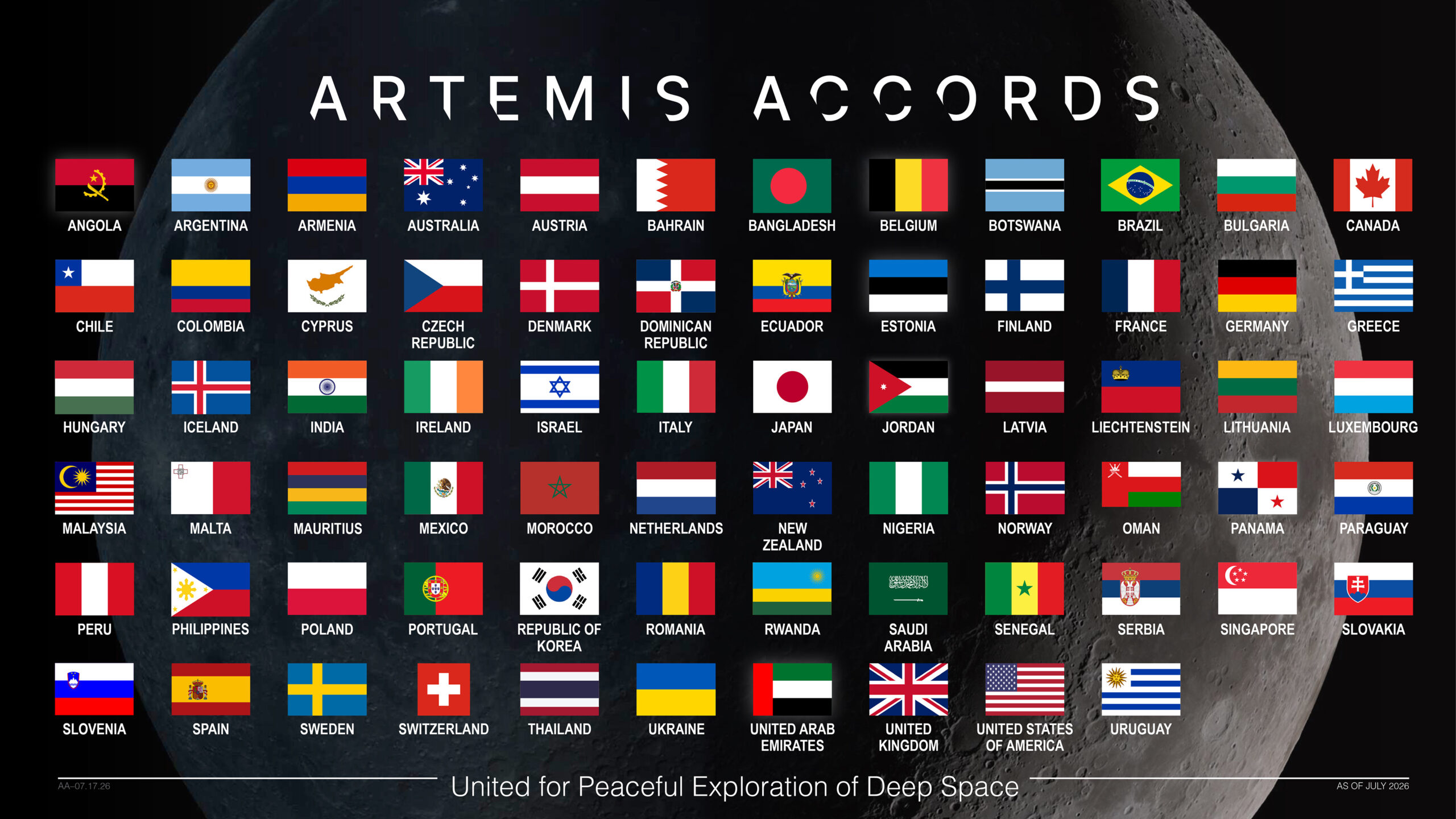
The Republic of Mauritius has become the 70th nation to join the Artemis Accords, a landmark international agreement that outlines principles for peaceful and collaborative space exploration. The signing ceremony took place in the city of Ébène on July 17, 2026, with Navindsing Jugmohunsing from Mauritius's Ministry of Tertiary Education, Science and Research representing the nation. U.S. State Department officials attended the event, and NASA Deputy Administrator Matt Anderson contributed remarks via video.
Jugmohunsing emphasized Mauritius's commitment to ensuring that space activities benefit humanity, particularly in protecting oceans and coastlines. "As a small island developing state in the Indian Ocean, we are committed to ensuring that space serves humanity by protecting our oceans and coastlines and amplifying the voices of nations like ours," he stated. He expressed optimism about the potential of space governance to open new opportunities for innovation and partnership.
The Artemis Accords were initiated in 2020 with the participation of eight countries, including the United States. They aim to establish best practices for space exploration, covering areas such as the deconfliction of space activities, utilization of space resources, and exchange of scientific data. One of the primary objectives is to ensure that space remains peaceful, accessible, and beneficial for all participating nations.
NASA and the U.S. State Department developed the Accords in collaboration with international partners, highlighting the importance of global cooperation in space exploration. The Accords are closely tied to NASA's Artemis program, which aims to return humans to the Moon and establish a sustainable presence there. "Together, we are creating the foundation for future exploration while ensuring that space remains peaceful, accessible and beneficial for all," Anderson noted. This initiative underscores the necessity of capable partners and shared commitments to responsible exploration.
Mike Gold, president of Redwire Space and a former NASA associate administrator, praised the rapid expansion of the Accords. "Going from seven nations joining the U.S. in signing the Accords in 2020 to 70 signatories in 2026 is a huge accomplishment," he said. Gold emphasized the optimism and hope that the space program represents not only for America but for the world.
Interestingly, three of the Artemis Accords signatories—Senegal, Serbia, and Thailand—had previously joined the Chinese-led International Lunar Research Station initiative. This highlights a growing trend of nations participating in multiple international space endeavors, reflecting an era of unprecedented global collaboration.
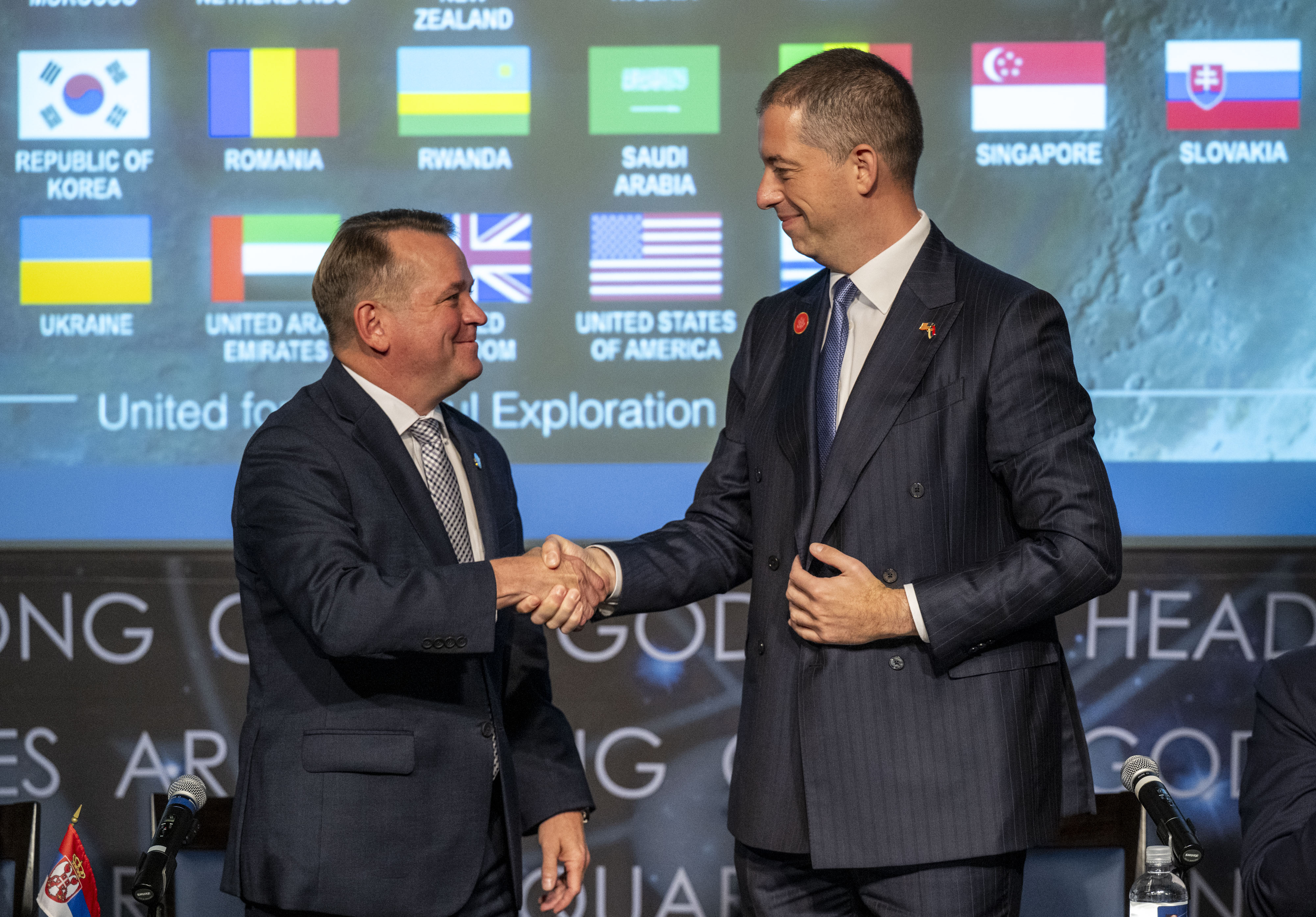
Serbia also joined the Accords just a day before Mauritius, on July 16, 2026, in a ceremony at NASA Headquarters in Washington, D.C. Serbian engineers have historically contributed significantly to space exploration, particularly during the Apollo program. Serbia's Foreign Affairs Minister Marko Đurić highlighted the contributions of Serbian scientists and engineers, including Milojko ‘Mike’ Vučelić, who played a crucial role in the Apollo 13 mission.
The Artemis Accords continue to gain momentum, with 11 new countries joining in 2026 alone. The agreement is open to any government willing to abide by its principles, regardless of whether they have existing space programs or aspirations to conduct operations on the Moon. This inclusivity is a testament to the universal appeal of space exploration as a means to unite nations for a common cause.
As the Artemis Accords gain more signatories, the global space community inches closer to realizing a collaborative and sustainable future in space exploration. Mauritius's accession not only marks a significant milestone but also reinforces the island nation's commitment to contributing to the international space dialogue.