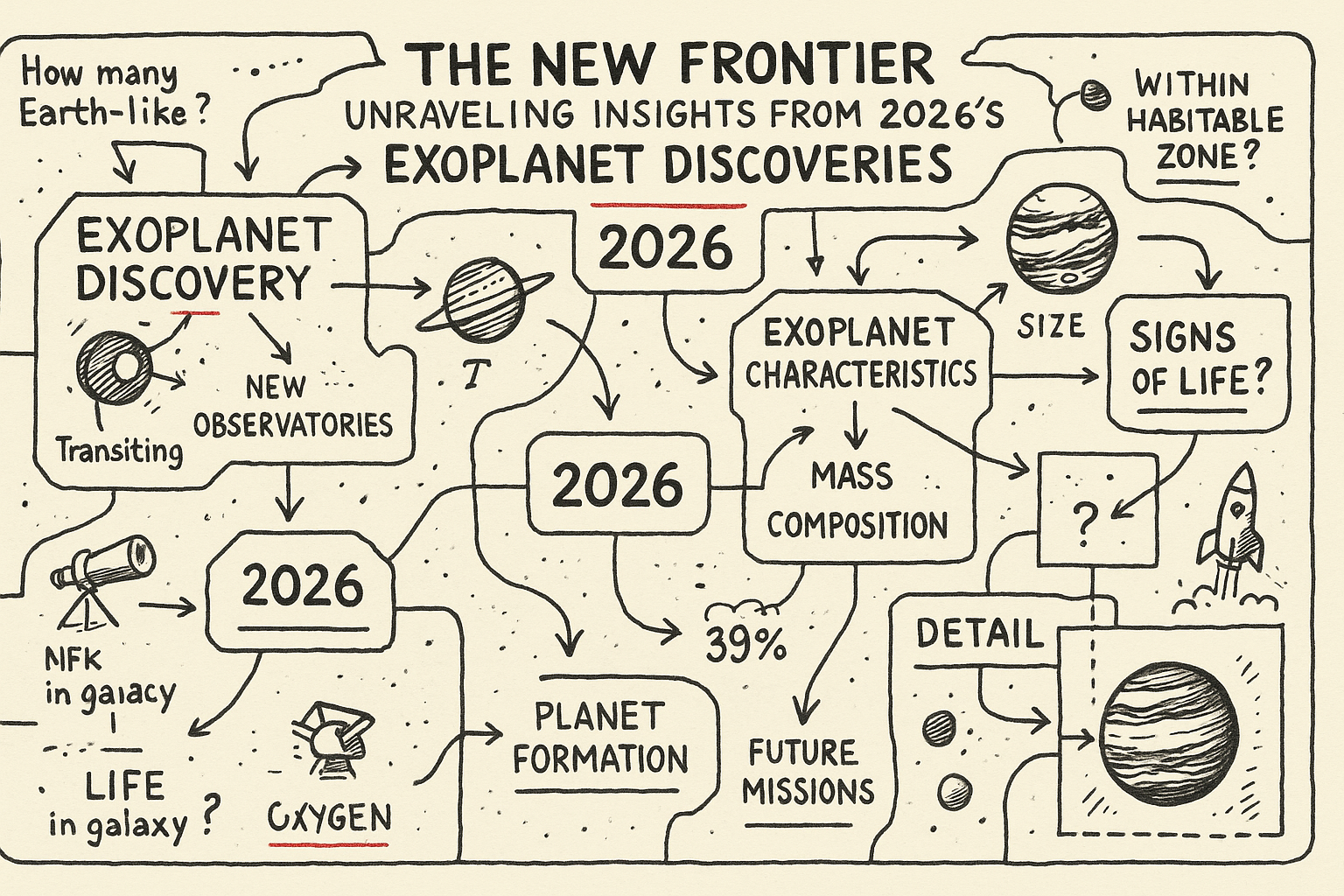
The year 2026 has marked a significant milestone in exoplanetary science, with the discovery of several diverse exoplanets orbiting stars of varying types. These discoveries offer a new lens through which to view the dynamics of planetary systems beyond our own. By synthesizing data from recent NASA findings, we gain a comprehensive understanding of how these celestial bodies challenge existing paradigms and reveal unexpected characteristics.
Diversity in Exoplanetary Systems
The recent discoveries highlight an impressive range of exoplanets, from super-Earths like HD 50554 c and HD 50554 d to Neptune-like planets such as TOI-4409 b and KMT-2025-BLG-1160L b. Each planet orbits a different type of star, from F-type to K-type, showcasing the diversity of planetary systems. This variety underscores the complexity of planetary formation processes, suggesting that the conditions leading to planet formation are more varied than previously thought.
Historically, our understanding of planetary systems was heavily influenced by the architecture of our own solar system. However, the discovery of exoplanets with short orbital periods, such as TOI-3278 b, which completes an orbit in just 3.2 days, challenges this framework. These 'hot Jupiters' upend traditional models, prompting scientists to rethink theories regarding planet-star interactions and migration.
Unexpected Commonalities
Despite their differences, many of these exoplanets share characteristics that prompt reflection on the universality of certain planetary features. For instance, the mass and orbital distances of gas giants like CD-35 2722 B b, which orbits an L-type star, suggest that such planets might be more common than previously anticipated. This could imply that gas giants are a typical outcome of planetary formation, regardless of star type.
Moreover, the relatively short orbital periods of many discovered exoplanets, including TOI-3053 b and TOI-6158 b, suggest a prevalence of close-in planets, which was once thought to be rare. This insight into planetary distribution informs our understanding of habitable zones and the potential for life-supporting conditions.
Implications for Future Exploration
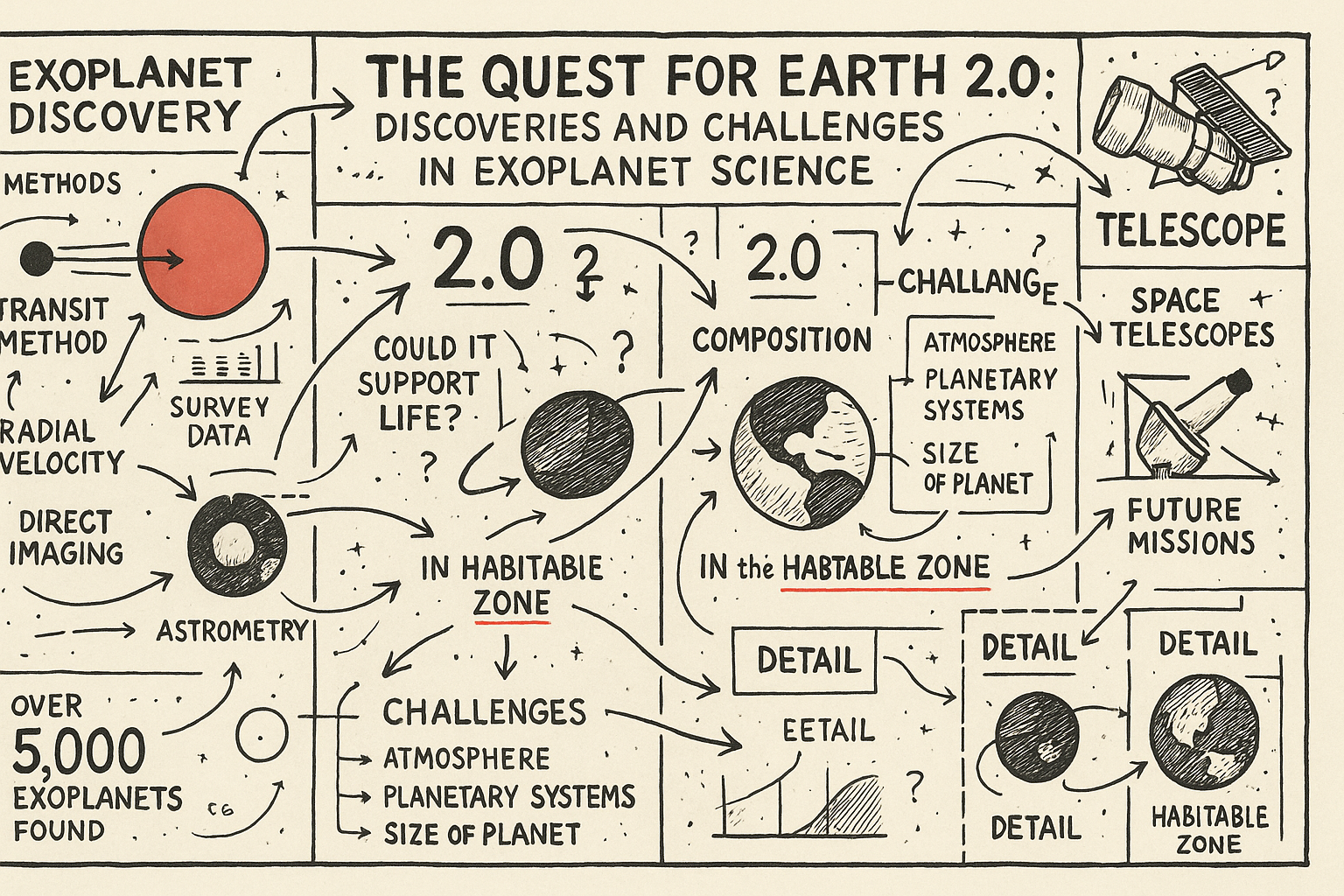
The discoveries of 2026 also bear significant implications for future space exploration missions. As we continue to catalog exoplanets, the focus shifts to understanding their atmospheres and potential for hosting life. Tools such as the James Webb Space Telescope and planned next-generation observatories will be crucial in analyzing the atmospheric compositions of these planets, searching for biosignatures and assessing their habitability.
Furthermore, these findings fuel the debate on the necessity of revisiting our technological and methodological approaches in exoplanet detection. With the increasing complexity and number of discovered planets, the development of more advanced data analysis algorithms and observational techniques becomes imperative.
Revisiting Historical Context
Reflecting on the history of exoplanet discoveries, it's evident that each new find adds a piece to the puzzle of our cosmic neighborhood. The first confirmed exoplanets were discovered in the 1990s, and since then, technological advancements have exponentially increased the pace of discovery. The 2026 findings continue this trajectory, offering a richer understanding of planetary systems and setting the stage for future breakthroughs.
In conclusion, the discoveries of 2026 not only expand our catalog of known exoplanets but also enrich our understanding of the universe's complexity. As we continue to explore, each new finding challenges our assumptions and broadens the possibilities of what planetary systems could look like.