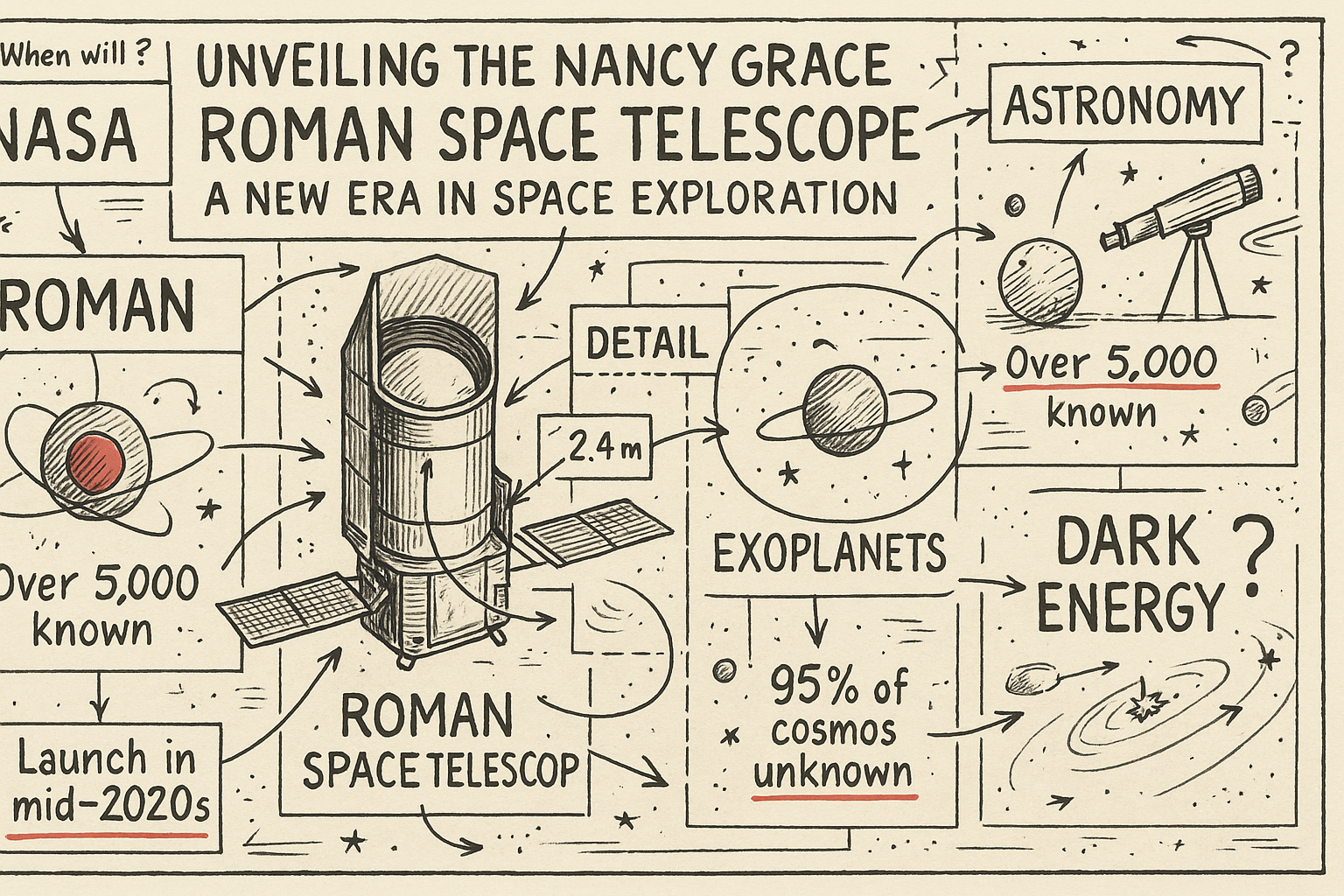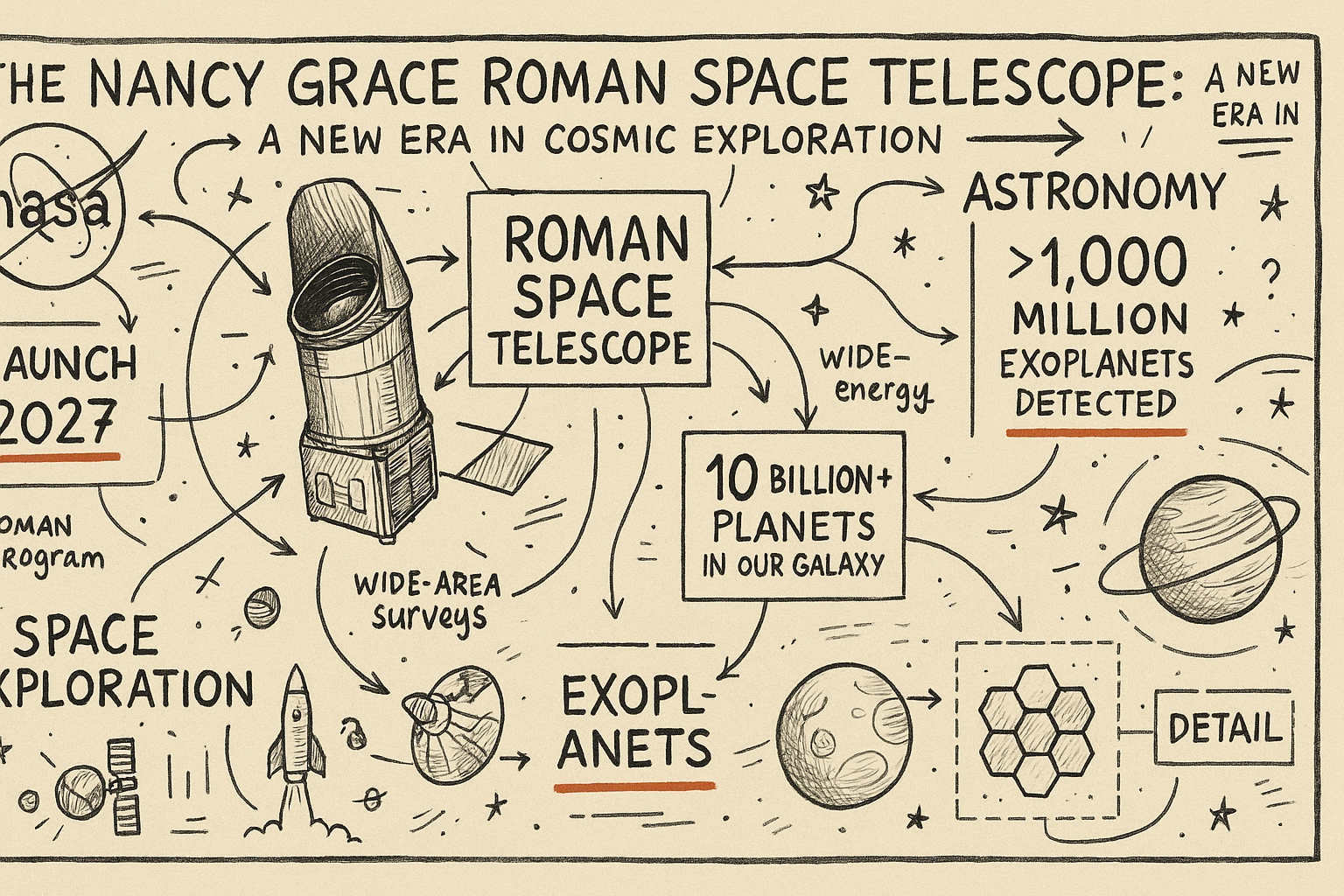
The Nancy Grace Roman Space Telescope, NASA's latest astronomical endeavor, is poised for launch on August 30, 2026, from the Kennedy Space Center in Florida. This cutting-edge observatory, named after NASA's first chief of astronomy, Nancy Grace Roman, is set to revolutionize our comprehension of the cosmos.
Constructed by Ball Aerospace in Boulder, Colorado, the Roman Space Telescope is equipped with a mirror the same size as that of the Hubble Space Telescope. However, it offers a field of view more than 100 times larger, allowing it to survey vast areas of the sky with unprecedented speed and detail. This capability is facilitated by its 18 4K detectors, which will enable the telescope to create a comprehensive 3D map of the Milky Way galaxy.
Once operational, the Roman Space Telescope will join the ranks of the Hubble and James Webb Space Telescopes, launched in 1990 and 2021, respectively. Together, these observatories will continue to probe the mysteries of the universe, with Roman specifically targeting the enigmatic phenomena of dark energy and dark matter. By examining these forces, the telescope aims to provide insights into how they have influenced the formation and evolution of the universe's normal matter.
International Collaboration and Technological Innovation
The Roman Space Telescope is not just a NASA initiative; it represents a significant international collaboration. The European Space Agency (ESA) is contributing essential hardware to the mission, including star trackers, batteries, and detectors for the coronagraph instrument. Additionally, ESA is providing communications support through its deep-space ground station network, enhancing the mission's scientific capabilities.
One of the telescope's groundbreaking features is its ability to block starlight, which often obscures distant exoplanets. This capability will allow Roman to reveal the disks of dust and particles that may eventually form new planets, thereby advancing our understanding of planetary system formation and evolution.
Moreover, the Roman Space Telescope is expected to detect up to 100,000 exoplanets, significantly expanding the current catalog of known worlds beyond our solar system. This extensive survey will contribute to a statistical census of planetary systems within the Milky Way, offering new insights into the frequency and diversity of planets in our galaxy.
As the launch date approaches, anticipation builds for the wealth of data and discoveries that the Nancy Grace Roman Space Telescope promises to deliver. By exploring the universe's most profound mysteries, this mission is set to usher in a new era of astronomical research and discovery.