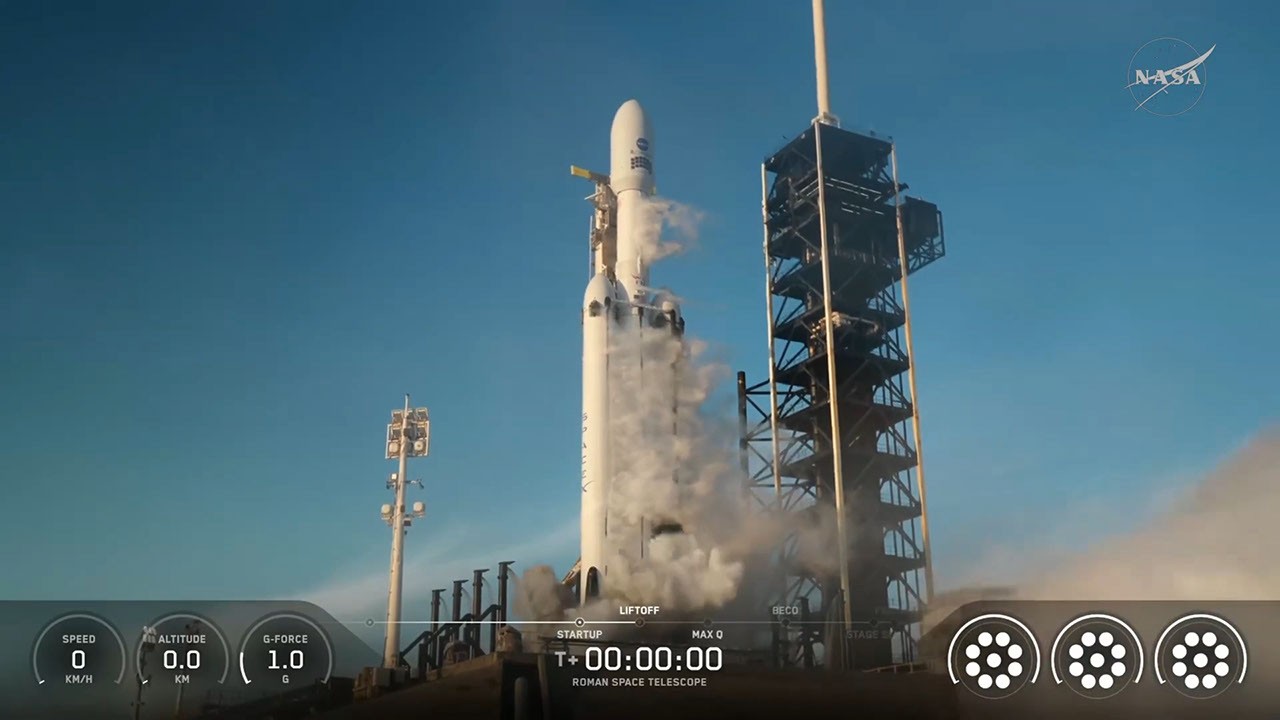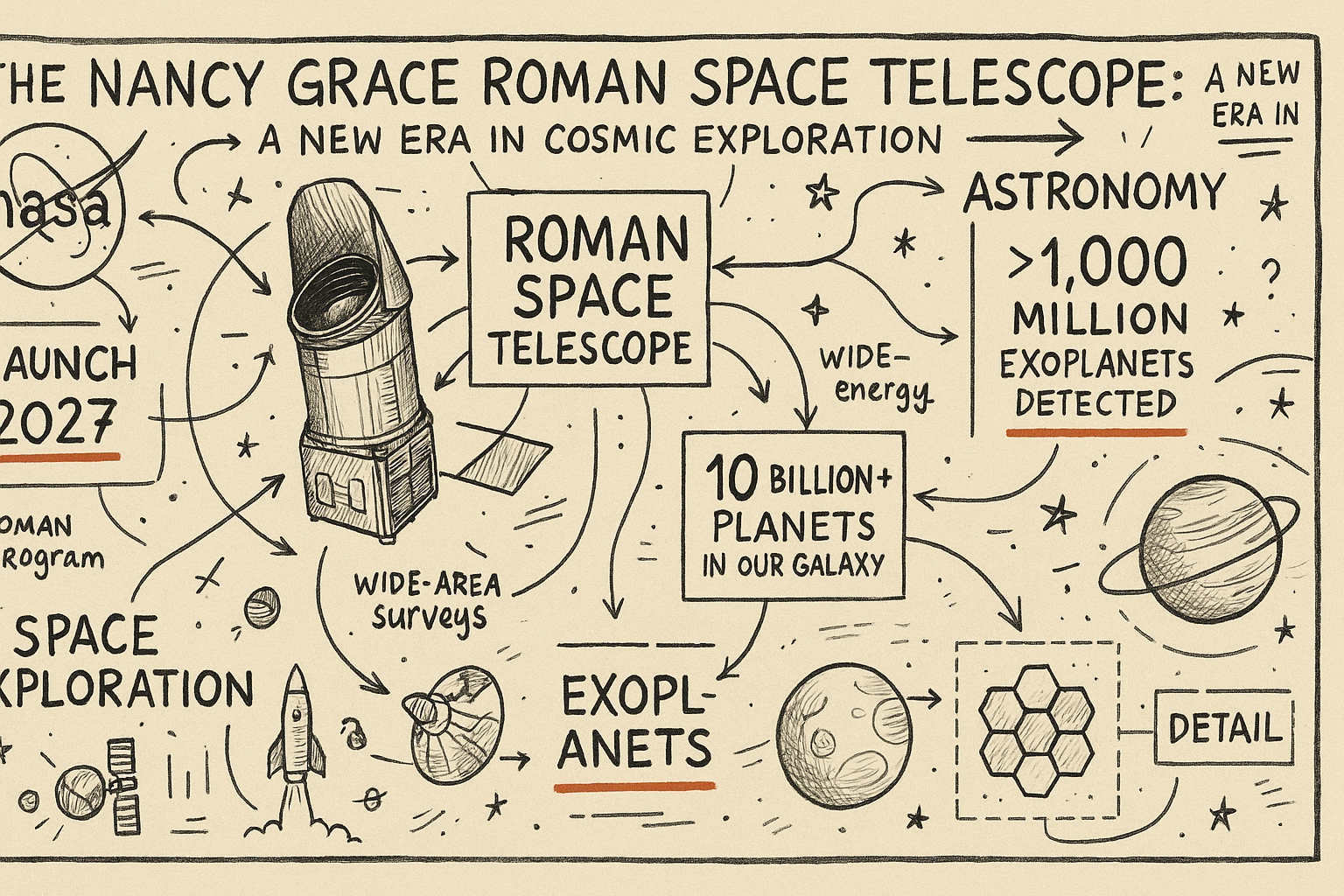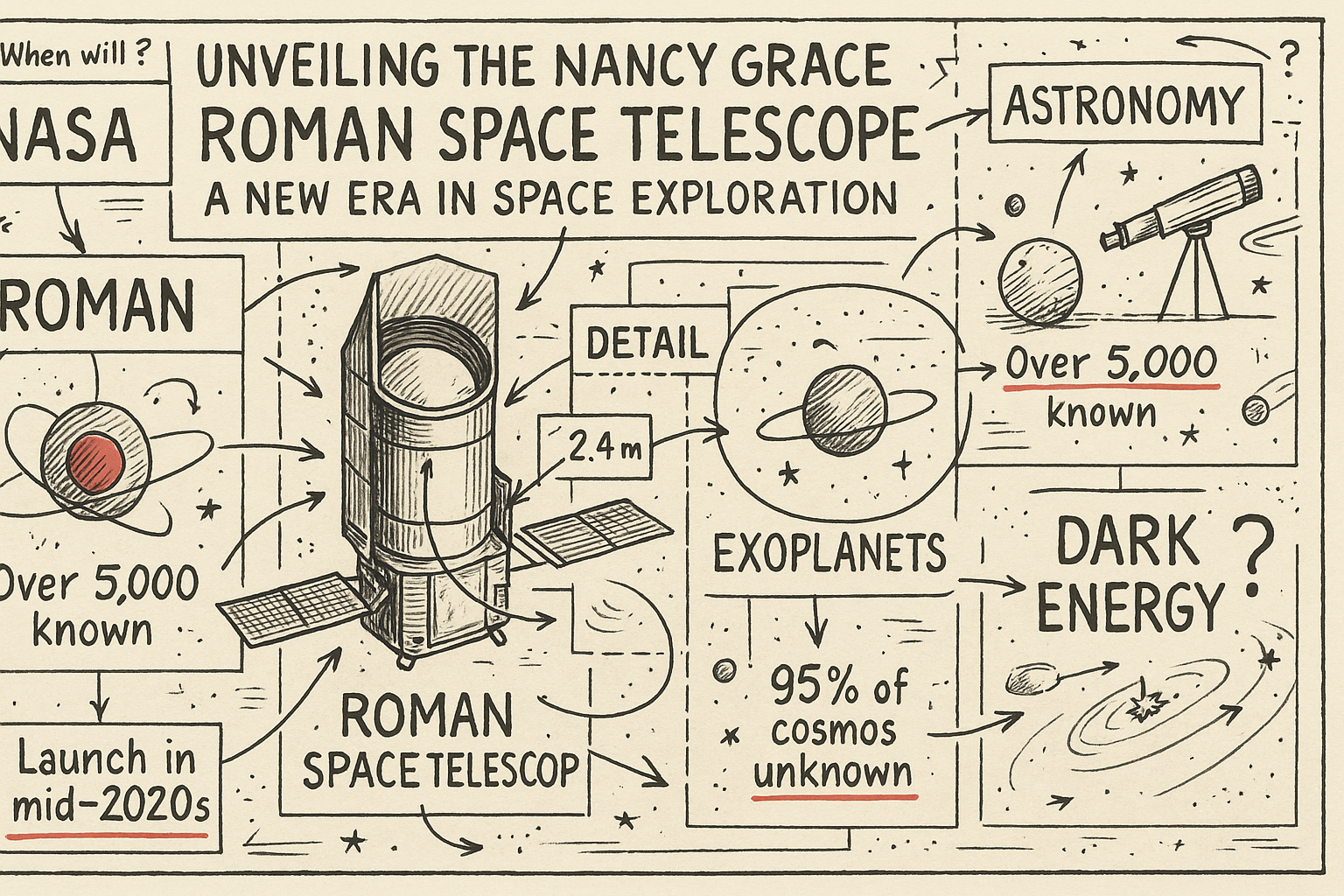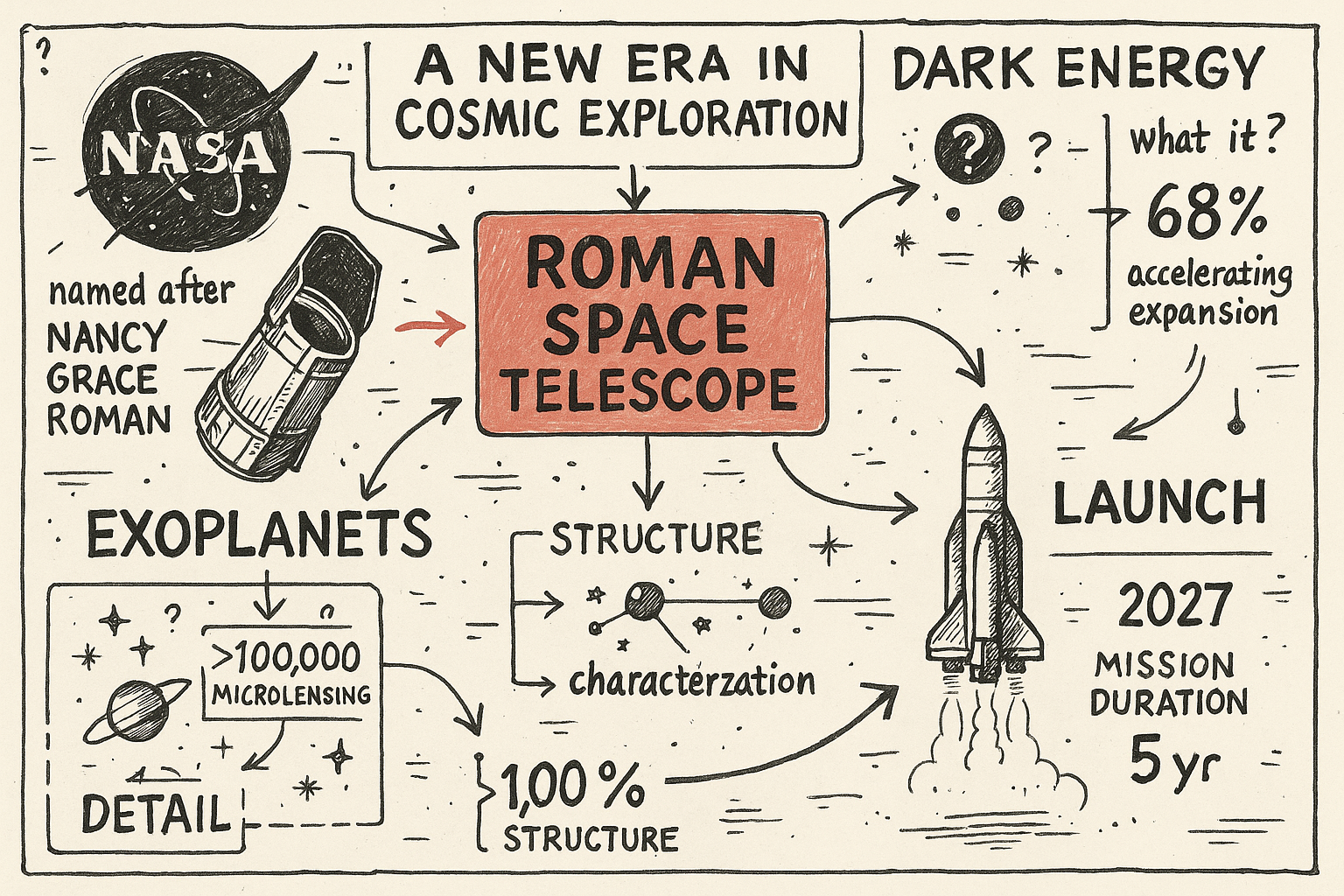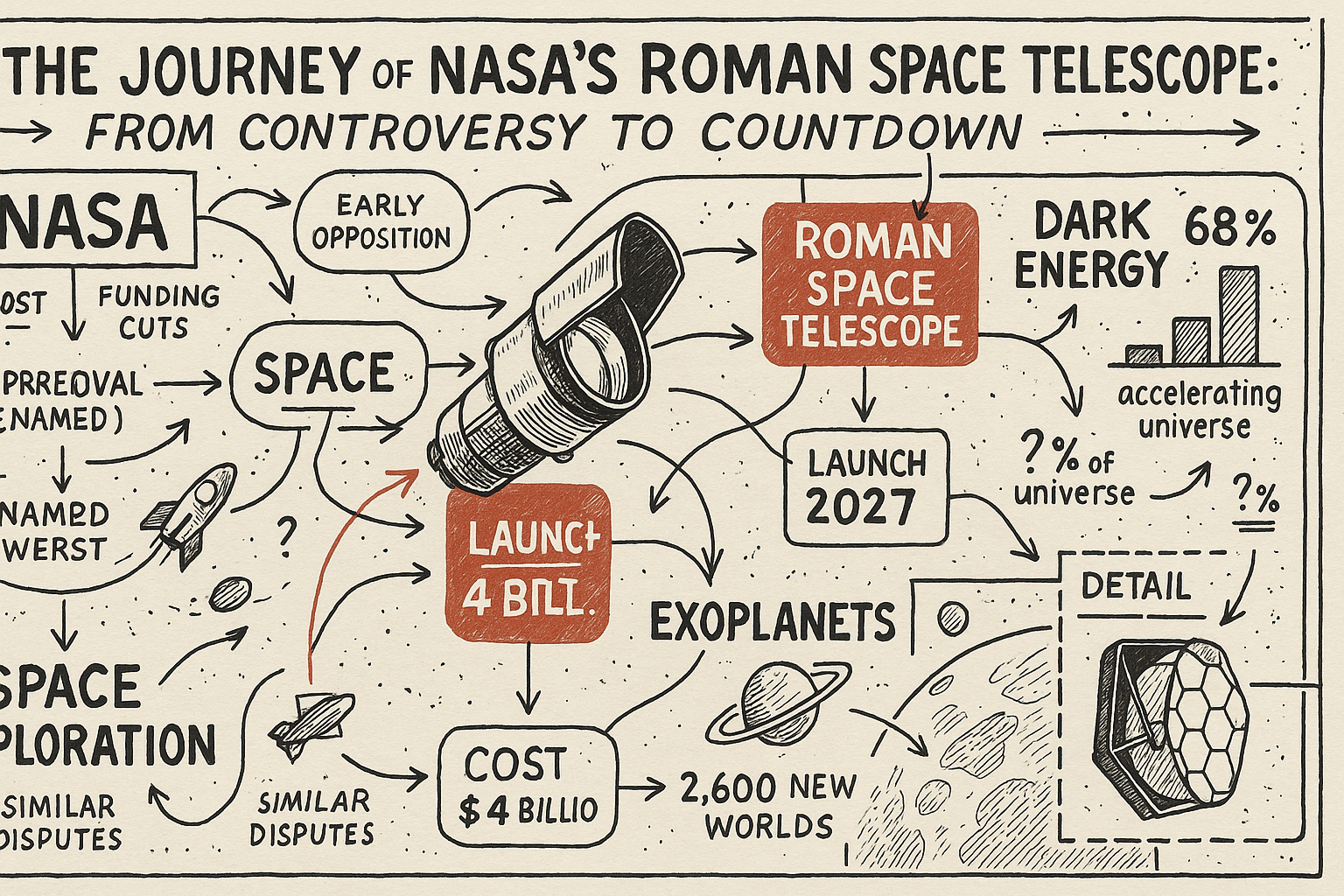
The Nancy Grace Roman Space Telescope, NASA's next-generation observatory, is set to launch on August 30, 2026, from the Kennedy Space Center in Florida. This ambitious mission, named after NASA's first chief astronomer, aims to explore the cosmos with unprecedented clarity and depth, focusing on the mysteries of dark energy and dark matter, as well as the discovery of new exoplanets.
The journey to this point has been fraught with challenges. In 2019, the Roman Space Telescope faced potential cancellation due to budgetary constraints and policy shifts. The Trump administration proposed scrapping the project, but the scientific community and space enthusiasts rallied to save it. Their efforts paid off, and the project continued, underscoring the importance of public support and advocacy in scientific advancement.
Technical Marvels and International Collaboration
The Roman Space Telescope is a technical marvel, boasting a wide field of view and advanced optical design. It will conduct detailed surveys of the sky in visible to near-infrared light. This capability will enable astronomers to gather data on the universe's expansion and the distribution of galaxies, contributing to our understanding of dark energy and dark matter.
International collaboration has been a cornerstone of the Roman Space Telescope's development. The European Space Agency (ESA) has played a crucial role, providing essential hardware such as star trackers, batteries, and detectors for the coronagraph instrument. ESA's deep-space ground station network will also support communications, ensuring seamless data transmission back to Earth.
Launch Preparations and Future Prospects
As the launch date approaches, preparations are in full swing. The telescope has already arrived at SpaceX's Launch Complex 39A, where it will undergo final checks before its journey into space. The collaboration with SpaceX highlights the growing partnership between NASA and private aerospace companies in advancing space exploration.
Once operational, the Roman Space Telescope is expected to revolutionize our understanding of the universe. By capturing wide-field images with high precision, it will complement the work of the Hubble and James Webb Space Telescopes, offering new insights into the structure and evolution of the cosmos.
The Roman Space Telescope's journey from near-cancellation to imminent launch is a testament to the resilience of the scientific community and the enduring human quest for knowledge. As it prepares to lift off, the world watches with anticipation, eager to see the discoveries that await beyond our planet.