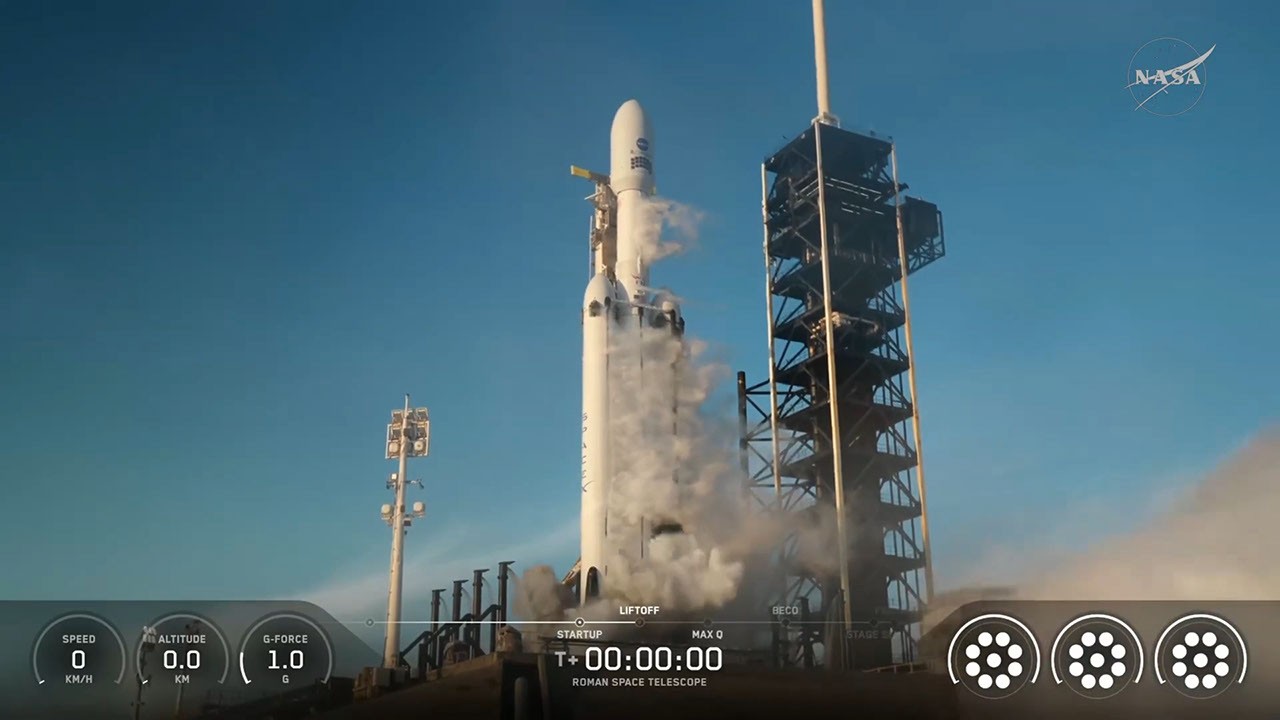
The Roman Space Telescope lifts off
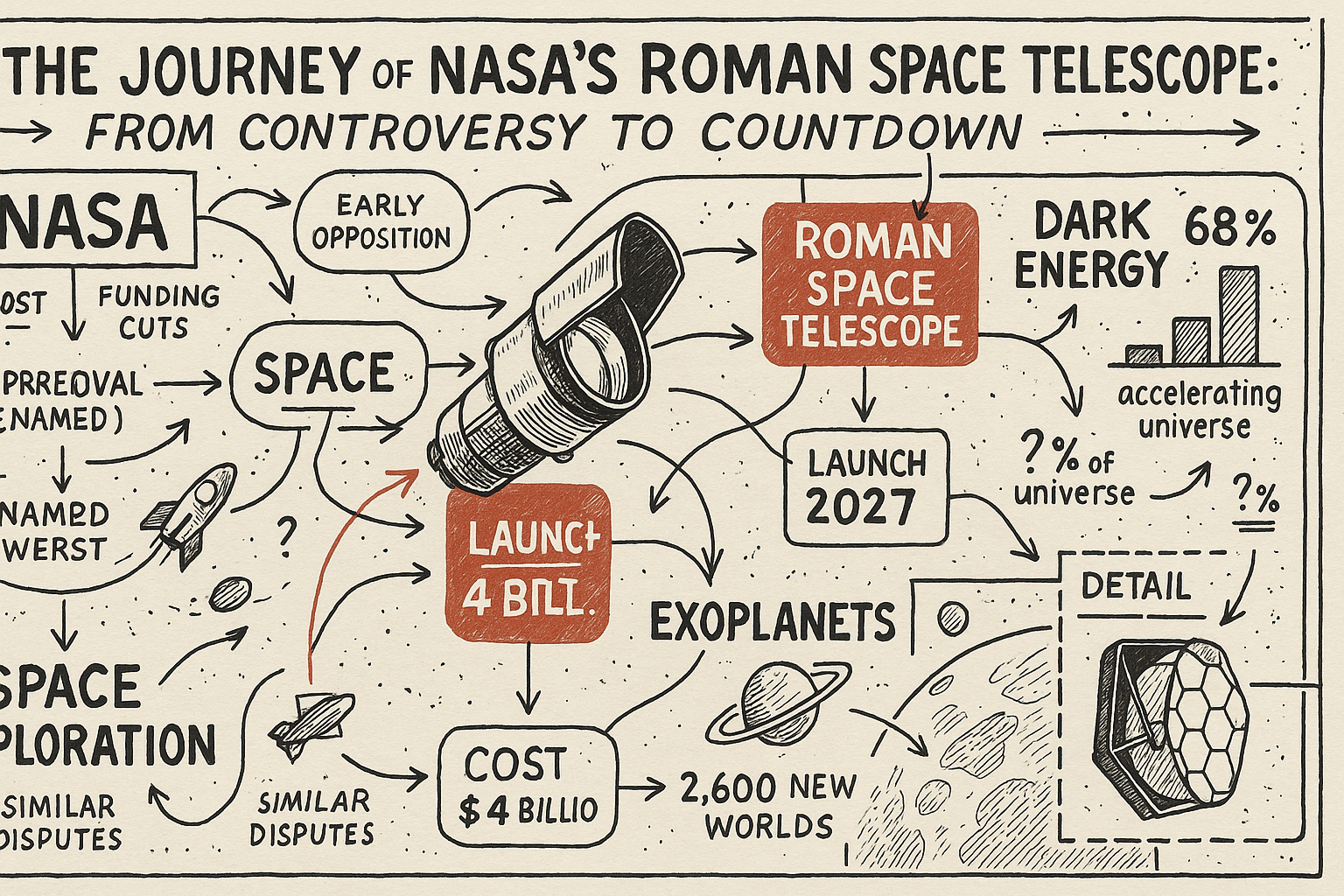
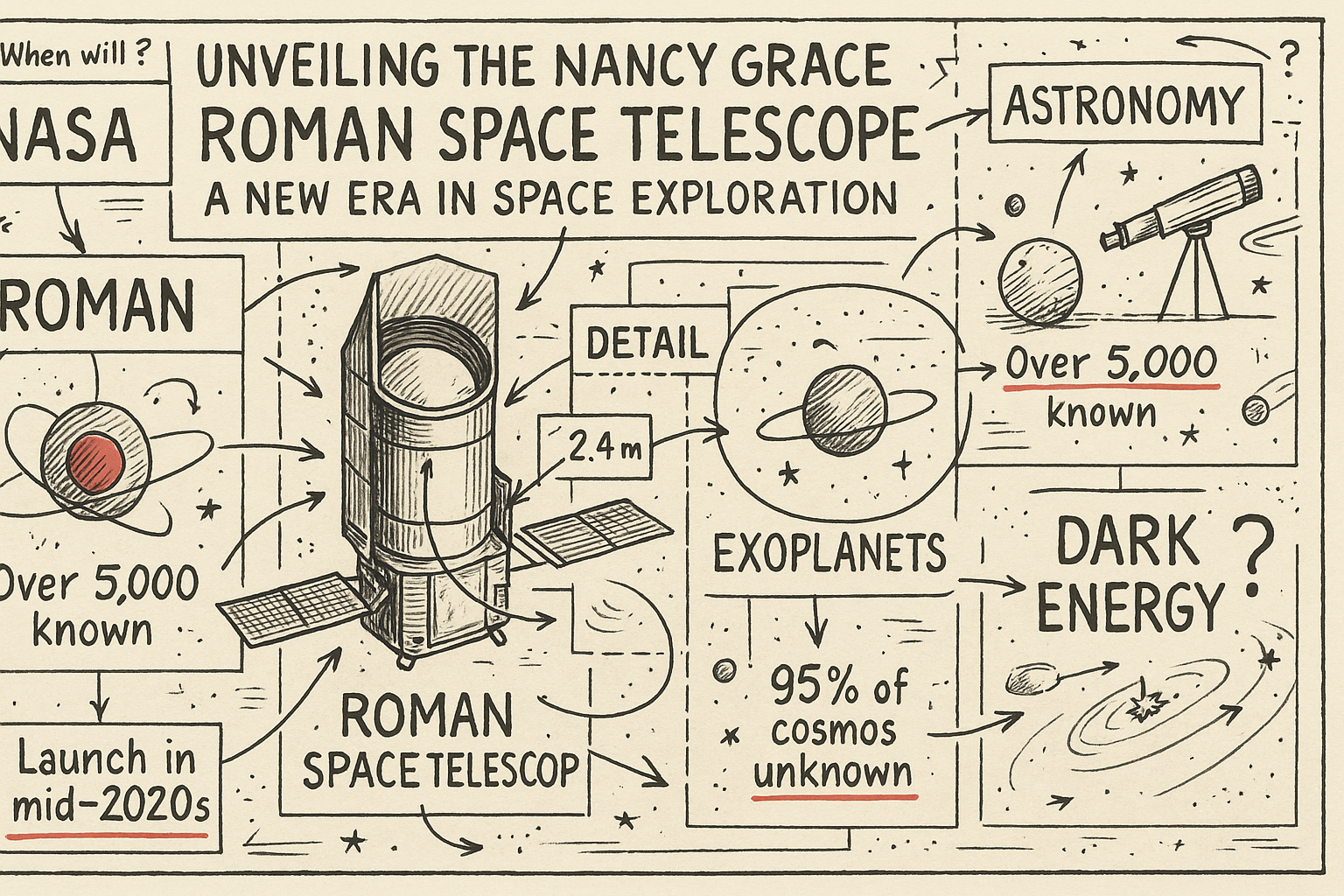
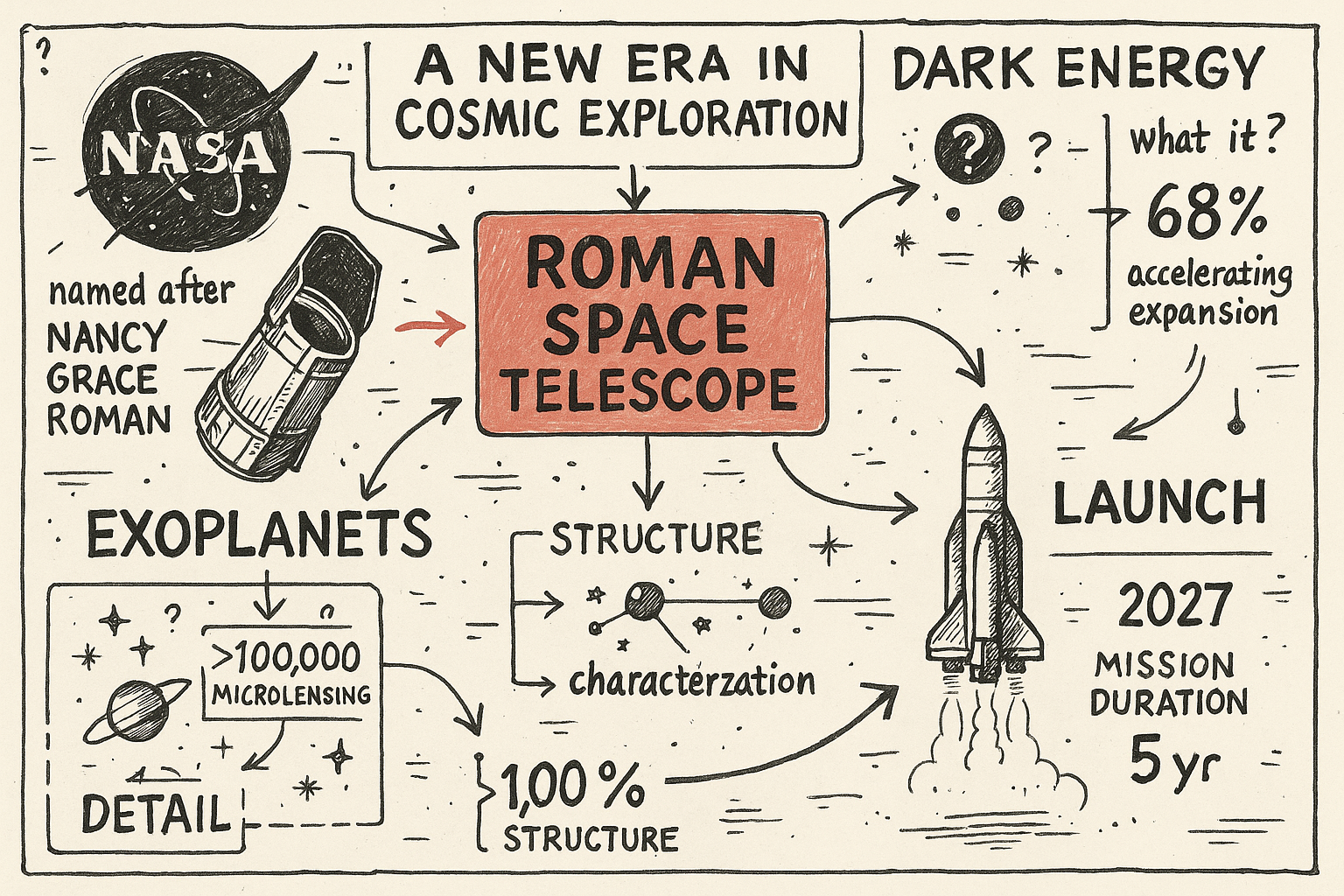
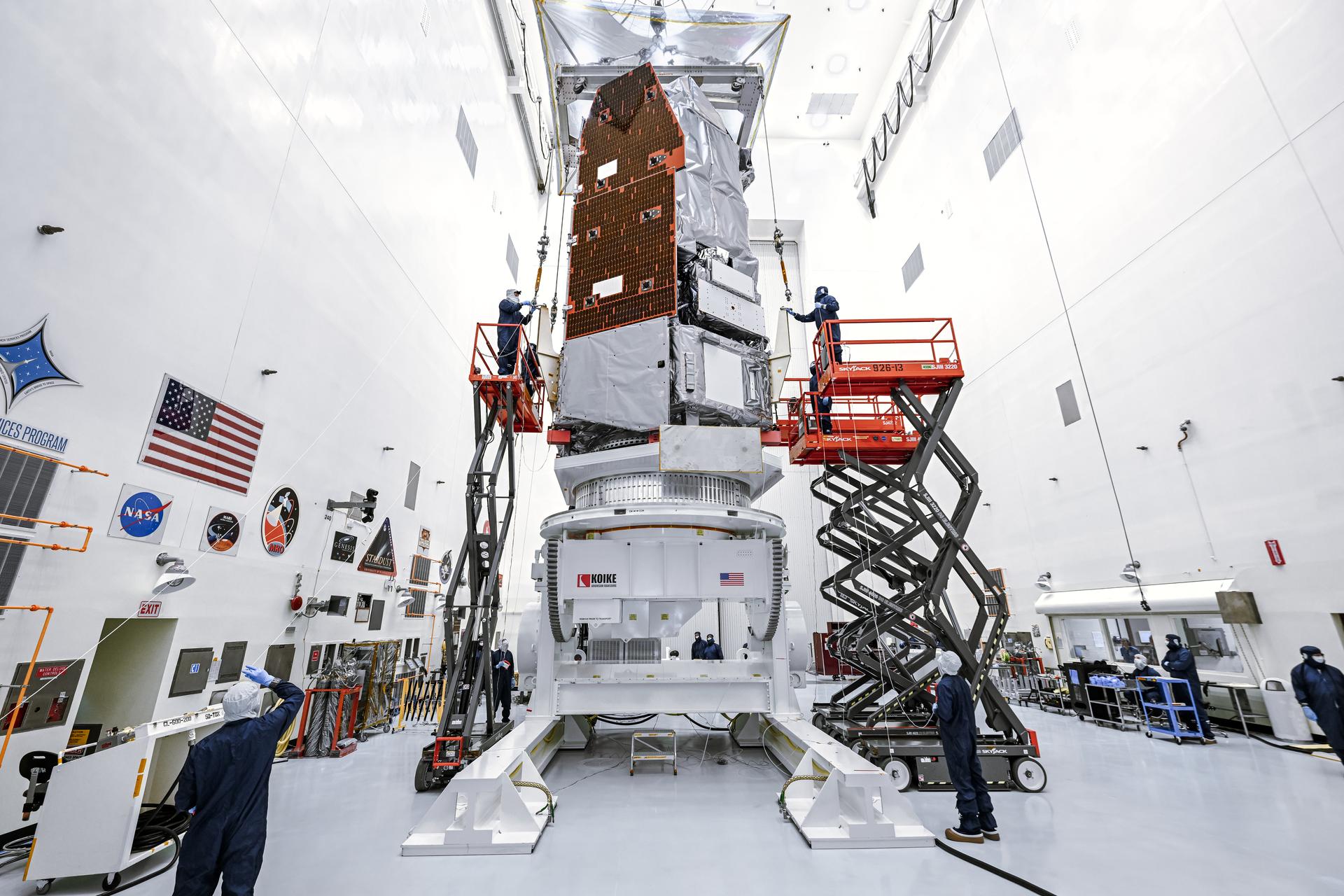
On 31 August 2026 the Nancy Grace Roman Space Telescope (Roman) launched, marking a major addition to NASA’s suite of space observatories. Roman is a 2.4-meter-class space telescope optimized for wide-field infrared surveys. The mission is designed to tackle three major scientific themes: mapping the effects of dark energy on cosmic expansion, conducting a census of exoplanets using microlensing, and providing wide-field infrared imaging and spectroscopy for the broader astronomical community.
What makes Roman different
Roman’s key capability is its combination of a large 2.4-meter primary mirror and an exceptionally wide field of view. According to NASA’s description, Roman will provide Hubble-quality images across dramatically larger sky areas: its field of view is about 100 times that of Hubble’s near-infrared camera. This will allow Roman to survey large swaths of sky quickly and with high angular resolution, enabling statistical studies that are impractical with narrower-field observatories.
Primary science goals
Roman’s science goals are organized around three themes. First, the telescope will investigate dark energy — the poorly understood driver of the accelerating expansion of the Universe — using multiple complementary techniques. Second, Roman will carry out a microlensing survey to detect exoplanets, including populations at orbital separations and masses that are difficult to reach with other methods. Third, the mission will serve as a general-purpose infrared observatory, producing wide-field imaging and slitless spectroscopy that will be valuable for a broad range of astrophysical studies.
Instrumentation and mission design
Roman’s 2.4-meter mirror gives it Hubble-class light-gathering power. The observatory’s wide-field instrument will deliver data products optimized for surveys, balancing sensitivity, angular resolution and sky coverage. NASA’s materials note that Roman is positioned to combine high image quality with survey-scale mapping — a capability explicitly highlighted in the mission description.
Context and heritage
Roman builds on decades of space-based optical and infrared astronomy. Its 2.4-meter aperture is the same size class as the Hubble Space Telescope, but Roman’s vastly larger field of view represents a generational shift from targeted, high-resolution imaging toward survey-scale precision cosmology and exoplanet demographics. The mission complements other contemporary facilities: it follows the James Webb Space Telescope’s deep, pointed infrared observations by enabling wide-area surveys that identify targets for more detailed follow-up.
Implications for cosmology and exoplanet science
By employing multiple observational probes of cosmic expansion, Roman aims to improve constraints on dark energy models. Given its survey power, Roman will produce statistical samples of galaxies, supernovae and weak gravitational lensing measurements over large areas, strengthening the empirical basis for testing cosmological models.
For exoplanet science, Roman’s microlensing program targets planets at larger orbital separations and lower masses than many other detection techniques typically access. The mission will thus help fill gaps in our knowledge of planetary system architectures and the distribution of planet masses and separations.
Data and community use
Roman is designed as a general-purpose observatory as well as a targeted experimenter for cosmology and exoplanets. The wide-field imaging and slitless spectroscopy it provides will be valuable across astrophysical disciplines, from studies of galaxy evolution to searches for transient phenomena. NASA’s public descriptions emphasize Roman’s role in producing survey data that the broader scientific community can use.
Looking ahead
The launch of Roman on 31 August 2026 begins a new phase for wide-field infrared space astronomy. Its combination of a 2.4-meter mirror and a field of view roughly 100 times that of Hubble’s near-infrared instrument positions Roman to bridge targeted, high-resolution studies and large statistical surveys, with direct relevance for dark energy research and exoplanet demographics. As Roman’s survey data arrive, astronomers will apply them to both planned programs and novel investigations, and follow-up observations with other facilities will add depth to Roman’s broad reach.
Note on sources: this article is based on NASA’s Astronomy Picture of the Day entry for 31 August 2026 describing the launch and mission capabilities of the Nancy Grace Roman Space Telescope.