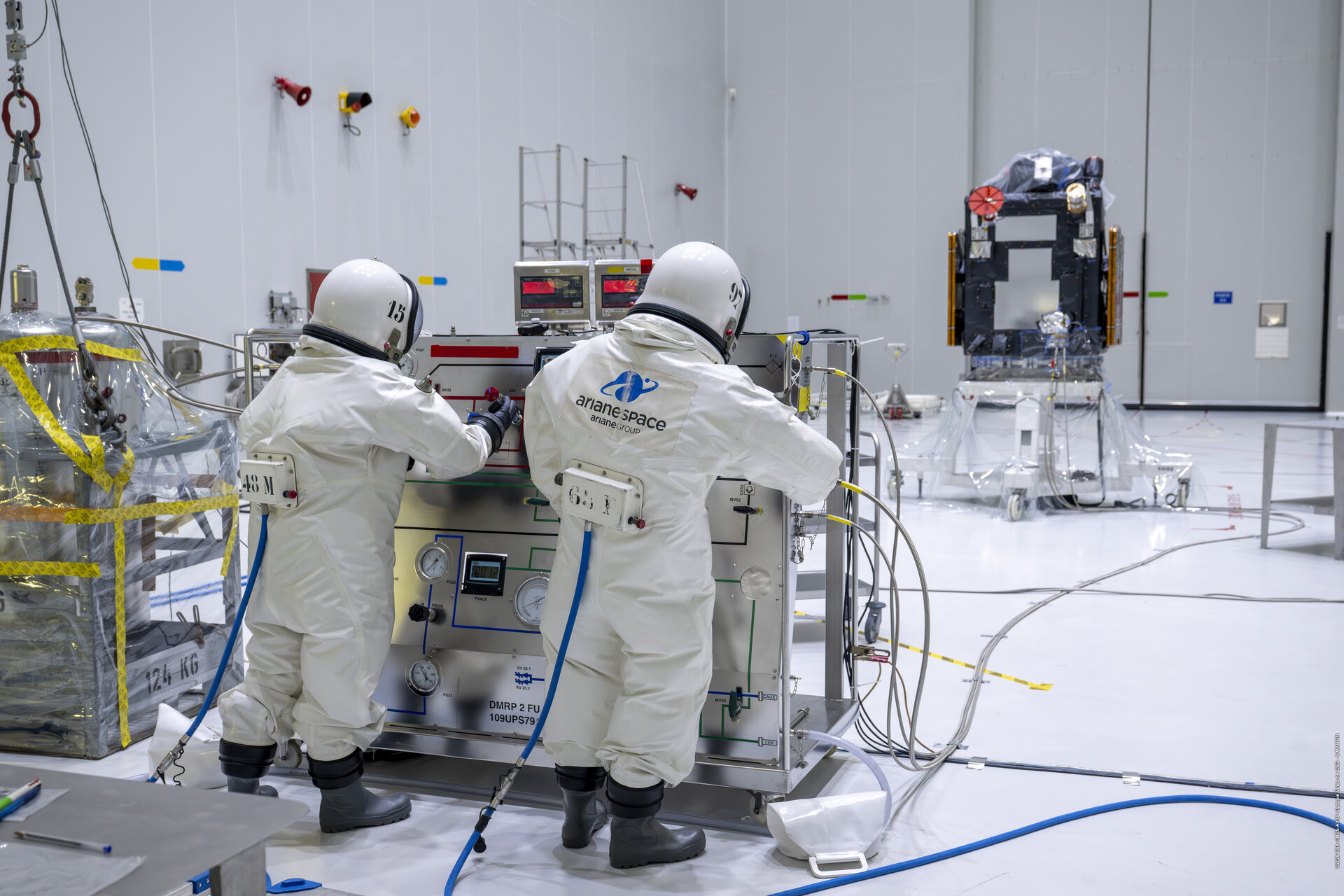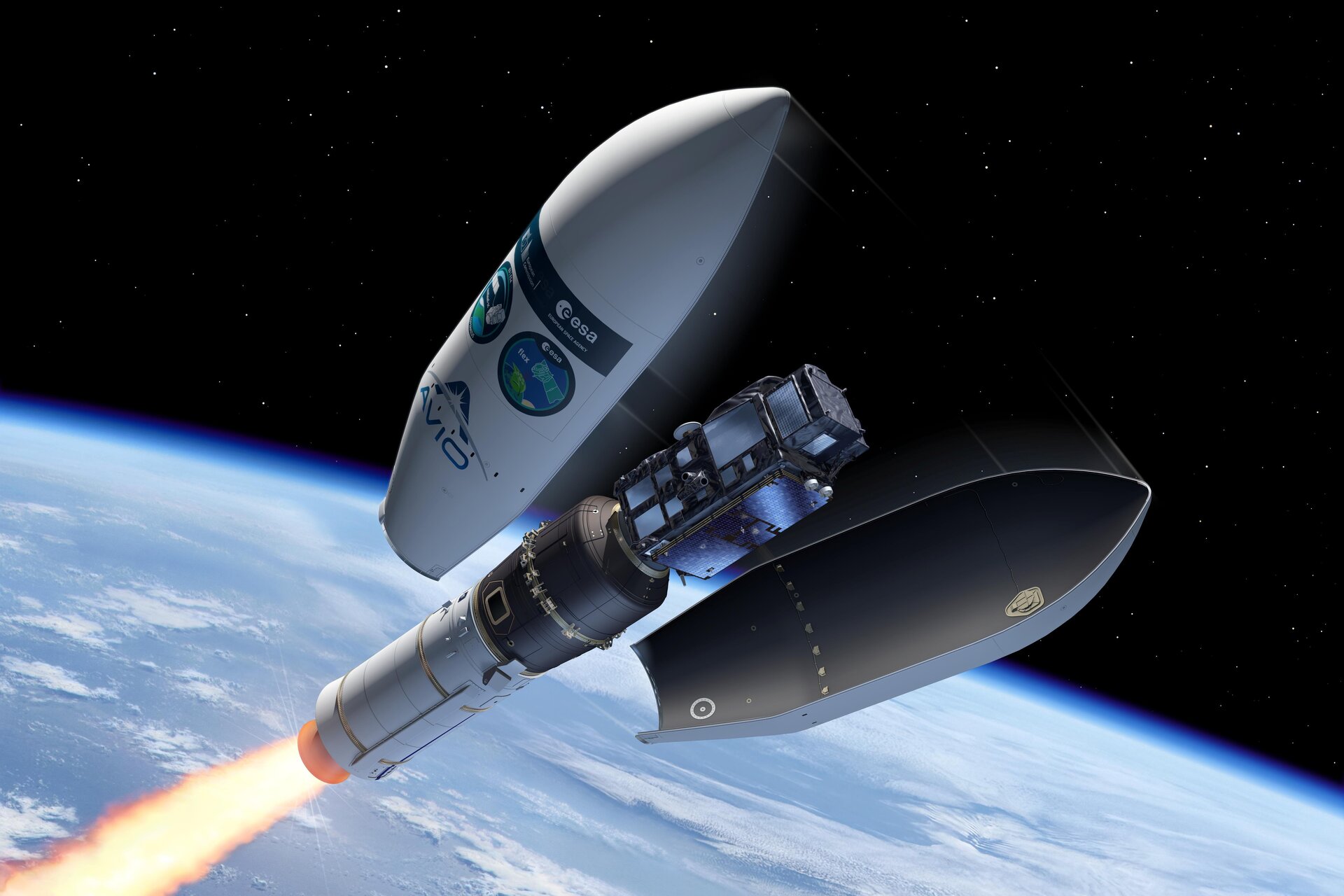
Europe’s photosynthesis mission FLEX has moved from fueling to final launch preparations at Europe’s Spaceport in Kourou, with a string of technical and operational milestones now complete ahead of the scheduled 15 September Vega‑C liftoff. After the satellite was topped up with propellant and fitted to its launch adaptor, launch teams closed the Vega‑C fairing over FLEX and its passenger, Copernicus Sentinel‑3C, bringing the duo one step closer to orbit.
Beyond the fueling milestone reported earlier, manufacturers in Jena, Germany, have delivered high-precision optical components for FLEX’s Fluorescence Imaging Spectrometer. The Fraunhofer IOF supplied a silicon-based double-slit assembly and two high-precision mirrors, elements that are critical to the instrument’s ability to detect the faint fluorescence signal from vegetation across the globe at the planned 300 m × 300 m resolution.
Operationally, the launch is unusual: two independent spacecraft teams will operate in parallel after deployment. At ESA’s European Space Operations Centre (ESOC), engineers rehearsed coordinated procedures to manage both FLEX and Sentinel‑3C post-separation — a ‘team of teams’ approach intended to reduce risk and smooth early commissioning. With both satellites now sealed inside the Vega‑C fairing, those rehearsals become directly relevant to the minutes and hours after separation.
ESA will stream the VV30 launch live, with coverage beginning at 02:50 CEST for a planned liftoff at 03:21 CEST (14 September at 22:21 local time in Kourou). The combined sequence of final ground checks, precise optical hardware on board, dual-mission operations planning, and fairing closure underscores the coalition of industrial, scientific and flight‑control work behind FLEX’s mission to deliver the first global maps of vegetation fluorescence from space.