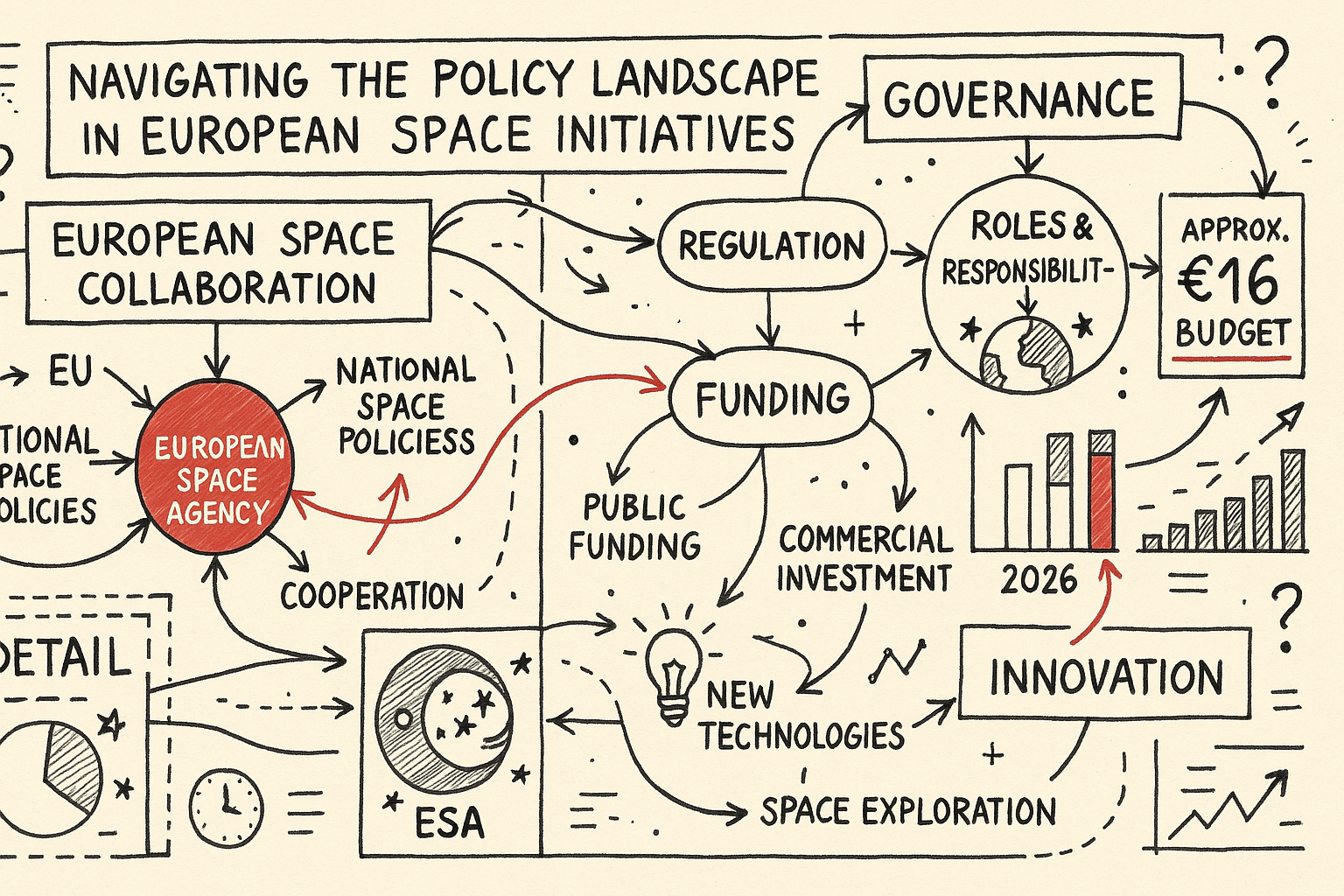
The European space sector is undergoing a transformative period, marked by a robust confluence of policy-driven investments and collaborative initiatives. As highlighted by recent developments, the European Space Agency (ESA) and various national space agencies are actively shaping a new frontier for space exploration and utilization. These efforts are not only aimed at bolstering economic growth but also at enhancing Europe's competitive edge in the global arena.
ESA and UKSA: Pioneering Policy-Driven Innovation
The collaborative efforts between ESA and the UK Space Agency exemplify a strategic approach to fostering innovation within the space sector. The InCubed funding program, which recently announced a new call for Earth Observation-based proposals, underscores a commitment to leveraging satellite data to enhance public services. This initiative follows a successful 2024 call that allocated over £2.5 million to projects demonstrating clear societal benefits (Source 1).
Parallel to this, the UK Space Agency's 'Unlocking Space for Investment' program is strategically designed to attract private investment, thereby spurring economic prosperity through space technology advancements (Source 5). This dual approach of public funding and private investment is pivotal in creating a sustainable ecosystem that encourages technological breakthroughs and entrepreneurial ventures.
Azerbaijan's Bold Step into Space Innovation
In a move that reflects the growing global interest in space innovation, Azercosmos has launched Azerbaijan's first National Space Incubation program. This initiative is focused on nurturing early-stage startups working on Earth Observation applications and other space-based solutions (Source 2). Such programs are crucial for countries like Azerbaijan, as they aim to build a robust innovation ecosystem that can compete on the international stage.
The program not only supports technological advancements but also represents a strategic policy shift towards developing a knowledge-based economy. This is particularly significant for emerging players in the space sector, offering them a platform to showcase their capabilities and contribute to global space endeavors.
Germany's Vision Foundation and the AI Revolution
The German Space Agency's recent grant to LiveEO for developing a multimodal 'Vision Foundation' AI model marks a significant policy-backed investment in AI-driven Earth Observation technologies (Source 3). This initiative aims to create a generalized AI architecture capable of detecting changes across various satellite imagery types, moving away from narrow, task-specific models.
This shift towards AI integration in space technologies is not just a technological evolution but a policy-driven strategy to maintain competitive advantage. It reflects a broader trend within Europe to harness the power of AI for enhancing the effectiveness and efficiency of space operations.
Implications and Future Directions
The policy initiatives discussed highlight a strategic alignment of resources and objectives across Europe, aimed at enhancing the region's leadership in space innovation. The focus on Earth Observation, AI integration, and startup incubation underscores a commitment to utilizing space technologies for societal benefits and economic growth.
Looking ahead, the success of these initiatives will depend on sustained investment, international collaboration, and the ability to adapt to rapidly evolving technological landscapes. The emphasis on collaborative frameworks, as seen in the ESA and UKSA partnership, will be crucial for addressing complex challenges and capitalizing on new opportunities in the space sector.
Furthermore, these policies could serve as a blueprint for other regions seeking to establish themselves as significant players in the global space industry. By fostering innovation through strategic investments and cross-border collaborations, Europe is setting a precedent for how policy can effectively drive technological progress and economic development.