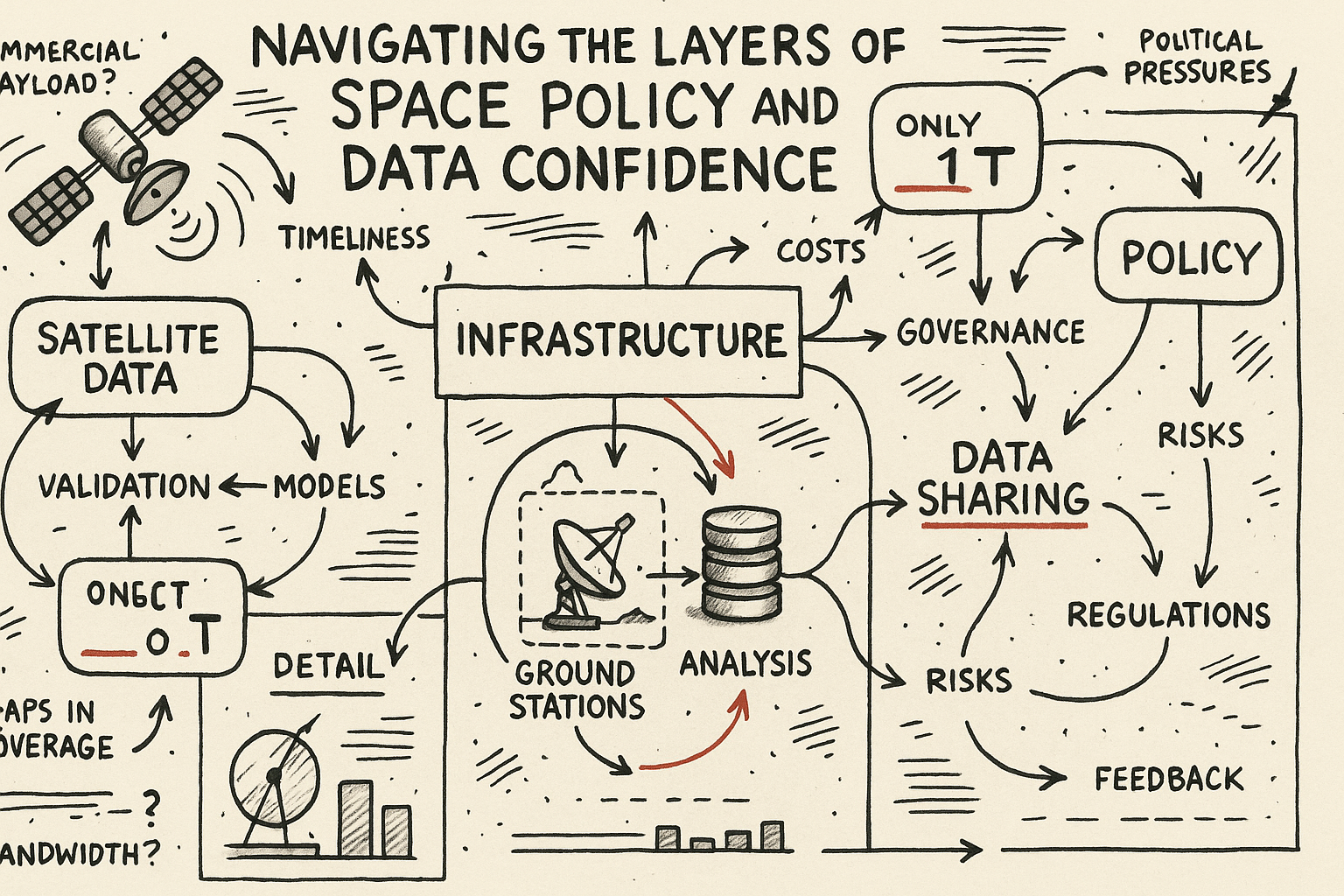
The contemporary landscape of space policy and infrastructure is undergoing a significant transformation, marked by a shift from mere launch capabilities to a broader control over space-based infrastructure. This evolution is underscored by the growing recognition of the importance of data confidence and strategic autonomy in space operations.
The Confidence Deficit in Space
Satellite operators have long grappled with the reliability of orbital data, a critical component for making informed decisions. The recent research highlighted by Dan Oltrogge in 'The Confidence Deficit in Space' suggests that while current data quality is sufficient for operational purposes, there is room for improvement. This improvement is pivotal as it directly impacts the confidence operators have in their systems, influencing the broader strategic decisions made by space agencies and commercial entities alike.
Contracts and Control: NRO's New Approach
The National Reconnaissance Office (NRO) has recently issued new contracts to SAR satellite data providers, reflecting a rigorous vetting process that underscores the critical role of data accuracy. These contracts, part of the Radar Commercial Augmentation initiative, are designed to ensure that only providers who demonstrate robust capabilities are involved in sensitive operations. This move is indicative of a broader trend towards ensuring that the data infrastructure is as reliable as the physical infrastructure.
The Right to be Wrong: A Paradigm Shift
Karolina Sarna, in her insightful analysis 'The Right to be Wrong,' argues for a paradigm shift in how Earth Observation (EO) data is perceived. EO data is inherently a model and not always a precise measurement. Allowing for a margin of error could foster innovation by encouraging providers to push boundaries without the fear of immediate repercussions. This approach may lead to EO data becoming more integral to infrastructure, rather than just an ancillary service.
From Projects to Products: Bridging the Middle Layer
The Earth Observation market is still largely dominated by project-based business models, as noted in Sarna's 'The Missing Middle Layer.' To transition to a scalable product market, several institutional and regulatory barriers need to be addressed. Establishing a robust middle layer involves creating a seamless integration between data providers and end-users, facilitating a more dynamic and responsive market.
Cybersecurity: The Ground Segment Challenge
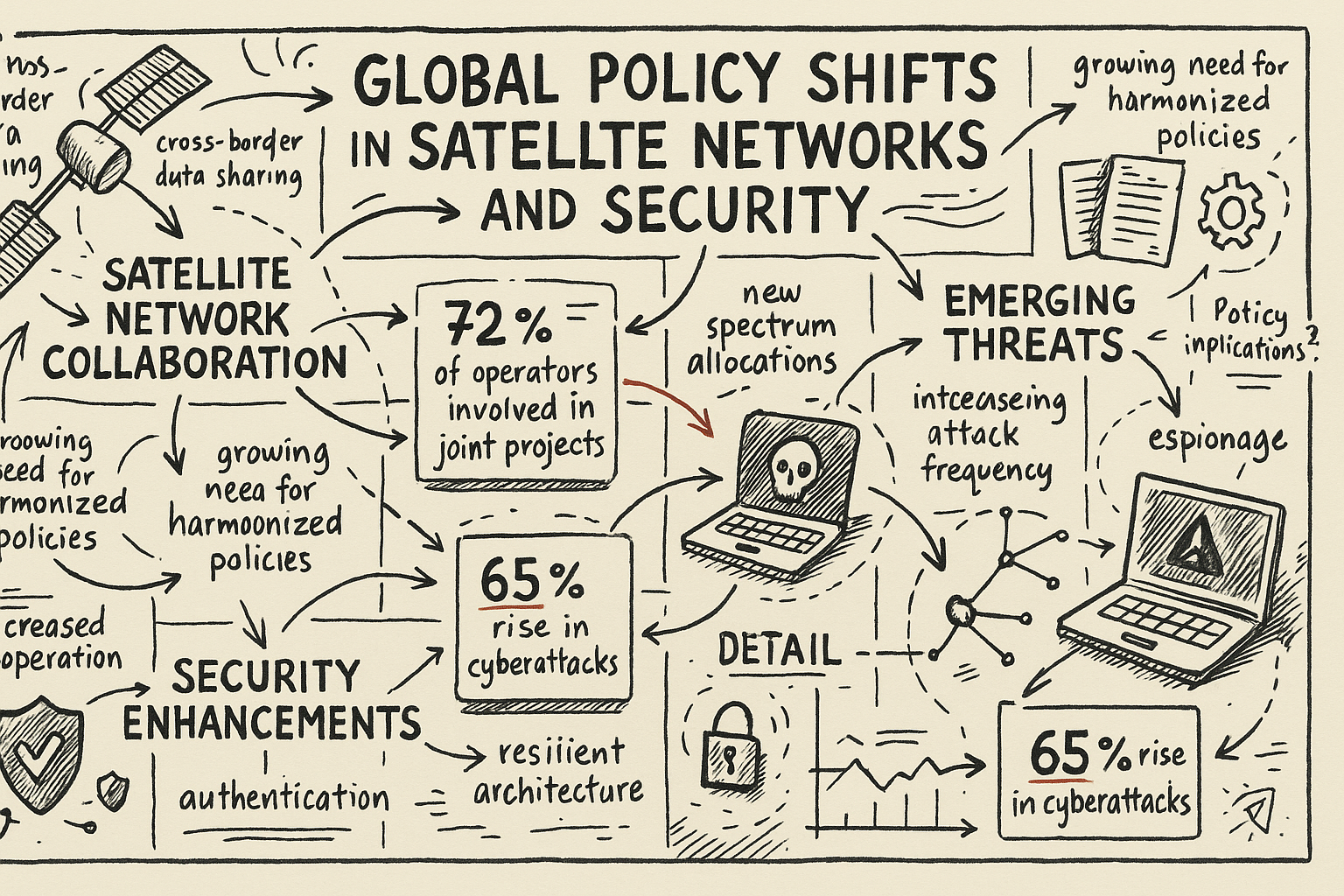
As Roger Patrick discussed in 'Cyber Threats in Space,' cybersecurity remains a relentless challenge, particularly for the ground segment. The ground segment is often the weakest link in the space infrastructure chain, making it a prime target for cyber threats. Continuous advancements in cybersecurity protocols are essential to safeguard data integrity and, by extension, the strategic autonomy of space operations.
Strategic Autonomy and Infrastructure Control
Timo Krone's analysis in 'A Space Programme or Just a Subscription?' highlights that true strategic autonomy in space is now measured by the extent of control over the infrastructure rather than the sheer number of launches. This shift emphasizes the need for nations and companies to invest in resilient and secure data infrastructures, ensuring that they are not only users but also controllers of the critical space infrastructure.
Future Implications
As the space industry continues to expand, the emphasis on data confidence and strategic autonomy will only grow. These developments suggest a future where space policy is increasingly intertwined with technological advancements and cybersecurity measures. The ability to control and secure space infrastructure will define the leaders in the new space race, with data confidence serving as both a cornerstone and a challenge.