The landscape of space policy is undergoing significant transformation as international collaborations and technological advancements redefine the global approach to satellite usage and security. Recent developments highlight a trend towards enhanced cooperation and innovation, driven by the need for secure and efficient satellite networks.
One such development is the French Space Agency CNES securing access to the Altair Earth Observation Constellation, developed by Orbitworks. This multi-year agreement is indicative of growing global confidence in cross-border partnerships to bolster Earth observation capabilities. The Altair constellation, comprising ten AI-enabled satellites, represents a strategic leap in utilizing advanced technology for environmental monitoring and other critical applications.
Meanwhile, AST SpaceMobile's expansion of its BlueBird constellation across Europe marks another pivotal moment. The addition of three new satellites—BlueBird 11, 12, and 13—enhances its satellite-based cellular broadband network, serving both commercial and governmental needs. This initiative underscores the increasing reliance on satellite networks to bridge connectivity gaps and support robust communication infrastructures across the continent.
In parallel, ORBES's introduction of the Exo-ORB inspection and maintenance robot signifies a breakthrough in satellite servicing technology. Designed to operate autonomously alongside large orbital infrastructures, Exo-ORB offers a third-person perspective crucial for the upkeep and protection of billion-dollar national security assets. This innovation highlights a shift towards proactive maintenance strategies, ensuring the longevity and reliability of vital space assets.
The European Space Agency's commissioning of an optical ground station in Luxembourg to advance quantum-enabled satellite communications is yet another critical policy development. By focusing on ultra-secure communication networks, this initiative aims to safeguard sensitive data transmissions against potential cyber threats. The integration of quantum technology into satellite communications represents a forward-thinking approach to addressing emerging security challenges in the digital age.
Historical Context and Policy Implications
Historically, space policy has been driven by national interests, with countries prioritizing individual advancements over collaborative efforts. However, the current trajectory reflects a paradigm shift towards international cooperation, driven by the recognition that global challenges require collective solutions. This shift is evident in the strategic partnerships and shared technological advancements observed across recent initiatives.
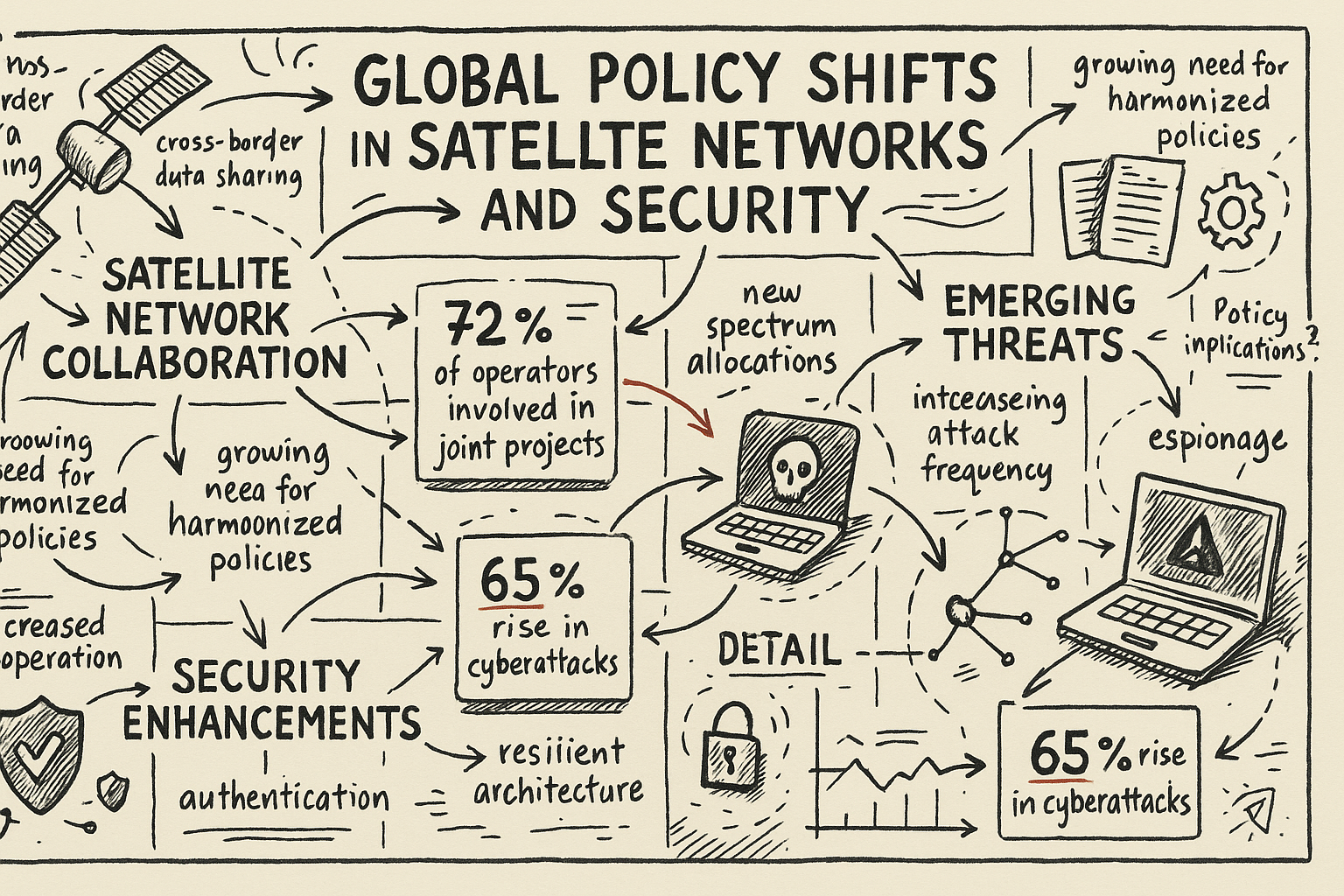
From a policy perspective, these developments emphasize the importance of establishing frameworks that facilitate international collaboration while ensuring data security and asset protection. The integration of AI, quantum technologies, and autonomous systems into satellite networks poses both opportunities and challenges, necessitating adaptive policy measures to govern their use effectively.
Furthermore, the increasing focus on secure communication networks highlights the need for robust cybersecurity policies that can keep pace with technological advancements. As satellite networks become integral to global communications, safeguarding these infrastructures becomes paramount to maintaining national and international security.
Future Implications
Looking ahead, the continued evolution of space policy will likely see an expanded role for public-private partnerships in driving technological innovation and operational efficiency. As countries and companies collaborate on ambitious satellite projects, the emphasis will likely shift towards creating interoperable systems that can seamlessly integrate with existing infrastructures.
Moreover, the development of quantum-enabled communication networks could redefine the standards of data security, prompting a reevaluation of current encryption and cybersecurity protocols. As these technologies mature, their applications could extend beyond space, influencing terrestrial communication networks and security measures.
Overall, the recent developments in satellite policy and technology underscore the importance of adaptive and forward-thinking strategies. By fostering international collaboration and embracing innovative solutions, the global space community can effectively address the challenges and opportunities of the evolving space landscape.