University of Maryland and SwRI simulated cosmic crashes and post-impact thermal evolution
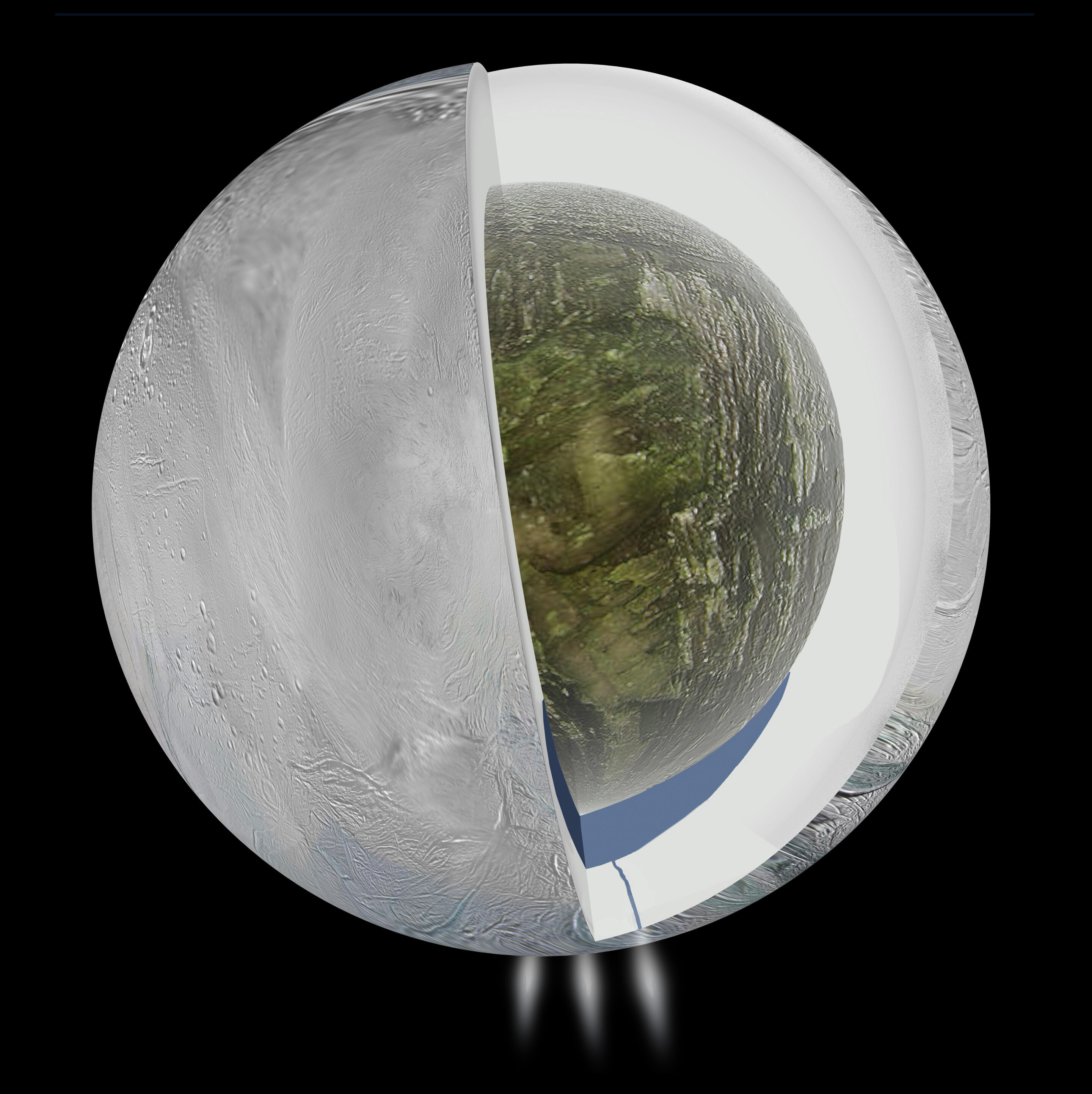
On September 19, 2026, researchers led by the University of Maryland (UMD), in collaboration with the Southwest Research Institute (SwRI) in Colorado and the Weizmann Institute of Science in Israel, published simulations in Nature Astronomy that probe how catastrophic collisions affect the ability of icy moons to host subsurface oceans.
The team combined two complementary modelling approaches: smoothed particle hydrodynamics (SPH) collision simulations that follow the immediate fragmentation, heating and reassembly of rock-and-ice bodies, and long-term thermal–structural evolution models that follow how heat is produced, transported and lost over billions of years. By linking these methods, the authors were able to compare a moon's state before an impact, immediately after, and over geological time.
Key result: for the states and sizes examined, large collisions generally did not change a moon’s long-term status as an ocean world. As UMD lead author Marc Neveu, an astronomy associate research scientist at UMD, summarized: "If there was an ocean before, there's likely to be an ocean after and vice versa." SwRI co-author Dr. Alyssa Rhoden noted that while disruptive collisions can affect the presence and persistence of subsurface oceans, they do not appear to create new oceans post-impact.
The researchers focused on two representative size scales—roughly 500 km and 1,000 km in radius—targets that span the range of many outer-solar-system moons of interest. Neveu and colleagues deliberately modelled some of the most extreme collisions they could conceive; as Neveu said, "If those didn't make a difference, it's unlikely smaller ones would either."
How the simulations were run and interpreted
The collision simulations tracked millions of individual fragments to determine how much material was ejected, how much reaccumulated into one or more bodies, and how much internal heating occurred during the impact. That instantaneous outcome fed into thermal evolution models that compute whether radioactive decay, remnant heat and the new body’s thermal structure can sustain liquid water beneath an icy shell over billions of years.
SwRI’s release emphasizes two connected conclusions: disruptive impacts can influence whether a given moon retains or loses a subsurface ocean, but such collisions are not efficient mechanisms for creating oceans where none existed before. The UMD-led summary conveys the same outcome: the presence or absence of an ocean tends to be robust to even very large collisions.
Implications for Saturn, Uranus and Neptune moon systems
Many of the candidate ocean worlds in our solar system orbit the gas and ice giants—moons of Saturn, Uranus and Neptune. Some of these systems contain numerous small moons with radii below 1,000 km, and previous work has proposed that many of the smaller bodies might be reassembled remnants of earlier moons destroyed in collisions. For example, SwRI notes that for Saturn’s moons, disruptive collisions have been proposed even within the last 100 million years, raising the question of whether the oceans we observe now are new or inherited from earlier generations.
The new modelling suggests that reassembly does not typically reset a moon to a cold, dead state if an ocean had already been present. Conversely, if a moon lacked an ocean prior to disruption, a collision does not commonly produce conditions that lead to a long-lived subsurface ocean. That dichotomy helps interpret current observations: ongoing or recent disruptive histories do not by themselves guarantee that a small icy moon will host a new ocean.
Context and caveats
The study’s authors stress limits and uncertainties. The simulations considered specific size classes and a range of extreme impact scenarios; Neveu and colleagues acknowledge that smaller impacts are unlikely to be more consequential than those they modelled. The thermal evolution calculations depend on assumptions about radioactive-element abundances, porosity, composition and the way heat is transported in reassembled bodies—parameters that carry uncertainty for many moons.
Moreover, while the linked SPH and thermal models provide a powerful way to follow both short-term and billion-year outcomes, they cannot capture every physical process in full detail. The authors accordingly frame some conclusions probabilistically: impacts "do not really matter as far as oceans are concerned" for the cases they studied, rather than claiming absolute universality for all moons in all collision regimes.
Future directions
The findings refine how planetary scientists interpret the histories of ocean-bearing moons and will inform prioritization for future observations and missions. If present-day oceans are likely inherited through reassembly, then surface geology and chemical tracers may preserve records of earlier oceanic conditions. Conversely, where observations indicate no prior ocean, models suggest impacts alone are unlikely to create one, directing attention to internal heating and composition as the dominant controls.
As missions and telescopic studies continue to probe the outer solar system, combining detailed impact modelling with measurements of composition, heat flux and geological age will help constrain which moons are robust ocean worlds and which might be cold, reassembled rubble. The UMD–SwRI–Weizmann simulations provide a quantitative step toward that integrated picture.