Eutelsat Trials OneWeb LEO Connectivity on Polish Long‑Distance Trains
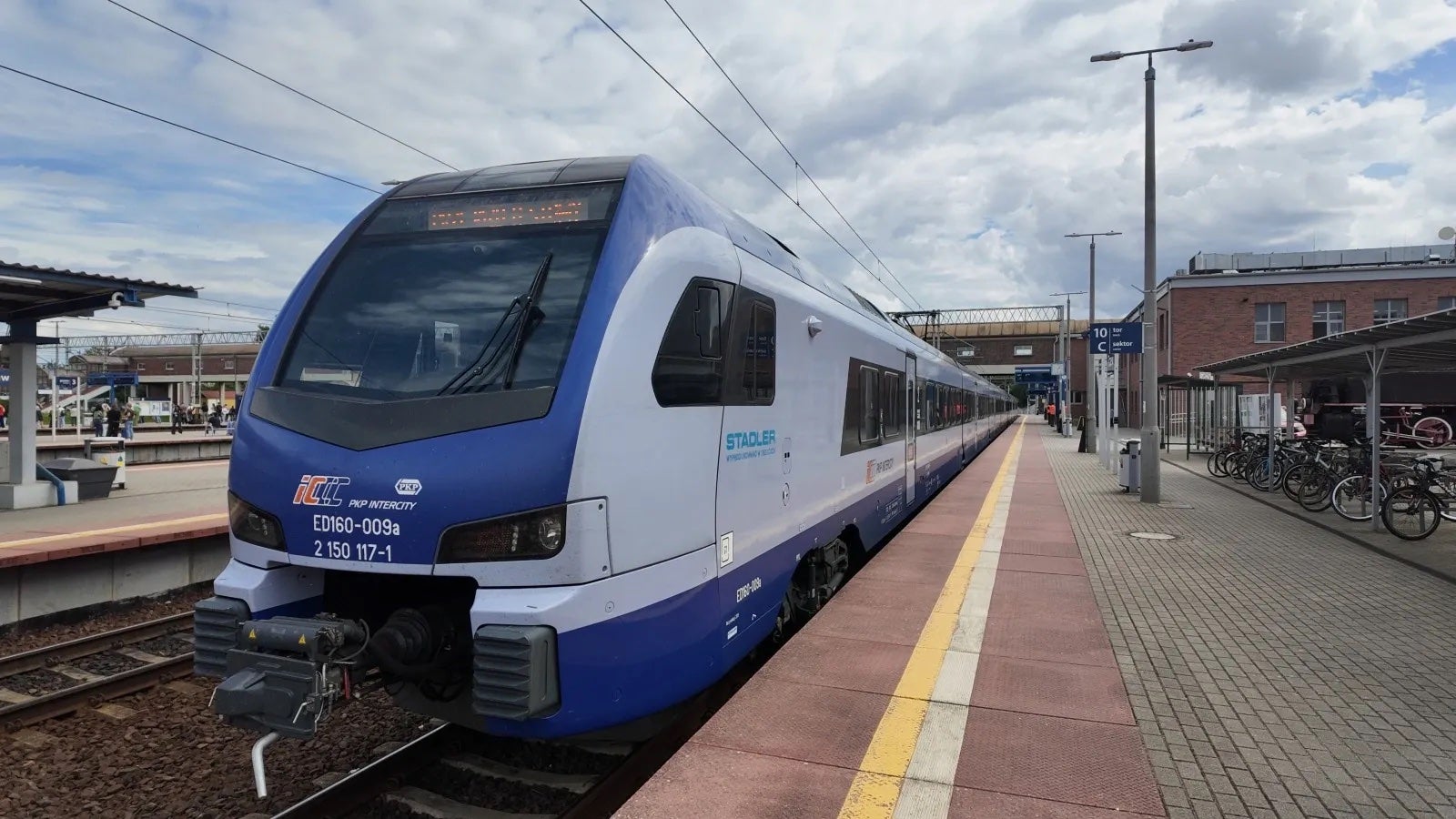
Eutelsat tested OneWeb Low‑Earth Orbit (LEO) connectivity on PKP Intercity’s live rail network in Poland during a demonstration announced on 22 September 2026. The test used a Kymeta Kestrel u5 flat‑panel terminal installed on a long‑distance train running between Kozłów, Warszawa, and Tczew. Systems integrator ACO Solutions led the demonstration, with Hispasat acting as the distribution partner alongside Eutelsat.
What the demonstration did and measured
According to Eutelsat, the on‑train installation demonstrated switching between satellite and terrestrial technologies and interfacing with both onboard and trackside systems. The solution is intended to support passenger connectivity as well as operational communications and data services. Eutelsat did not publish specific performance metrics for the trial.
Drew Brady, Eutelsat director of commercial management, Land Mobility, said in a video about the test that "we have a number of people running different data sessions to understand how the service works, to test the failover between satellite and cellular, [and] response times as we go through natural blockages in the region." The company therefore focused on real‑world evaluation of session continuity and failover behavior as the train passed through areas with cellular coverage and areas with natural blockages.
Certification and phased rollout
The Kymeta Kestrel u5 recently received compliance with railway standards from European standards body TÜV Rheinland, and Kymeta is conducting connectivity trials with rail operators over the next 60 days, with an expectation of a full‑scale rollout across European and global markets. That certification and the current tests with PKP Intercity place the Kestrel u5 in a position for broader adoption by rail operators that need a compact, low‑profile antenna solution suitable for high‑speed and long‑distance services.
Joanna Siecińska, a member of the management board for finance and business development at PKP Intercity, said the tests were successful and called them an “important step” toward connecting passengers. Siecińska added that PKP Intercity was able to validate the solution under real operating conditions and explore technologies that could enhance onboard connectivity, passenger comfort, and the overall travel experience in the future.
Why satellite‑to‑cellular switching matters for rail
Modern passenger expectations and increasing operational demands require continuous connectivity on long‑distance services. Trains travel through mixed coverage environments: urban and suburban regions with dense cellular networks, and rural or obstructed areas where terrestrial coverage is poor or intermittent. LEO satellite constellations such as OneWeb offer an option for extending connectivity in those gaps. Demonstrations like Eutelsat’s focus on the technical challenge of failover — maintaining active sessions and acceptable response times as the train switches between cellular networks and satellite links — as well as on integrating satellite connectivity with onboard operational systems and trackside infrastructure.
Partnerships and roles in the trial
ACO Solutions served as the systems integrator for the demonstration, coordinating the onboard installation and the interaction between shipsets, terminals and networks. Hispasat acted as the distribution partner, and Eutelsat managed the LEO service element tied to OneWeb. Kymeta supplied the Kestrel u5 terminal, leveraging its recent railway compliance certification to support this and other tests with rail operators across Europe and globally.
Context and next steps
Although Eutelsat did not release quantitative performance data from the demonstration, the public statements emphasize validation under operational conditions rather than single‑point performance numbers. Kymeta’s planned 60‑day trial window with rail operators will likely generate further operational data, and Eutelsat’s involvement with OneWeb places the operator among commercial players exploring LEO hybrid connectivity for mobility markets.
For rail operators such as PKP Intercity, the immediate benefit is the ability to test integration approaches and confirm how satellite links can back up or complement terrestrial systems for passenger Wi‑Fi, onboard entertainment, and critical operational communications. From a procurement and certification standpoint, the combination of TÜV Rheinland railway compliance for the Kestrel u5 and live network demonstrations will be important steps toward wider adoption.
Implications for the European rail market
The demonstration in Poland reflects a broader industry trend of testing hybrid satellite–terrestrial connectivity solutions for mobility markets. Operators and vendors are now evaluating not only raw throughput but also resilience, latency behavior during failover, and the ability to interface with existing onboard and trackside systems. If subsequent trials yield measurable improvements in session continuity and acceptable response times, rail operators may accelerate deployments that combine cellular and LEO satellite services to maintain passenger and operational connectivity over longer routes and through coverage blackspots.
Sources: Satellite Today (Via Satellite) articles "Eutelsat Trials LEO Rail Connectivity in Poland" and Kymeta Kestrel u5 certification coverage.