SpaceX submits re-entry and collision analysis for Starmind on Sept. 18, 2026
SpaceX submitted a 12-page technical response to the Federal Communications Commission (FCC) on Sept. 18, 2026, detailing atmospheric re-entry thermodynamics and orbital collision probabilities for its proposed Starmind space-based data center constellation, the company said in the filing reported by SatNews.
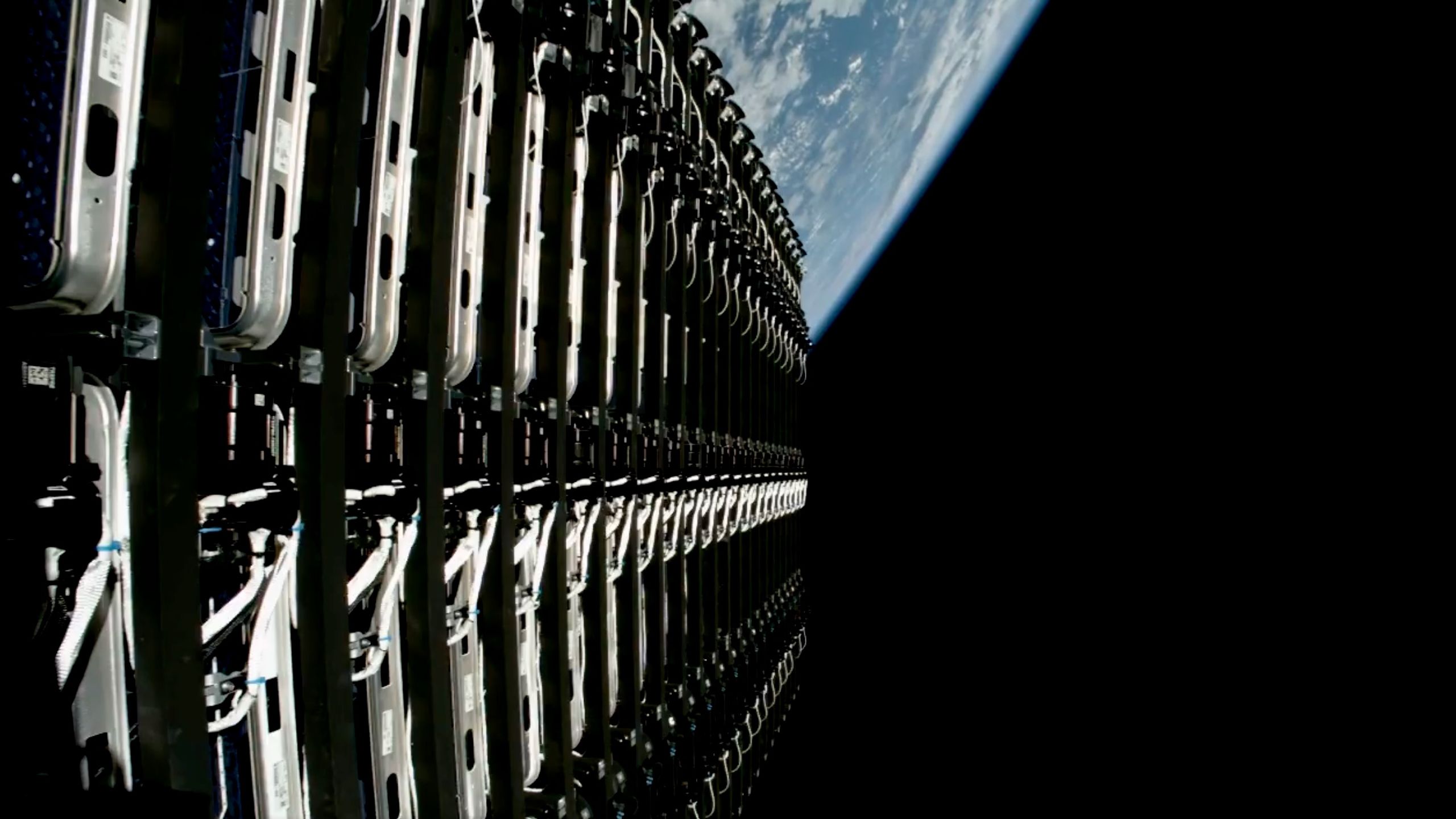
The Starmind architecture is described in the filing as a high-density Low Earth Orbit (LEO) constellation intended to process artificial intelligence workloads in space. Individual Starmind nodes are substantially larger than typical telecommunications platforms: SpaceX reports each Starmind spacecraft may have an individual spacecraft mass of up to 4,000 kilograms (4 metric tons), nearly seven times the mass of a 575‑kilogram Starlink V2 Mini platform that the company referenced for comparison in the submission.
SpaceX framed the submission as a response to formal FCC inquiries about disposal safety, demise characteristics and human casualty risks associated with retiring the heavier compute platforms. The company outlined a phased deployment approach that would evaluate real-world atmospheric and environmental outcomes during initial operations. According to the filing, Starmind spacecraft operating below 600 kilometers would undergo controlled de-orbit maneuvers to ocean disposal zones, while higher-altitude units could be moved into graveyard orbits upon retirement pending regulatory approval.
The technical evaluation models structural breakup and atmospheric destruction of key components during high-velocity re-entry. SpaceX stated that major bus structural elements, primary propellant tanks and optical laser communication terminals are expected to vaporize completely during re-entry. However, the analysis identified several dense internal components that could survive re-entry intact, including AI compute hardware modules, solar array segments, thermal management cooling loops, avionics assemblies and electric thruster bodies.
For any surviving fragments, SpaceX calculated impact energy thresholds and human casualty risk using NASA Debris Assessment Software (DAS) standards. The filing reports that all surviving fragments are calculated to impact Earth’s surface with kinetic energy below 15 joules, and that the aggregate human casualty risk meets the FCC requirement of less than 1‑in‑10,000 (0.0001), with SpaceX reporting a zero aggregate human casualty risk under DAS standards. The filing also quantified large-debris collision probability, estimating the full-satellite collision probability with orbital debris measuring 10 centimeters or larger at below 0.001 over the spacecraft’s operational lifespan.
The filing contextualizes the 15‑joule figure by noting, in SpaceX’s analysis, that a 15‑joule impact is equivalent to a 1.7‑inch hailstone falling at terminal velocity.
Regulatory reviewers have focused on larger and heavier LEO platforms in recent months as new commercial architectures push satellite mass and capability beyond those typical of broadband constellations. The Starmind submission explicitly requests regulatory latitude for graveyard-orbit disposal of higher-altitude units, a practice more commonly associated with medium and geostationary orbits than with dense LEO operations.
Independent and agency-led re-entry prediction efforts have been active in parallel: European Space Agency (ESA)-funded work led by NorthStar Earth & Space will study uncontrolled atmospheric re-entry forecasting, according to recent announcements reported by SpaceQ and Satellite Today. Those projects emphasize improved modelling of where and when uncontrolled re-entries will land, a complementary effort to the controlled-disposal and demisability analyses that SpaceX provided to the FCC for Starmind.
The Starmind filing comes against a backdrop of rapid growth in SpaceX’s LEO presence. Spaceflight Now reported in August 2026 that SpaceX has exceeded 11,000 satellites in low Earth orbit, illustrating the company’s operational scale as it seeks regulatory approval for new classes of spacecraft.
NovΔ mAInd's launch database: SpaceX — 144 launches tracked, 99.3% success rate, first flight 2025-01-04, most recent 2026-09-20, 22800 kg to LEO.
As regulators examine how larger, compute-dense satellites behave on re-entry and interact with the existing debris environment, the technical details SpaceX provided will be central to FCC decisions on authorizing Starmind operations and disposal plans. The company’s demisability modelling — which flags specific dense components that could survive re-entry — and the request to permit graveyard orbits for some retired units are likely to shape the conditions and mitigation requirements the FCC may impose, should it proceed toward approval.
Uncertainties remain and SpaceX’s filing contains modelling results rather than direct observational proof: the company proposes a phased deployment intended to validate those models in real operational conditions. ESA-sponsored re-entry forecasting work and other agency tools will also play a role in verifying uncontrolled re-entry predictions and informing regulatory expectations for new large spacecraft in LEO.