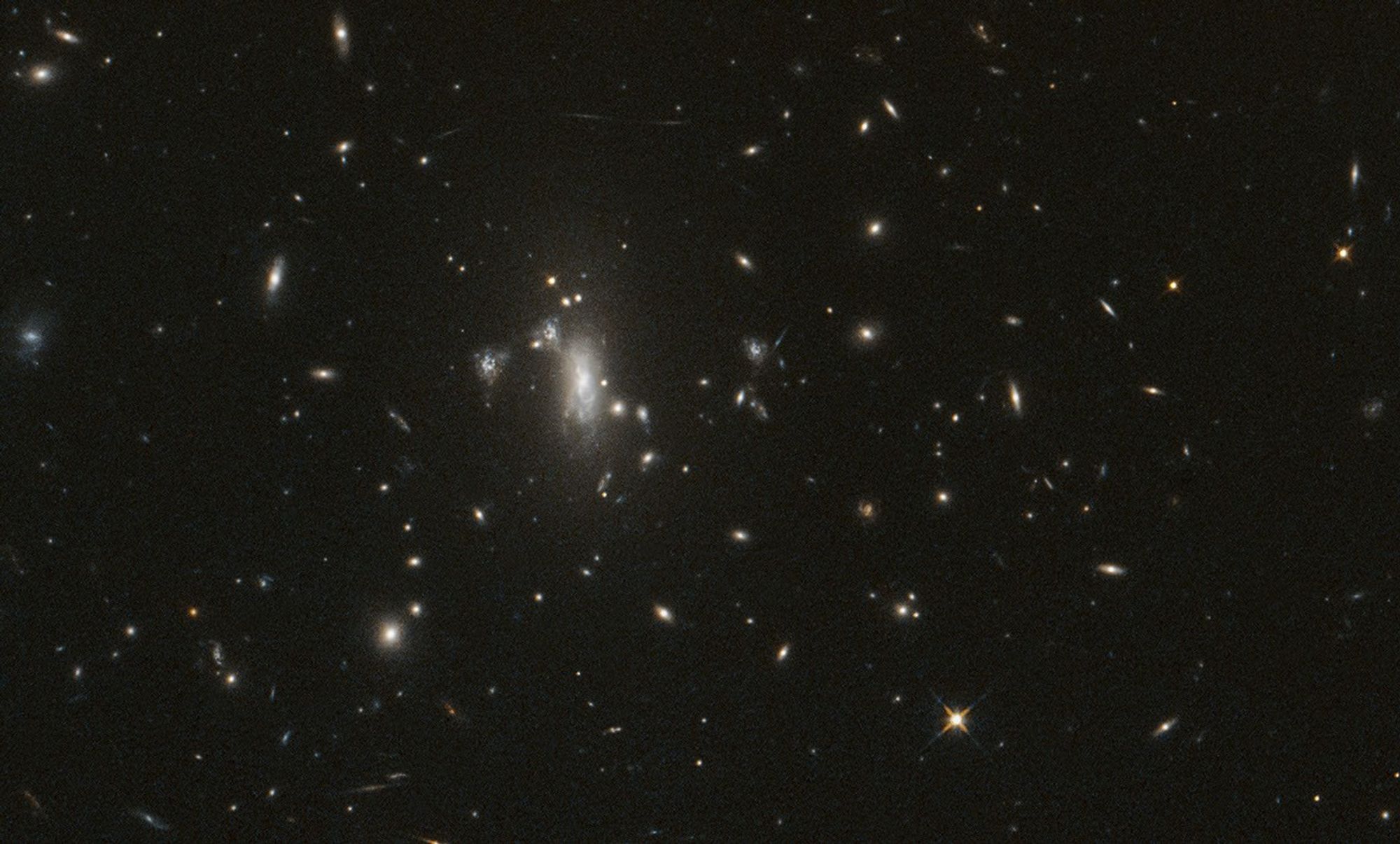
NASA’s Hubble Space Telescope completed its 200,000th orbit around Earth on Sept. 19, 2026, and used an observation made that same day to search for the predicted reappearance of a gravitationally lensed supernova named Athena.
Launched in 1990, Hubble has now spent more than 36 years in orbit, during which it has accumulated over 1.7 million scientific observations and traveled more than 5 billion miles (8 billion kilometers) around Earth, according to NASA. The milestone orbit number underscores the longevity of an observatory that continues to supply high-demand ultraviolet and visible-wavelength data complementary to NASA’s James Webb Space Telescope and the Roman Space Telescope.
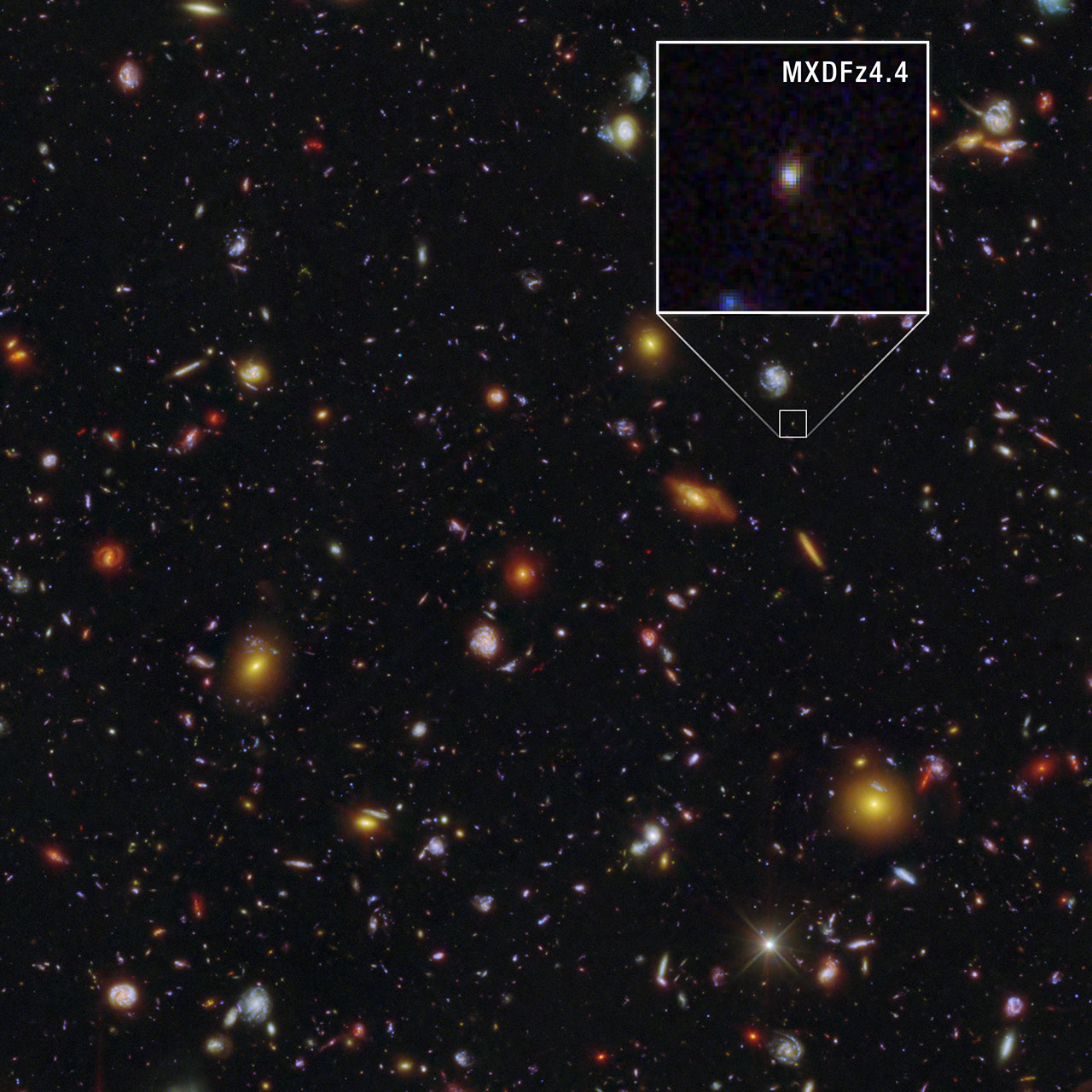
The image tied to this orbit centers on galaxy cluster MACS J0417 and is part of repeated monitoring to catch the reappearance of supernova Athena. Athena was discovered by NASA’s James Webb Space Telescope in 2025, and because MACS J0417 acts as a gravitational lens it bends and magnifies light from background objects. That lensing can produce multiple images of the same transient event separated in time: light taking different paths through the curved spacetime of the cluster arrives at Earth months or years apart.
Researchers predict Athena could reappear "between now and early March 2027," a window reported by NASA and repeated in the Phys.org summary of NASA’s announcement. Observing the timing of those reappearances matters because the delays between images encode information about both the mass distribution of the lensing cluster and the geometry of the universe. Precise measurements of time delays can therefore help refine models of MACS J0417’s mass and contribute to independent estimates of the universe’s expansion rate, commonly quantified as the Hubble constant.
Hubble’s unique capability to return repeatedly to the same sky locations — combined with its ultraviolet and visible sensitivity — makes it particularly well suited to long-term monitoring campaigns such as this. NASA notes that demand for Hubble observing time remains high: each year astronomers request roughly seven times as much time as is available. That persistent demand is one reason Hubble continues to be scheduled around the clock for targets across every area of astronomy.
The Athena monitoring program is an example of coordinated use of multiple observatories. Athena’s initial discovery by Webb in 2025 illustrates how the telescopes’ complementary wavelength coverage and scheduling can be leveraged: Webb can find distant, redshifted objects in the infrared, and Hubble can follow up in visible and ultraviolet bands to watch for temporal changes and to measure light curves with a long time baseline. The Roman Space Telescope, identified by NASA as another partner in the family of large observatories, is expected to expand time-domain cosmology capabilities when it continues its mission operations.
Gravitationally lensed supernovae are comparatively rare but scientifically valuable. When a supernova’s multiple images reappear at different times, the delays provide a probe of both the foreground lens’s mass distribution — including dark matter — and cosmological parameters. Because there remains an active discrepancy between measurements of the Hubble constant from the local universe and from the cosmic microwave background, independent methods that use lensing time delays are of interest to cosmologists as a cross-check on other techniques.
Hubble’s 200,000-orbit milestone also prompts reflection on the observatory’s broader legacy. Over more than three decades it has produced high-impact images and spectra that have shaped study of planets, stars, galaxies and cosmology. NASA emphasizes that Hubble’s ultraviolet and visible observations continue to complement Webb and Roman, maintaining the space-based observatory fleet that together probes a wide range of wavelengths and timescales.
If Athena does reappear as predicted, Hubble’s observations during and after the event will feed into lens models for MACS J0417 and contribute data points for analyses of time delays and the Hubble constant. If the reappearance is not detected within the predicted window, that outcome will also inform models and could indicate the need to revise mass models or time-delay predictions. In either case, the monitoring campaign illustrates how legacy observatories like Hubble remain active participants in contemporary cosmology and time-domain astrophysics.
Sources: NASA; Phys.org