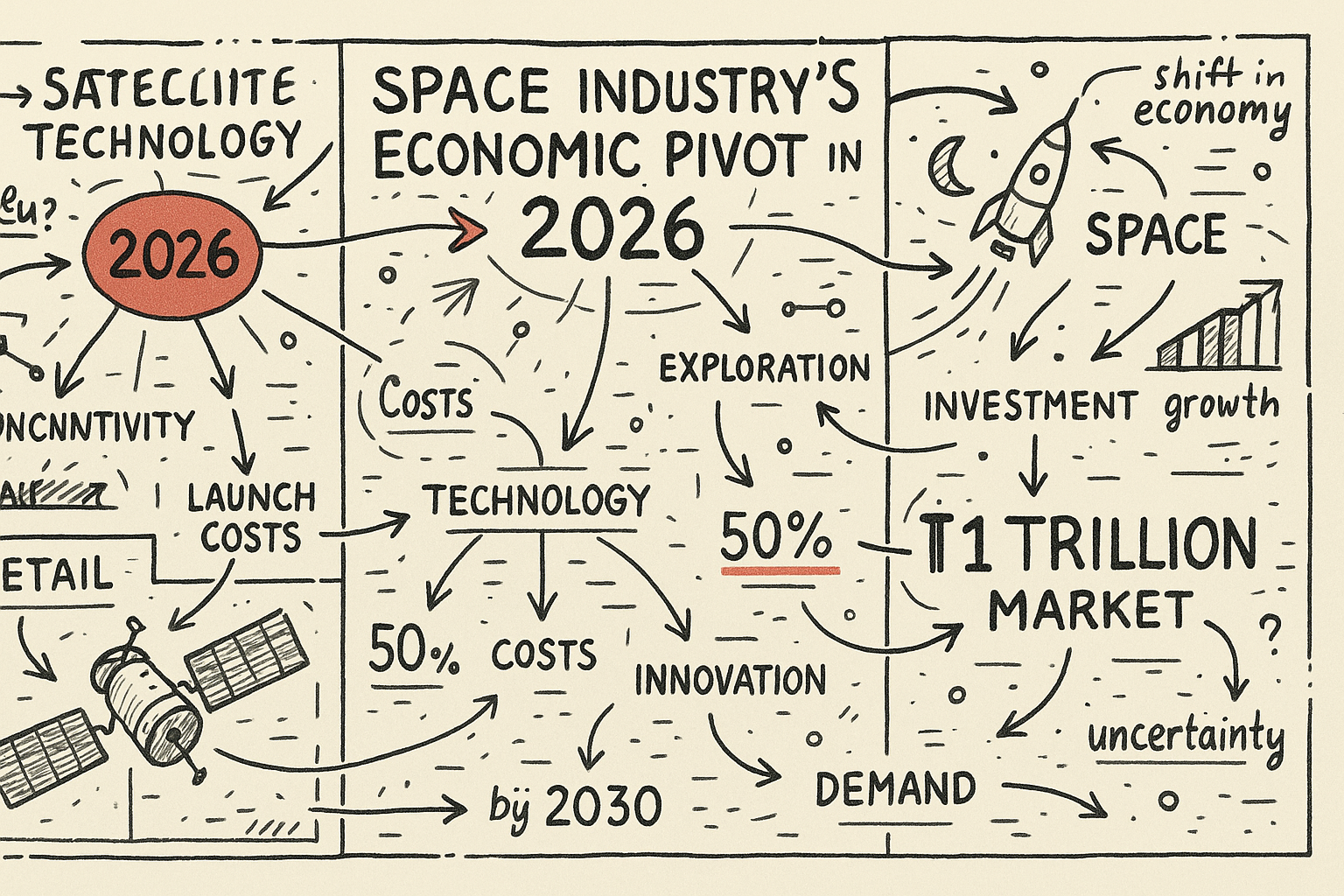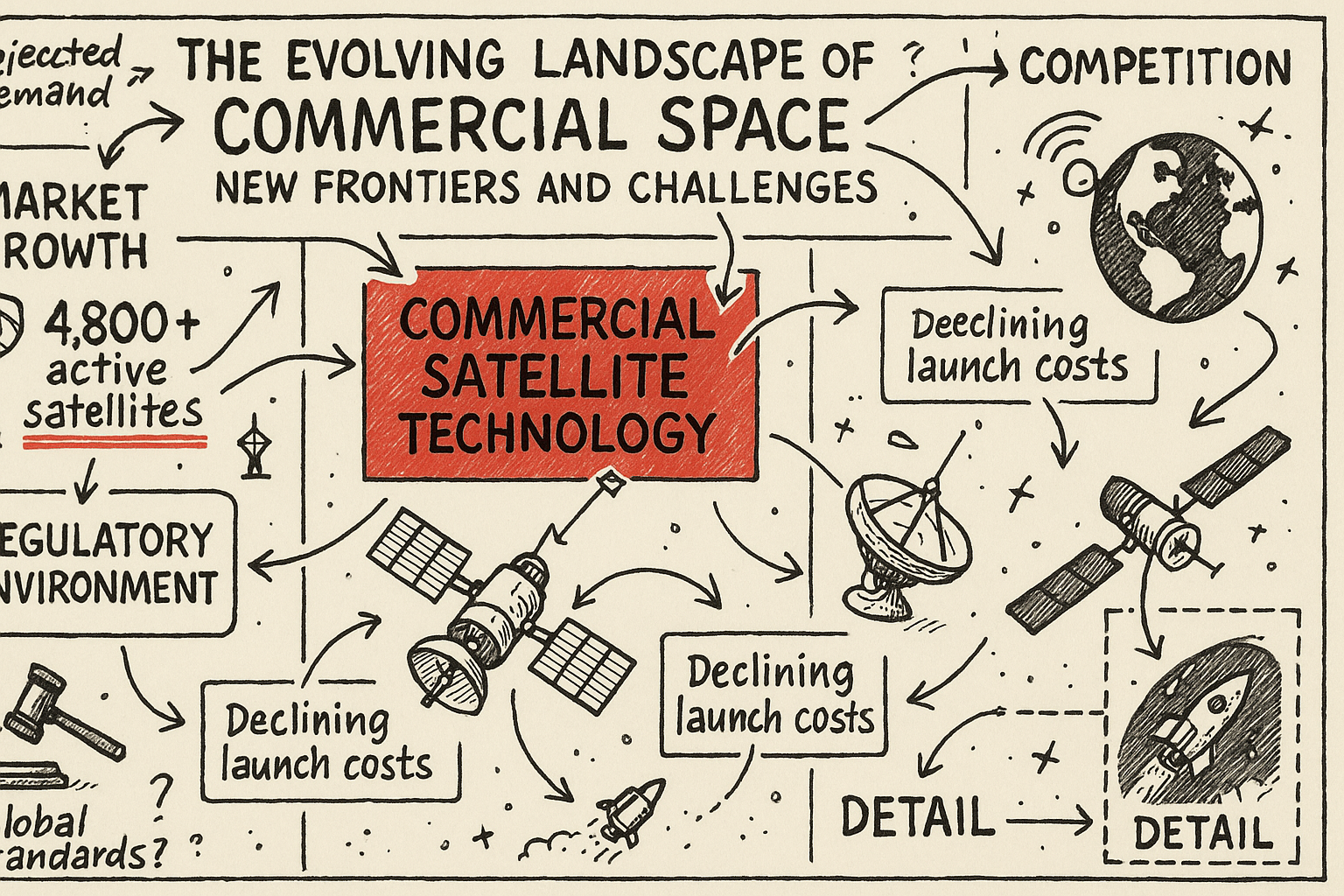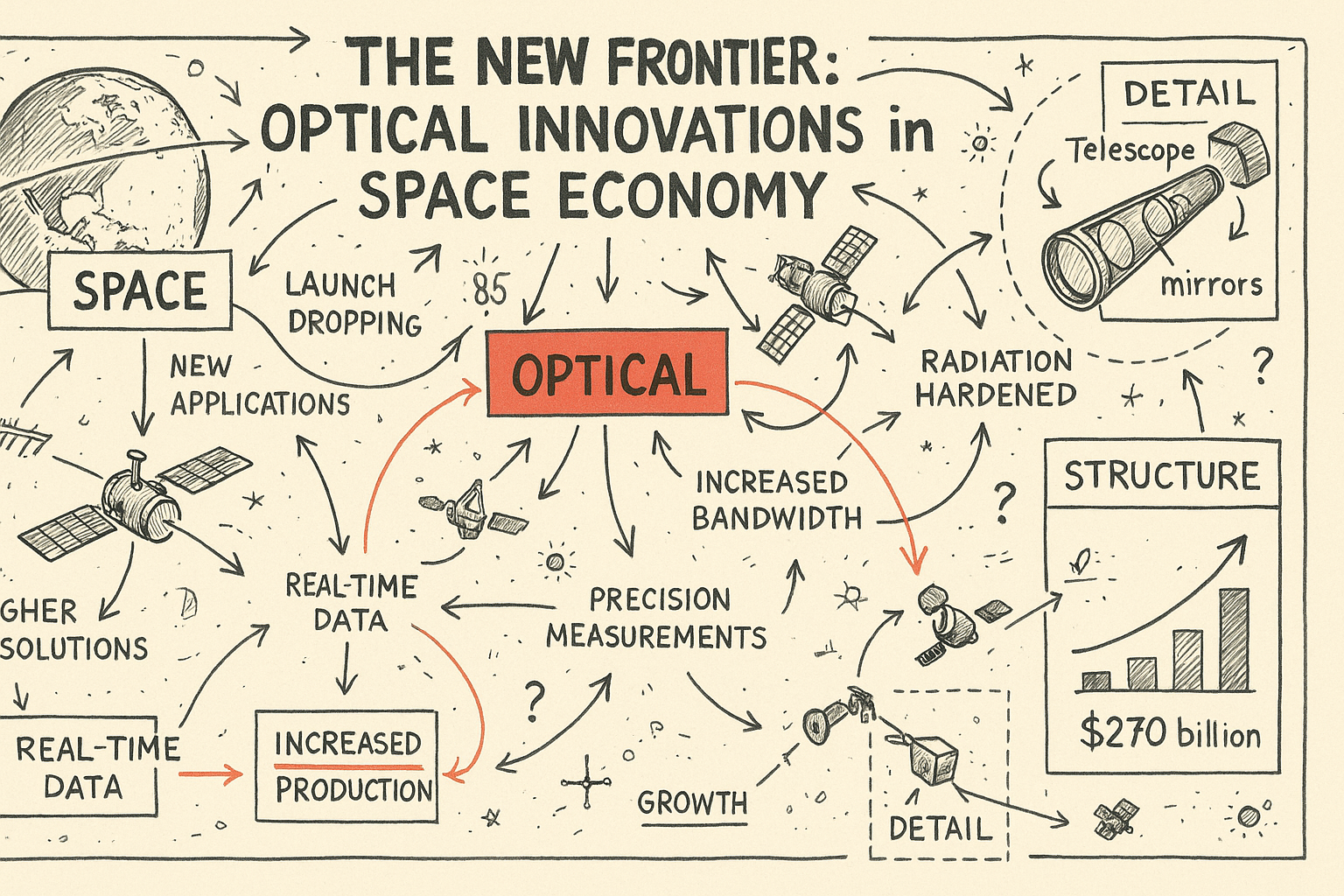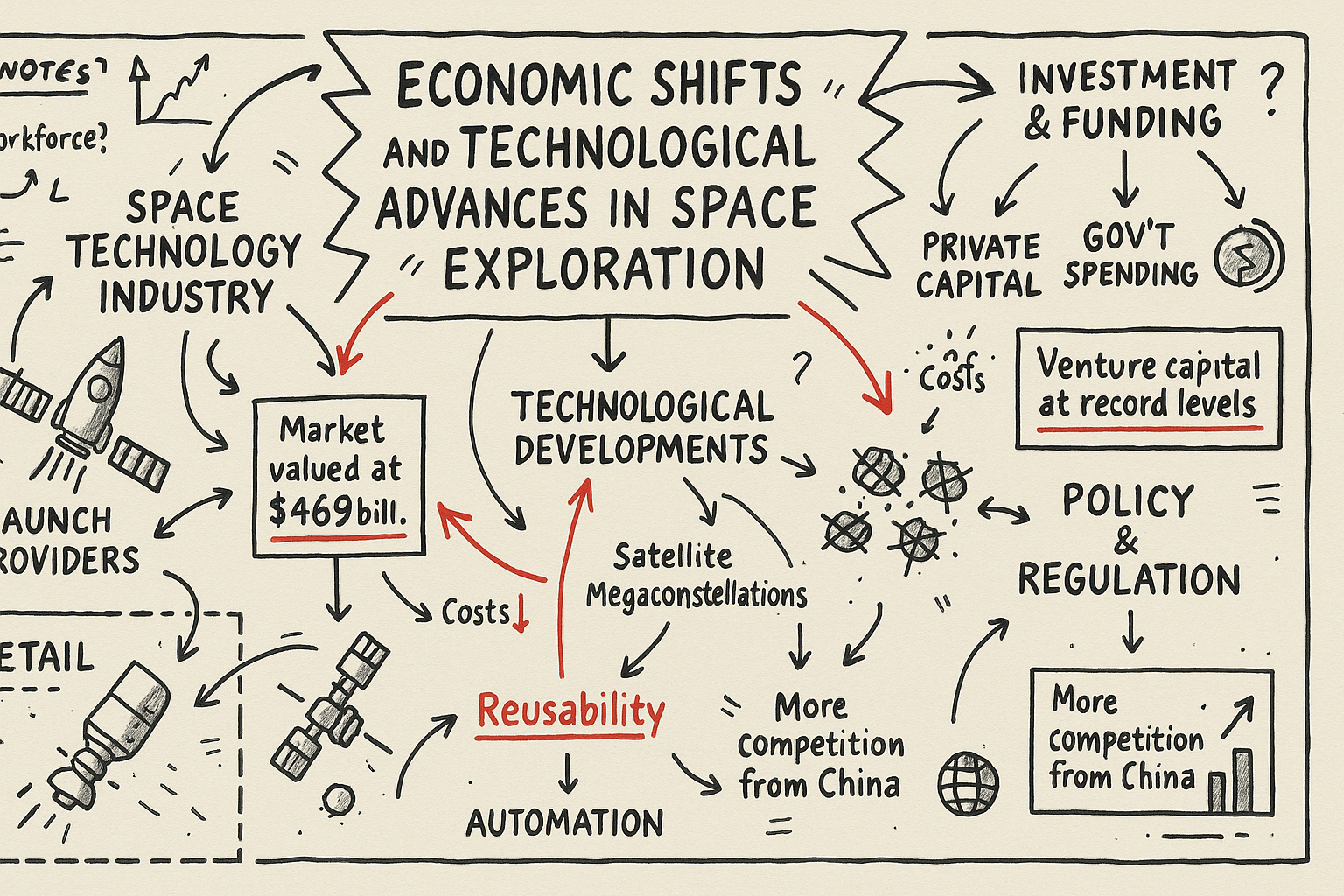
The burgeoning space economy is increasingly becoming a focal point for technological innovation and economic growth, catalyzed by recent developments in space-based manufacturing, satellite technology, and lunar exploration. This deep-dive analysis explores how these developments are not only reshaping the commercial space sector but also influencing broader economic trends.
In-Space Manufacturing: A New Frontier
The announcement by Outpost to launch an in-space manufacturing service using its Space Factory platform marks a significant milestone in the commercialization of space. This initiative aims to produce StarFiber, an advanced optical fiber, by 2028. The potential for manufacturing in microgravity environments opens up new possibilities for producing materials with unique properties, which could have far-reaching implications for industries on Earth.
Historically, manufacturing advancements have driven economic growth, from the Industrial Revolution to the digital age. Now, space-based manufacturing could herald a new era of industrial development, potentially reducing costs and resource consumption on Earth while creating high-value products.
Satellite Technology and Inspection
Starfish Space, backed by NASA, is preparing to launch its Otter spacecraft, designed to inspect defunct satellites. This capability not only extends the life of satellites but also represents a shift towards sustainable space practices. By enabling the servicing and recycling of inoperable satellites, companies like Starfish are addressing the growing concern of space debris, which poses risks to both current and future space operations.
This trend towards sustainable practices in space is reminiscent of the environmental movement on Earth, where resource conservation and waste management have become central to economic policies and corporate strategies.
Lunar Exploration: Water as a Catalyst
The partnership between Astrolab and Interstellar Mapping to hunt for lunar water underscores the strategic importance of the Moon in future space exploration and economic activities. Water on the Moon could be used not only for sustaining human presence but also for producing fuel, making lunar exploration economically viable. This pursuit is reminiscent of historical explorations on Earth, where the search for resources such as gold and oil drove exploration and economic expansion.
Power Beaming: A New Energy Paradigm
Katalyst's demonstration of space-based power beaming for the Pentagon's energy investment program illustrates the potential of space as a platform for innovative energy solutions. By beaming power to remote locations, this technology could revolutionize energy distribution, particularly in areas difficult to access by traditional means.
The concept of power beaming challenges conventional energy paradigms, much like how renewable energy technologies have disrupted the fossil fuel industry. If successful, it could lead to more decentralized and resilient energy systems.
Implications for the Future
These developments highlight a broader trend of convergence between space technology and economic strategies, where space is not just the final frontier but a new frontier for economic opportunities. The establishment of new manufacturing facilities, like Planet's in Berlin, further underscores the global nature of the space economy, where international collaboration and investment are key.
As space technologies advance, the economic implications will extend beyond the traditional space sector, influencing industries such as telecommunications, manufacturing, energy, and even global trade. The potential for new markets and industries to emerge is significant, suggesting a future where space plays a central role in economic growth and development.