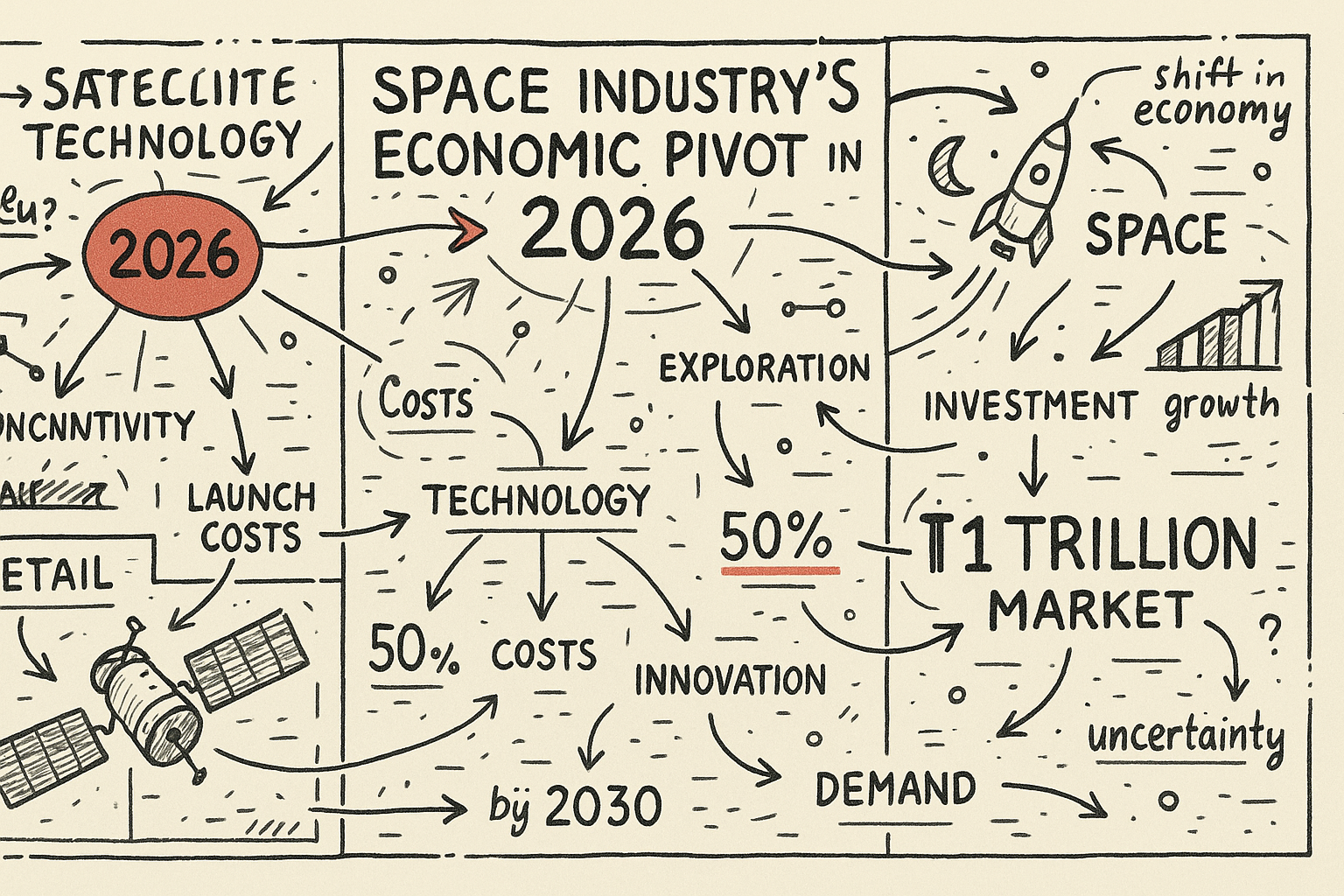
The space economy is undergoing a profound transformation in 2026, driven by strategic partnerships, technological advancements, and ambitious market expansions. This evolution is not just about launching satellites but about redefining the industry's economic framework to embrace longevity, sustainability, and broader market integration.
Strategic Alliances and Market Penetration
A wave of strategic partnerships is reshaping the space industry's economic dynamics. For instance, LatConnect 60's collaboration with India's NSIL and GeoSyze signifies a pivotal move to solidify its market presence in a region poised for substantial growth. Such alliances are not merely transactional but are indicative of a broader trend where companies leverage local expertise to penetrate new markets effectively.
Similarly, SES's deal with the Peruvian Navy exemplifies how satellite companies are increasingly aligning with governmental entities to secure sovereign contracts. This not only ensures sustained revenue streams but also strengthens geopolitical ties, which are crucial in an era where space capabilities are becoming integral to national security.
Technological Advancements for Sustainability
On the technological front, Eutelsat's initiative to extend the life span of its GEO satellites through Infinite Orbits reflects a growing emphasis on sustainability. As the costs of satellite launches remain significant, extending the operational life of existing assets presents a cost-effective alternative. This approach not only conserves resources but also aligns with global sustainability goals, a narrative increasingly embraced across industries.
Moreover, the advent of in-orbit manufacturing, as planned by Helogen, signals a future where space-based production could revolutionize satellite maintenance and manufacturing efficiency. Such innovations could drastically reduce the need for frequent launches, thus lowering the environmental impact and operational costs associated with space missions.
Funding and Expansion: A Double-Edged Sword
Pixxel's successful $100 million funding round underscores the financial community's confidence in space technology's potential. However, this influx of capital also poses challenges. The pressure to deliver on ambitious growth plans can lead to overexpansion, a pitfall that has historically plagued many tech sectors. As Pixxel aims to scale its US operations and enhance its sensing technologies, the company must balance rapid growth with sustainable operational practices.
In contrast, Satellogic's expansion of its Department of Defense work highlights another dimension of economic strategy: diversification. By securing government contracts, Satellogic not only stabilizes its revenue but also positions itself as a key player in defense-related space capabilities, an area likely to see increased investment amid rising global tensions.
Implications for the Future
The aforementioned strategies and technological advancements suggest a future where the space economy is not just about satellites but about creating an interconnected ecosystem. This ecosystem will likely include direct-to-device communications, as hinted by SpaceX's plans to deploy Starlink satellites for direct-to-device connectivity, marking a shift towards integrated space-based communication solutions.
However, the expansion of space capabilities also raises questions about regulatory frameworks and the potential for market saturation. As more companies enter the space race, regulatory bodies will need to adapt to ensure fair competition and sustainable practices, a challenge that will require international cooperation.
In conclusion, the space industry's economic transformation in 2026 is characterized by strategic collaborations, technological sustainability, and an influx of investment. While these developments promise growth and innovation, they also necessitate careful navigation to avoid the pitfalls of overexpansion and regulatory challenges.