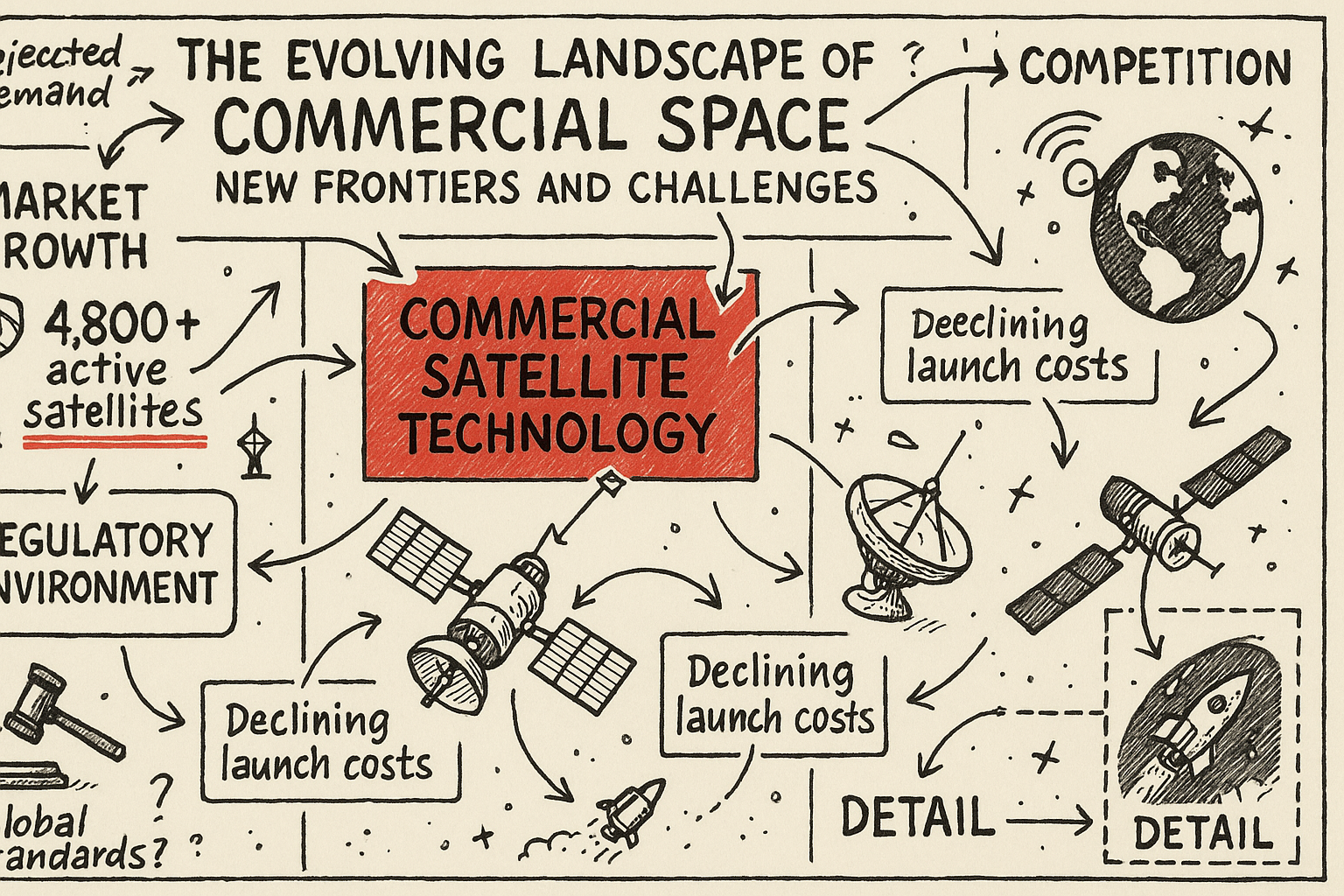
The commercial space sector is on the cusp of transformative change, driven by technological innovations and strategic business shifts. Recent developments underscore the growing importance of commercial entities in space exploration and satellite technology, marking a significant departure from the traditional government-dominated space endeavors.
Technological Innovations and Strategic Alliances
One of the most exciting advancements in commercial space is the move toward in-orbit computing. Sophia Space, a company at the forefront of this innovation, has raised $7 million to demonstrate orbital computing capabilities by 2027. They have selected the Apex Space Nova satellite bus for this mission, highlighting the increasing collaboration between tech companies and space hardware providers (Source 1).
This trend is further emphasized by Sophia Space's recent inclusion as an associate member of the Commercial Space Federation (CSF). This membership not only solidifies its position within the industry but also signifies the broader shift toward integrating advanced computing within the space ecosystem (Source 2).
Corporate Maneuvers and Market Dynamics
The commercial space sector is not just about technological advancement; it's also about strategic repositioning. EchoStar's decision to change its stock ticker from SATS to ECHO highlights a shift in focus towards becoming a global connectivity provider, reflecting a broader industry trend towards integrated communication networks (Source 7).
Meanwhile, All.Space's relocation from the UK to the US amid its acquisition by York Space Systems underscores the geopolitical dynamics influencing business decisions in the space sector. This move aligns with US defense priorities, pointing to the increasing intersection of commercial interests and national security concerns (Source 3).
Market Leaders and the Billionaire Space Race
Elon Musk's ascent to become the world's first trillionaire, following SpaceX's historic IPO, highlights the immense financial stakes involved in the space industry. This development not only cements SpaceX's position as a market leader but also exemplifies the growing influence of private entities in space exploration (Source 8).
Challenges and Lessons Learned
While the commercial space industry is burgeoning, it is not without its challenges. The recent mishap involving NASA's Deep Space Network (DSN) antenna, attributed to poor training and procedures, serves as a cautionary tale. It underscores the critical need for robust operational protocols as the industry continues to expand (Source 4).
In a surprising turn, Earth observation satellites have developed the capability to autonomously locate specific objects. This advancement in satellite AI could revolutionize data processing and retrieval in space, offering unprecedented efficiency and autonomy (Source 5).
Conclusion: Preparing for the Future
The commercial space sector is poised for continued growth, driven by technological advancements, strategic corporate shifts, and the increasing role of private entities. However, as the industry evolves, it must address operational challenges and ensure effective collaboration between public and private sectors to sustain momentum and innovation.