ESA’s Hera begins major braking sequence to rendezvous with Didymos–Dimorphos
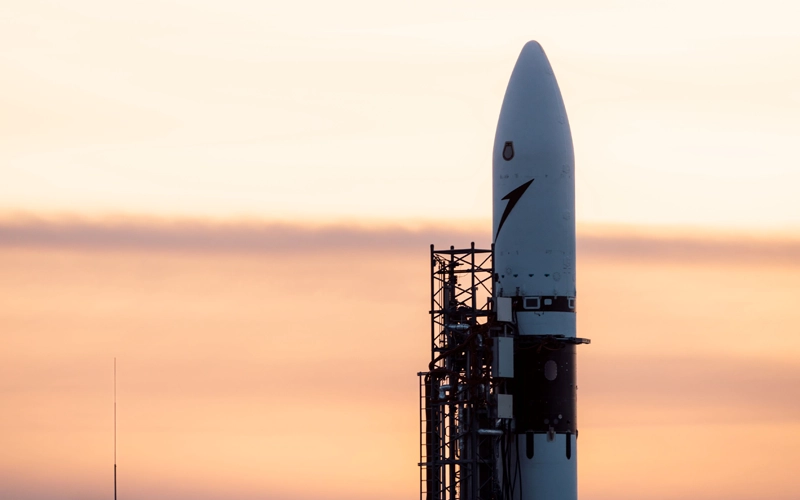
European Space Agency (ESA) mission Hera, launched from Cape Canaveral on 7 October 2024, is preparing to perform its most demanding in‑flight activity since liftoff: a pair of sustained hydrazine thruster burns to slow the small–car–sized spacecraft so it can match velocity with the Didymos–Dimorphos binary asteroid system ahead of a November rendezvous.
After two years of cruise, including two deep‑space manoeuvres and a spring 2025 gravity flyby of Mars that altered its trajectory and increased its speed, Hera is currently moving relative to Earth at about 12 kilometres per second. To approach the binary pair safely, Hera will need to reduce its velocity relative to the asteroids by a few hundred metres per second.
ESA’s flight dynamics team has scheduled an initial long burn, BRM‑1, for early on Tuesday 15 October. For BRM‑1 Hera will rotate so that the ring of Orbit Control Thrusters points toward the Didymos system and three hydrazine‑fed Orbit Control Thrusters will be fired continuously for a total of 93 minutes. Because the manoeuvre must also preserve spacecraft attitude, the Reaction Control Thrusters — arranged in pairs on the corners of Hera’s cube‑shaped bus — will be used intermittently to stabilise and fine‑tune orientation while smaller pulses from the Orbit Control Thrusters provide precision adjustments.
“To prepare for this initial Braking Manoeuvre, known as BRM‑1, we performed a brief test burn on 2 October, after which we started to generate the full sequence of telecommands,” explains Francesco Castellini of ESA’s Flight Dynamics team, who are responsible for determining spacecraft positions and computing how to move them. Following the BRM‑1 burn, ESA expects to reacquire Hera’s signal using one of its two 35‑metre deep‑space antennas in New Norcia, Australia. Castellini notes that the post‑burn phase is critical: Hera’s GNC (guidance, navigation and control) sensor outputs in the telemetry, together with ranging and Doppler data embedded in the signal, will be used to verify whether the achieved delta‑v matches predictions.
After a few days of analysis and additional checks, the flight dynamics team plans to uplink the telecommand sequence for a second, shorter braking manoeuvre, BRM‑2. That burn is scheduled for the early morning of Thursday 22 October and is expected to last about 31 minutes. ESA states BRM‑2 should complete most of the required change in velocity.
The braking campaign is a delicate exercise in long‑duration thruster management in deep space. Hydrazine‑based propulsion must be handled carefully to ensure continuous, predictable thrust for the planned durations while maintaining thermal and power margins. The combination of main orbit control thrusters for bulk delta‑v and reaction control thrusters for attitude control will be closely monitored from ESA’s operations centres.
Hera’s target, the binary system consisting of a 780‑metre primary (Didymos) and a 151‑metre secondary (Dimorphos), was itself the subject of an impact experiment by NASA’s DART spacecraft, which struck Dimorphos on 26 September 2022. ESA’s background briefing describes Dimorphos as roughly the size of the Great Pyramid of Giza and notes the secondary orbits Didymos at an average distance of about 1.15 kilometres, moving at roughly 18 centimetres per second relative to its parent.
DART imagery showed Didymos as a spinning‑top shape with relatively smooth dusty plains and a 2.2‑hour rotation period; that spin rate is close enough to structural limits that material may shed from the primary, a process that could be responsible for the creation of Dimorphos. Dimorphos itself appeared to be a rubble‑pile asteroid dominated by large boulders, with many blocks the size of cars to houses. ESA cautions that Dimorphos has likely been extensively reshaped by the DART impact, which produced an ejecta plume and redistributed surface material.
Hera carries two CubeSats — Juventas (a radar sounder) and Milani (a spectrometer and camera package) — to augment observations of the system. ESA’s public materials characterise the mission as an in‑situ follow‑up to DART: Hera will characterise the asteroid pair, measure the DART‑induced orbital change, and investigate the internal structure and properties of both bodies to improve models used in planetary defence.
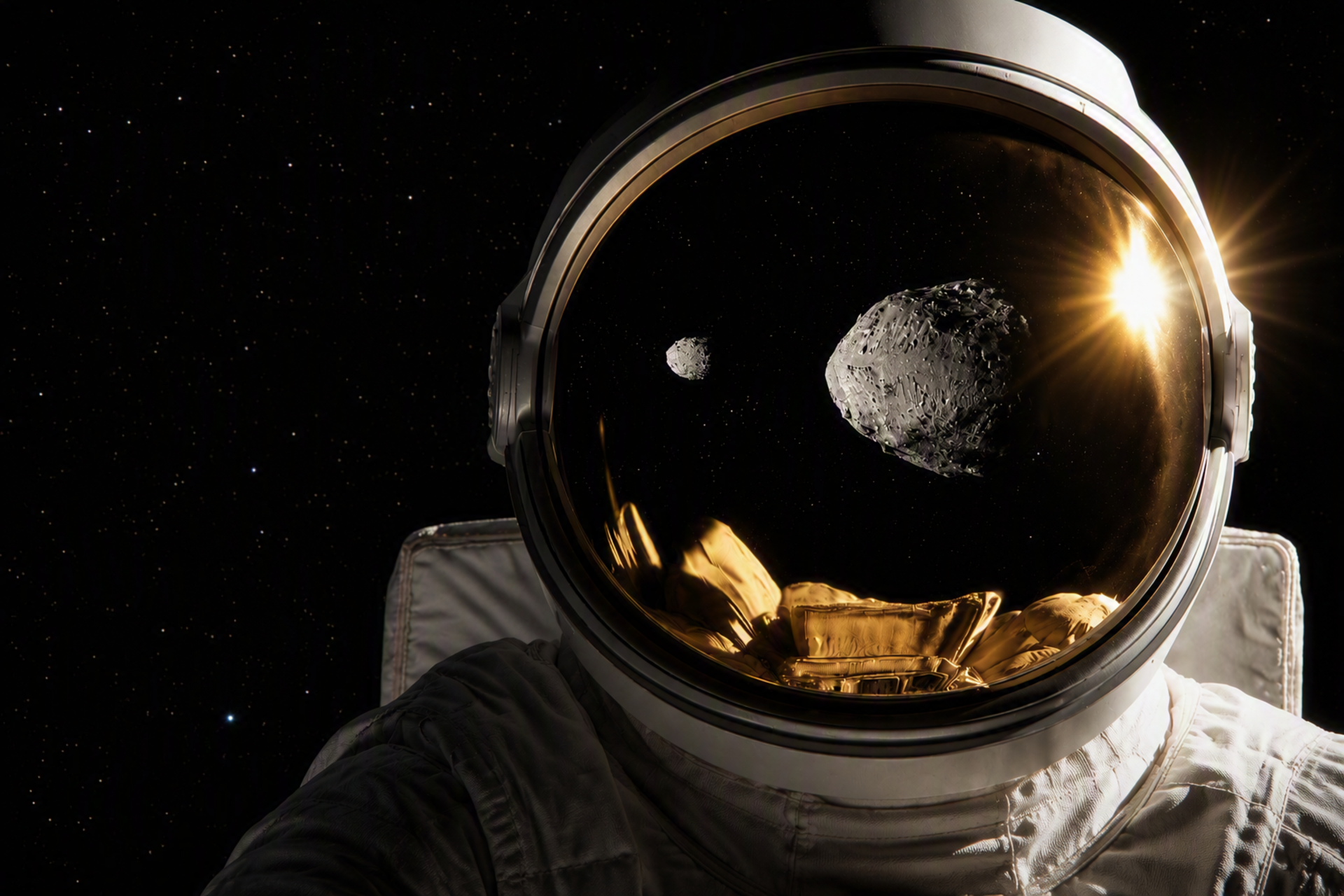
The spacecraft will rendezvous with the Didymos system at roughly 1.5 astronomical units from the Sun, a distance similar to Mars orbit where sunlight is dimmer than at Earth but still strong. At that distance, Didymos and Dimorphos will appear as rugged, iron‑grey hills bathed in relatively bright sunlight. An astronaut visiting Hera at arrival would find the small secondary’s gravity extremely weak; walking there would be more akin to stepping and drifting in a very low‑gravity environment. ESA notes the larger Didymos exerts far stronger gravity on Dimorphos than the secondary’s own, and the dynamical environment around the pair is complex.
The upcoming braking burns mark the final critical navigation steps before Hera moves into close operations and surveys the consequences of the first planetary‑defence kinetic impactor test. The mission’s data will inform models of rubble‑pile bodies and help refine mitigation strategies for potentially hazardous near‑Earth objects, while the planned CubeSat observations and Hera’s own instruments will build a detailed picture of the outcome of the DART impact.
Successful completion of BRM‑1 and BRM‑2 will place Hera in the correct velocity frame for its November arrival, setting the stage for months of detailed reconnaissance of Didymos and Dimorphos and for extracting the scientific and planetary‑defence lessons of the DART–Hera campaign.