Introduction
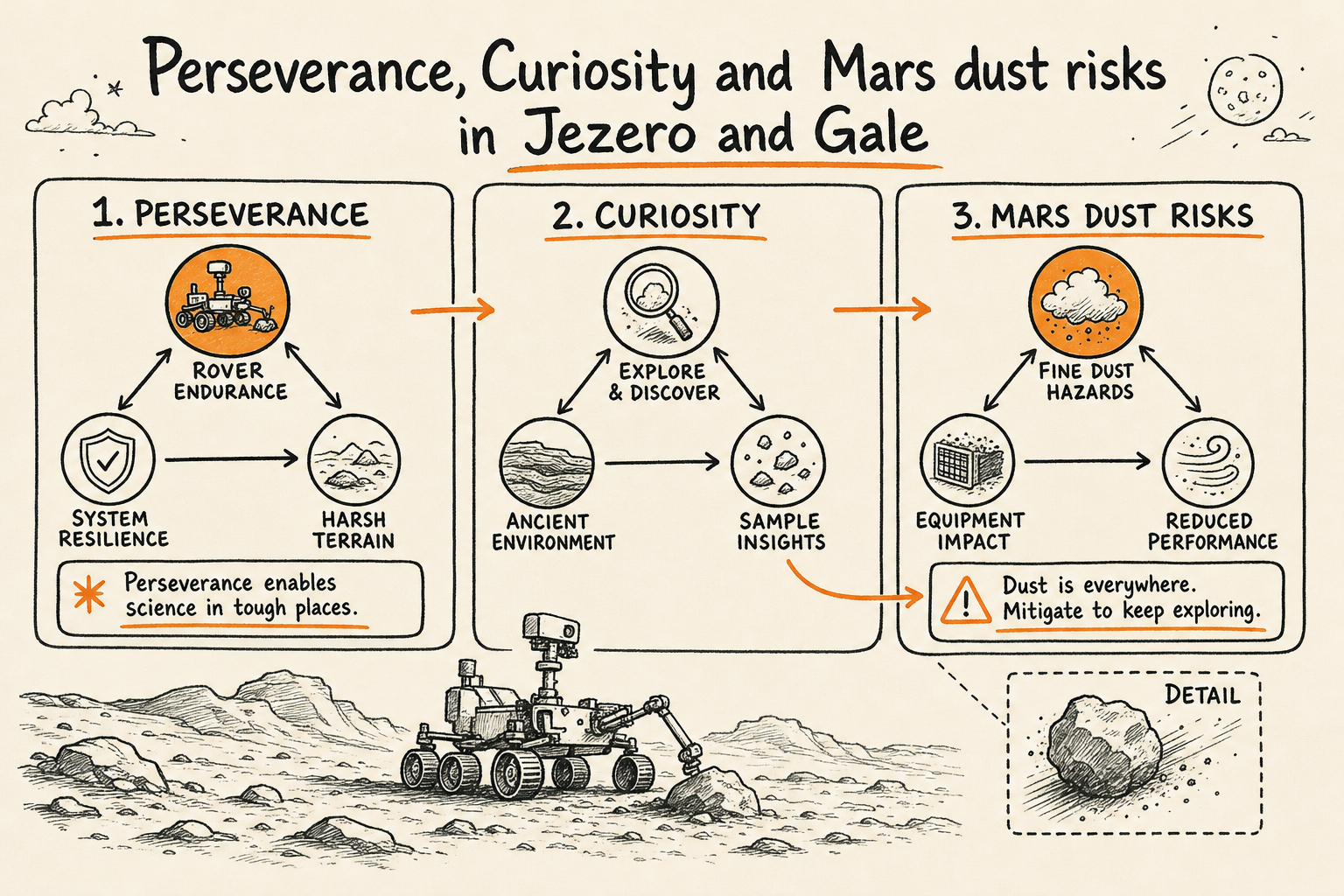
Two of NASA's most accomplished mobile laboratories — Perseverance in Jezero Crater and Curiosity in Gale Crater — are producing a linked picture of Mars as both a slowly unraveling archive of ancient water and an active environment of erosional processes that pose direct hazards to future human explorers. Recent image releases and a systematic dust study combine to make a single argument: Mars' surface is scientifically generous but operationally unforgiving.
High-resolution landscapes, long-lived questions
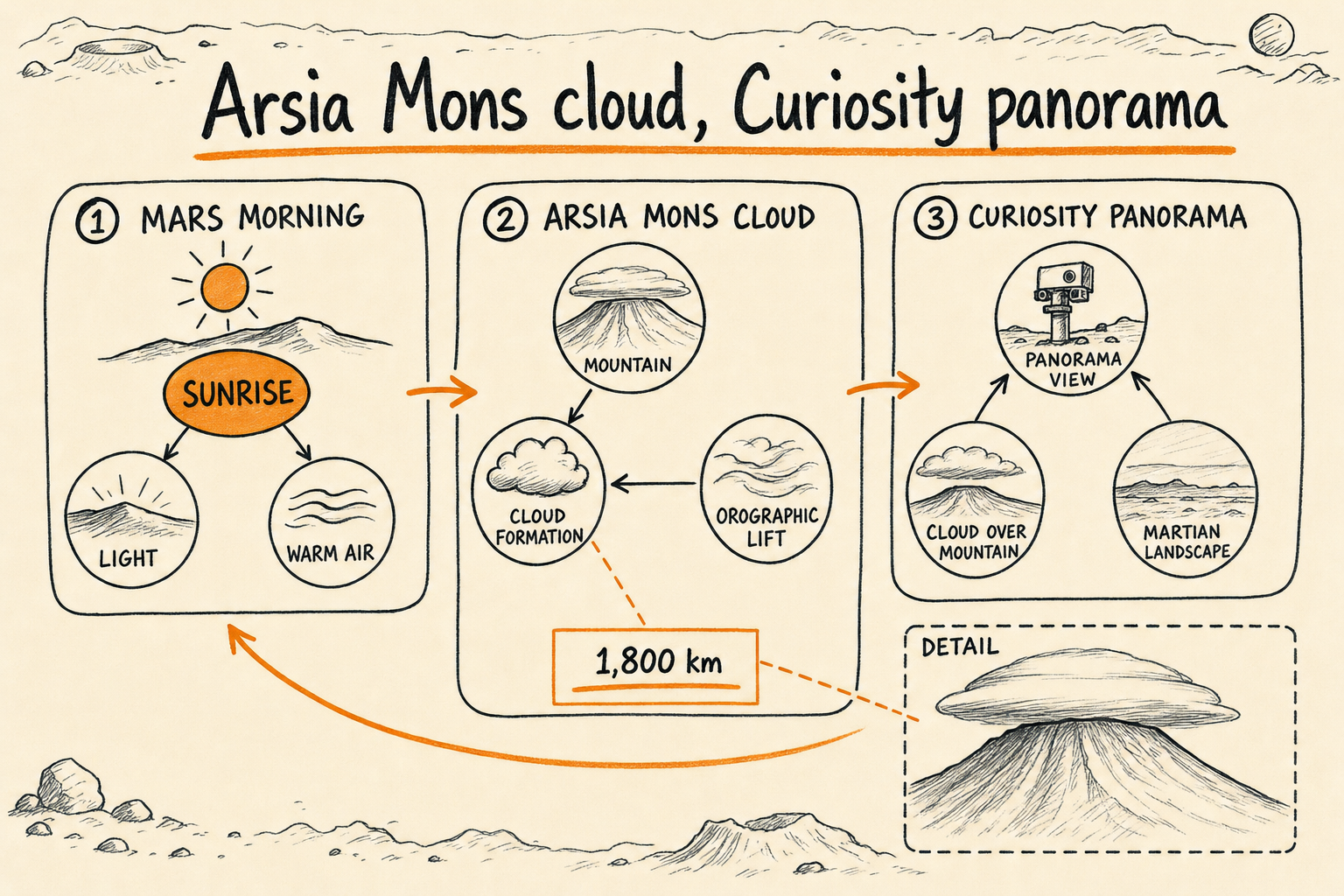
Perseverance's stitched 360-degree panorama of Neretva Vallis and Curiosity's close-up of wind-sculpted ridges (yardangs) are, at first glance, classic planetary imagery — stunning vistas that feed public imagination. But viewed together they form complementary datasets. Perseverance has been tracing an ancient river channel that fed Jezero's paleo-lake; those riverine deposits are where the rover seeks preserved organics and biosignatures. Curiosity's dawn panorama in Gale reveals yardangs and elongated ridges that speak to prolonged atmospheric sculpting. Each landscape tells a part of Mars' environmental history: episodic liquid water that built deltas and channels, followed by aeolian dominance that reworked and exposed those records.
Historically, missions have traded breadth for depth: Viking and Pathfinder offered broad reconnaissance; Mars Science Laboratory (Curiosity) and Mars 2020 (Perseverance) marry mobility with focused geologic inquiry. Now, the narrative is maturing from 'Was there water?' to 'Where and how is the water-era record best preserved and accessible?' The juxtaposition of fluvially deposited horizons at Jezero with wind-carved exposures at Gale shows scientists where to look — and how easily delicate stratigraphic records can be abraded or exhumed by wind.
From imagery to human risk: ultrafine dust
Beyond science, Perseverance's long-term monitoring has produced a less romantic but urgent result: pervasive fine and ultrafine dust adheres to spacesuit materials carried aboard the rover. Measurements spanning more than 1,600 Martian days show particles small enough to penetrate lungs and possibly enter the bloodstream. That finding, published in a major peer-reviewed outlet, shifts dust from a nuisance (abrading seals, fouling instruments) to a biomedical hazard that must be mitigated before sustained crewed operations.
This is not merely an engineering checkbox. On Apollo, lunar dust abraded suits and clogged systems; Moon crews returned with irritation and equipment wear. On Mars, the dust's ultrafine fraction elevates concerns: inhalation risk, longer-term cardiopulmonary effects, contamination pathways into habitats, and the design implications for suit don/doff procedures and airlock systems. The Mars surface that yields compelling science is the same environment that forces rethinking of mission architecture.
Operational consequences and near-term choices
Several practical implications follow. First, sampling strategies must balance scientific return with contamination risk: site selection for human sorties should privilege locales with natural barriers to dust mobilization or where geologic exposures minimize the need for intrusive operations. Second, spacesuit design must account for electrostatic adhesion and ultrafine particle penetration; filtration and active dust removal systems become mission critical. Third, surface base planning should incorporate layered decontamination and containment steps to prevent dust migration into habitats and labs.
These are not theoretical. Perseverance's measurements provide real, quantifiable particle-size distributions attached to actual suit fabrics exposed to Martian conditions. Engineers can now prioritize solutions (non-stick finishes, electromagnetic dust repulsion, local filtration) based on observed particle behavior rather than Earth-based analogs alone.
Surprising or counterintuitive lessons
First, the greatest scientific returns and greatest human risks may co-locate. The same stratigraphic exposures prized for biosignature searches are frequently sites of active aeolian abrasion that generate the very ultrafine dust posing health risks. In other words, the best places to look for ancient life are also the hardest places to protect crews.
Second, durable geological records on Mars are not necessarily safe archives: wind that reveals deeper layers also refreshes the surface with fine respirable material. This makes Mars uniquely challenging compared with the Moon, where dust is predominantly larger and mechanically jagged but lacks the same ultrafine fraction tied to weathering in an ancient atmosphere.
Broader implications and next steps
For mission planners, the path forward is clear: integrate planetary science and human factors early and iteratively. Rover data must inform habitat siting, suit engineering, and EVA protocols. Funding lines that treated science and crew safety separately will need stronger cross-disciplinary coordination.
For scientists, combined datasets from Perseverance and Curiosity sharpen targeting: search strategies should combine geomorphic context (river deltas, channel fills) with understanding of local wind regimes and surface roughness to both maximize the chance of preserved biosignatures and minimize sample contamination and operational hazard.
Conclusion
Perseverance and Curiosity, decades after the first rover footprints, are doing more than collecting images and samples. They are refining the calculus of exploration: revealing the most promising places to find Mars' past while simultaneously defining the constraints that will govern safe human presence. The Red Planet remains a trove of discovery — but it is a landscape that will demand humility, engineering ingenuity, and an acceptance that science and safety must be inseparable.