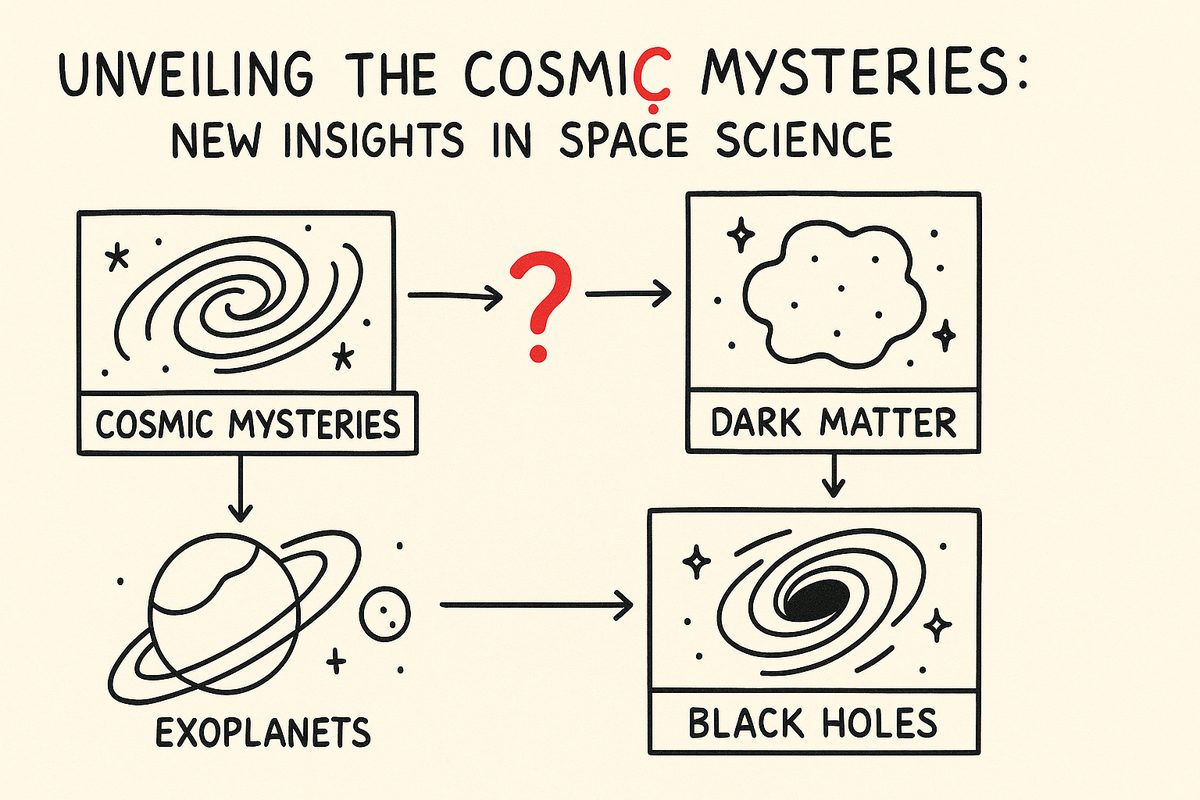
The frontiers of space science continue to expand, offering both profound insights and new mysteries about our universe. Recent research has unveiled potentially groundbreaking findings that challenge longstanding perceptions and spark debate among scientists.
Understanding the Solar System's Past
The recent hypothesis that our solar system may have once harbored additional planets deepens the enigma of our cosmic neighborhood. These missing planets, suggested by complex gravitational simulations, could explain the current configurations of outer planets and provide clues to the early solar system's chaotic environment. This revelation invites a comparison with historical astronomical theories, reminiscent of the initial skepticism surrounding the heliocentric model.
Interstellar Intrigue: The Case of 3I/ATLAS
The James Webb Space Telescope's observations of the interstellar object 3I/ATLAS have revealed the presence of methane, a chemical signature that starkly contrasts with typical solar system comets. This finding suggests that the chemistry of other star systems can be markedly different from our own, emphasizing the diversity of cosmic phenomena. Such discoveries underscore the importance of advanced telescopes in broadening our understanding of the universe's complexity.
New Insights into Stellar Evolution
Euclid's recent observations of a 'gap' in red dwarf populations within a globular cluster have opened new lines of inquiry into stellar evolution. This phenomenon may indicate previously unknown processes affecting the life cycles of stars. Historically, red dwarfs were considered the most stable stars, but these findings suggest a more dynamic evolutionary path, challenging traditional models.
The Expanding Universe: Small Magellanic Cloud
Data from a multi-year survey now shows that the Small Magellanic Cloud, a satellite galaxy of the Milky Way, is expanding rather than rotating. This expansion, influenced by the gravitational pull of the Large Magellanic Cloud, provides new insights into galactic interactions and evolution, highlighting the complex gravitational ballet performed by celestial bodies over billions of years.
Policy and Research: The Uncertain Future
However, these scientific advancements face potential disruptions from proposed U.S. grant funding rules, which threaten to diminish peer review and international collaboration. Such policy changes could stifle the innovative spirit that drives discoveries and limit our ability to engage in global scientific partnerships. Historically, collaborative efforts have been pivotal in achieving major breakthroughs, from the International Space Station to the Hubble Space Telescope.
As we continue to unravel the universe's mysteries, these findings exemplify the dynamic nature of space science. Each discovery not only answers longstanding questions but also raises new ones, propelling us further along the path of exploration and understanding.