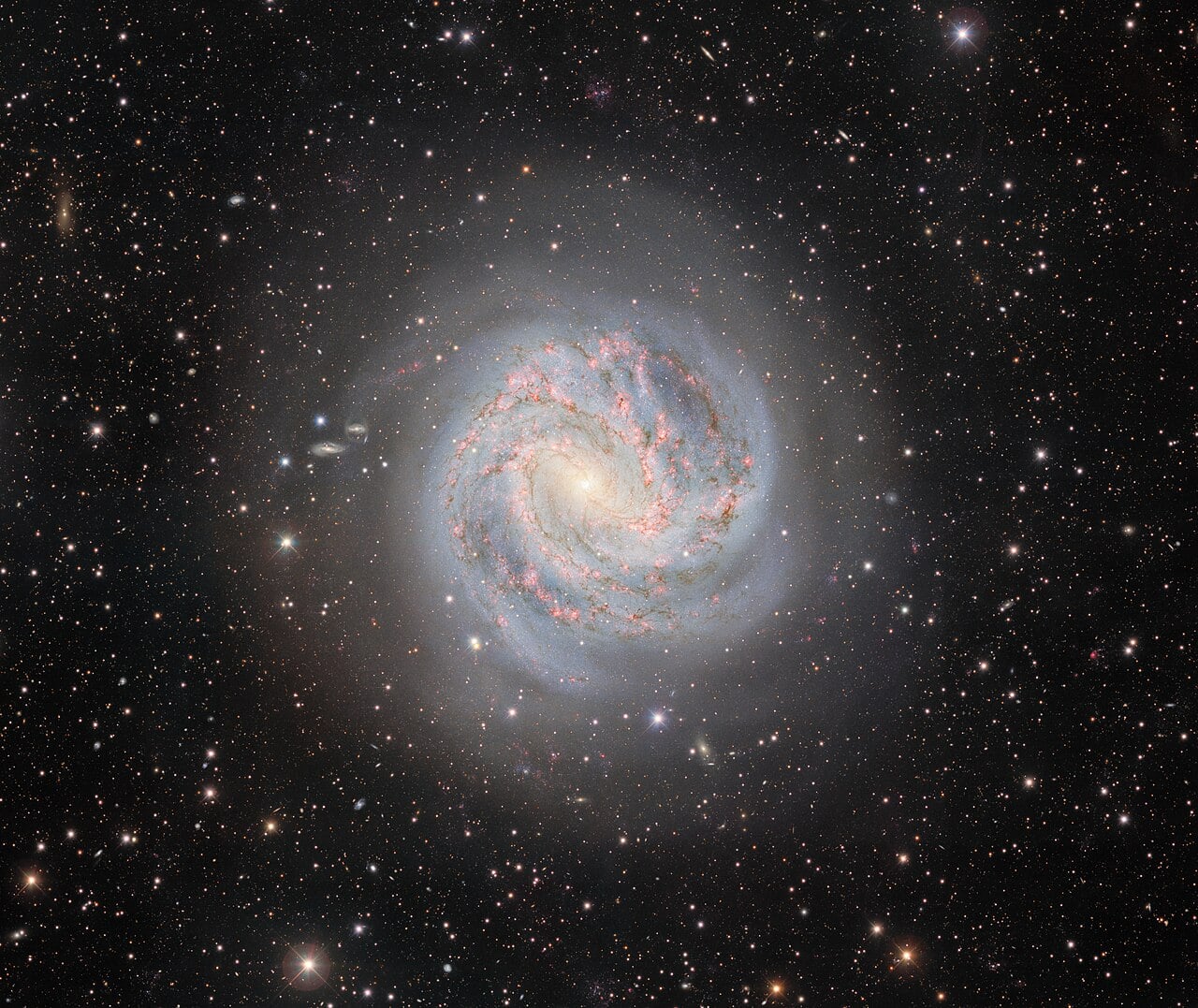
In the realm of cosmic phenomena, the death of a star is traditionally marked by a dramatic explosion known as a supernova, followed by a slow fading into obscurity. However, recent observations from NASA's Chandra X-ray Observatory have unveiled a startling deviation from this narrative within the Pinwheel Galaxy, also known as Messier 83. This spiral galaxy, located approximately 15 million light-years away, is not only a site of vigorous star formation but also a cosmic stage where stars refuse to fade quietly.
For more than a decade, astronomers have been sifting through Chandra's observations of Messier 83. Led by Andrea Prestwich, the team discovered a peculiar behavior in what were assumed to be supernova remnants—the celestial debris left behind when massive stars meet their explosive end. Instead of dimming gradually over time, as expected, these remnants were observed to brighten and fade dramatically.
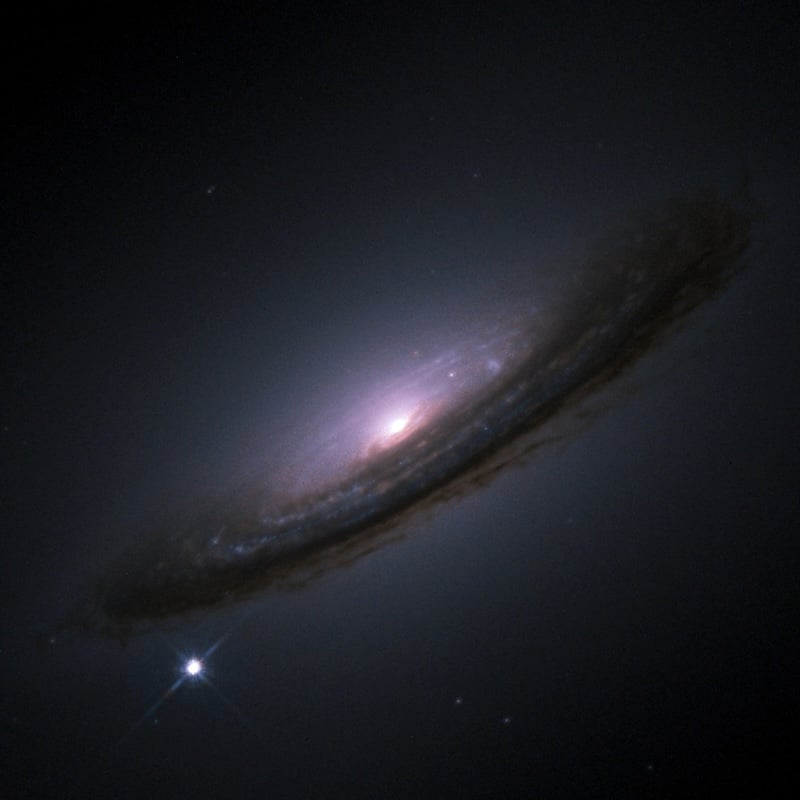
Among the 22 remnants exhibiting this behavior, the case of SN 1957D was straightforward. This remnant continues to interact with surrounding gas, causing it to flare. However, the other 21 remnants presented a mystery, as they could not all be young enough to explain their activity by traditional means. This led the researchers to hypothesize a more complex scenario involving binary star systems.
In these high mass X-ray binaries, a surviving star, locked in orbit with a neutron star or black hole left by its deceased companion, is slowly being consumed. Gas from the surviving star is drawn towards its dense partner, heating up to extreme temperatures and emitting X-rays—an activity detected as flickering by Chandra.
While high mass X-ray binaries are not a new discovery, their prevalence in Messier 83, specifically intertwined with supernova remnants, is unprecedented. Previously, only a handful of such systems had been observed across various galaxies. Yet, in Messier 83 alone, over twenty candidates have been identified, predominantly in regions dense with massive stars.
This discovery suggests a significant population of these exotic systems in galaxies with active star formation. Furthermore, it opens up the possibility that, in some instances, the remnants of a star might not even require a companion to exhibit such activity. Instead, they could be re-accreting their own ejected material, a form of stellar recycling.
The implications of these findings extend beyond mere curiosity. Understanding these processes could provide deeper insights into the life cycles of stars and the dynamics of galaxies. It challenges astronomers to rethink the lifecycle of stars and the mechanisms that govern their afterlives.
Messier 83, with its rich tapestry of stellar phenomena, continues to be an invaluable laboratory for studying the cosmos. The unexpected behavior of its supernova remnants as observed by Chandra not only enriches our understanding of stellar evolution but also underscores the complexity and unpredictability of the universe.