In a groundbreaking achievement for time-domain astronomy, researchers have successfully utilized the Submillimeter Array (SMA) on Maunakea to observe a gamma-ray burst (GRB) at millimeter and submillimeter wavelengths just minutes after its discovery. This marks a significant step forward in the ability to study transient cosmic phenomena in real-time.
On January 26, 2026, the gamma-ray burst designated GRB 260127A was detected by the Neil Gehrels Swift Observatory. The observatory, known for its rapid alert system, automatically notified operators who initiated the observation process. Within 90 seconds of the alert, preparations were underway, and the SMA began its observations a mere 12.6 minutes after the initial GRB signal.
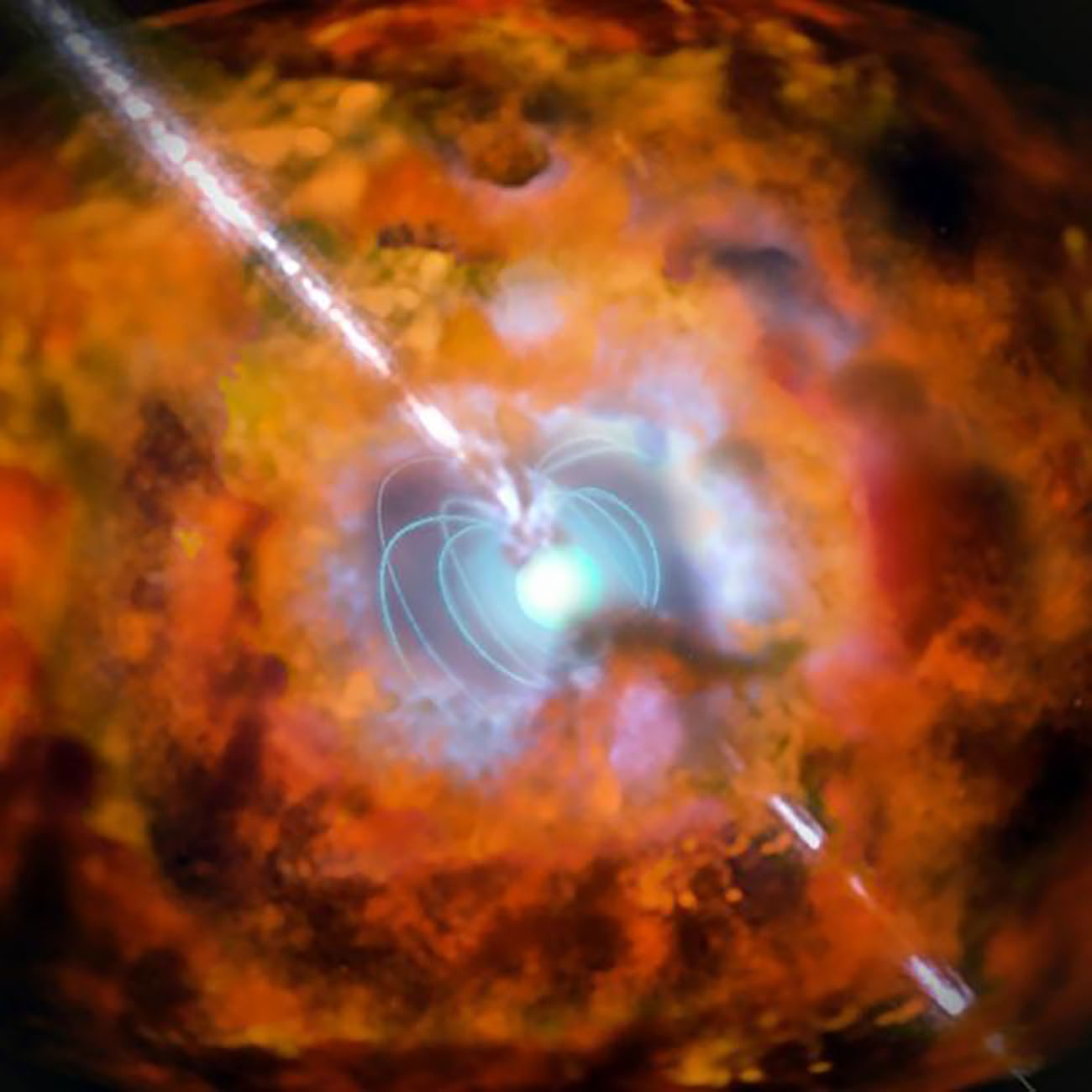
This rapid response was made possible by a newly implemented mode at the SMA, enabling it to capture the earliest stages of such cosmic events, a capability that had previously eluded astronomers working with millimeter wavelengths. This advancement allows for a more detailed understanding of the phenomena surrounding GRBs, which are some of the universe's most luminous explosions. These bursts result from the collapse of massive stars or the merger of compact objects like neutron stars, followed by an afterglow detectable across various wavelengths.
The ability to observe GRBs in the submillimeter range shortly after detection has been a long-standing goal in the field. Traditionally, observations at these wavelengths suffered from significant delays, unlike X-ray and optical observations which could be executed much faster. The new system effectively bridges this gap, allowing astronomers to collect comprehensive data on the afterglow of GRBs.
The recent success of the SMA's rapid-response capability was heralded by scientists at the Center for Astrophysics | Harvard & Smithsonian (CfA), who published their findings in The Astrophysical Journal Letters. By capturing these fleeting cosmic events in their early stages, researchers can better explore the physics of GRBs, shedding light on the processes that lead to such explosive emissions.
Time-domain astronomy, the field concerned with observing changes in astronomical objects over time, has revolutionized our understanding of dynamic cosmic events. This approach contrasts with traditional methods that capture static images of the universe, akin to taking a photograph. Time-domain astronomy, in comparison, is more like creating a film, capturing the evolution of phenomena in real-time or over extended periods.
The integration of rapid-response capabilities at observatories like the SMA is part of a broader trend towards enhancing our ability to react swiftly to cosmic events. This development is crucial for studying transient phenomena, which often occur without warning and can evolve rapidly.
In addition to the advancements at the SMA, efforts are underway to maintain and enhance the capabilities of other observatories critical for GRB detection. The Swift Observatory, for instance, is set to benefit from the LINK mission by Katalyst Space Technologies, which aims to adjust its orbit, ensuring its continued effectiveness in detecting and analyzing such events.
As we continue to push the boundaries of observational astronomy, the ability to capture and study the universe's most dynamic and energetic events in real-time becomes increasingly feasible. This not only enhances our scientific understanding but also underscores the importance of technological innovation in advancing astronomical research.