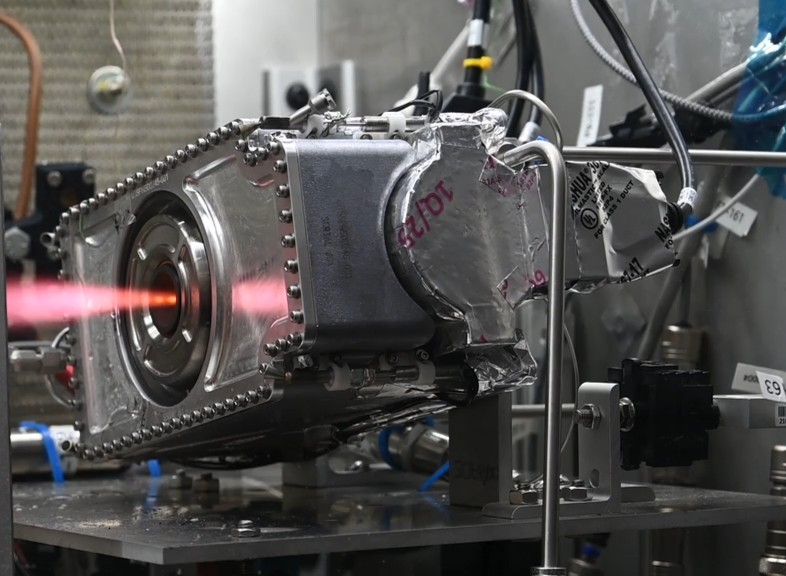
In a significant development for small satellite technology, Parabilis Space Technologies has completed successful hot-fire testing of its Dense Orbital Transfer System (DOTS), a propulsion system designed to enhance the agility and operational capabilities of cubesats. This advancement marks a potential transformation in how these small satellites, which are increasingly utilized for military and commercial purposes, perform in space.
The DOTS prototype, roughly the size of a household toaster, represents a novel integration of traditional propulsion technologies. It employs a hybrid engine that combines the storage benefits of solid fuels with the control and performance advantages of liquid propulsion systems. This approach is aimed at overcoming a common limitation of cubesats: their generally static nature once deployed in orbit.
Small satellites have become a cornerstone of military space strategies due to their cost-effectiveness and rapid production capabilities. However, their inability to maneuver post-deployment has restricted their utility, particularly for complex missions requiring orbital adjustments. The Space Force, recognizing these limitations, has collaborated with Parabilis to explore DOTS as a solution.
The Space Systems Command has described DOTS as a "novel application of heritage space propulsion technology," emphasizing its potential for future military applications. The system's ability to maneuver is crucial for several reasons: avoiding space debris, maintaining satellite formations, repositioning for new mission objectives, and operating effectively in very low Earth orbit, where atmospheric drag can shorten a satellite's lifespan but enhance imaging and communications.
One of the key features of DOTS is its "cold start" capability, which allows the propulsion system to activate without a lengthy warm-up period. This feature enables cubesats to respond rapidly to changing conditions in orbit, a significant advantage over traditional systems that require preparation time before initiating maneuvers. Additionally, the use of safe-to-handle solid propellants addresses safety concerns often associated with more volatile chemical propellants.
Enrico Attanasio, CEO of Parabilis, highlighted DOTS as a "clear leap in cubesat propulsion performance," indicating the company’s readiness to transition from ground testing to an in-orbit demonstration. The successful completion of these tests sets the stage for a flight demonstration, which Parabilis aims to conduct in collaboration with government or industry partners within the next year. The company has noted interest from both sectors, underscoring the broad potential applications of this technology.
This propulsion innovation aligns with broader trends in the aerospace industry, where the focus is increasingly on developing agile, responsive satellite systems capable of adapting to new challenges. As the number of satellites in orbit continues to grow, driven by both commercial and governmental initiatives, the importance of maneuverable, cost-effective solutions like DOTS will likely increase.
Parabilis’ DOTS technology holds promise not only for enhancing military capabilities but also for advancing commercial satellite operations, potentially offering improved mission flexibility and longer operational life for satellites in low Earth orbit. As this technology progresses towards deployment, it could set new standards for cubesat performance and redefine their role in modern space missions.