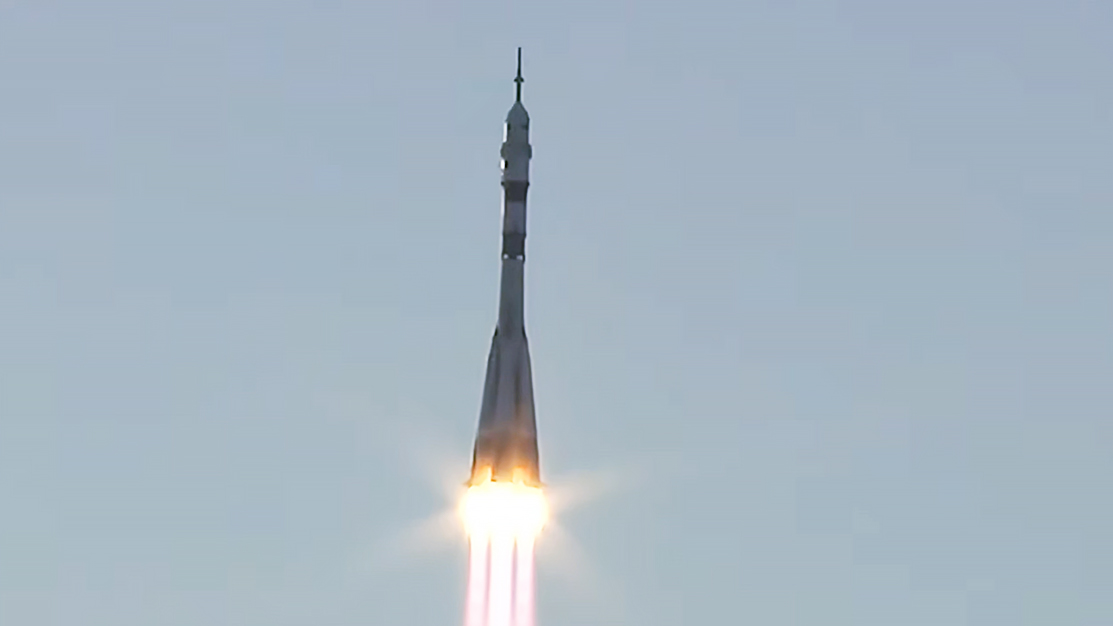
The Soyuz MS-29 mission marks another milestone in international space collaboration as a new crew of three astronauts successfully launched from the Baikonur Cosmodrome in Kazakhstan on July 14, 2026. This mission is a testament to the enduring partnership between NASA and Roscosmos, showcasing their ability to work together despite geopolitical challenges.
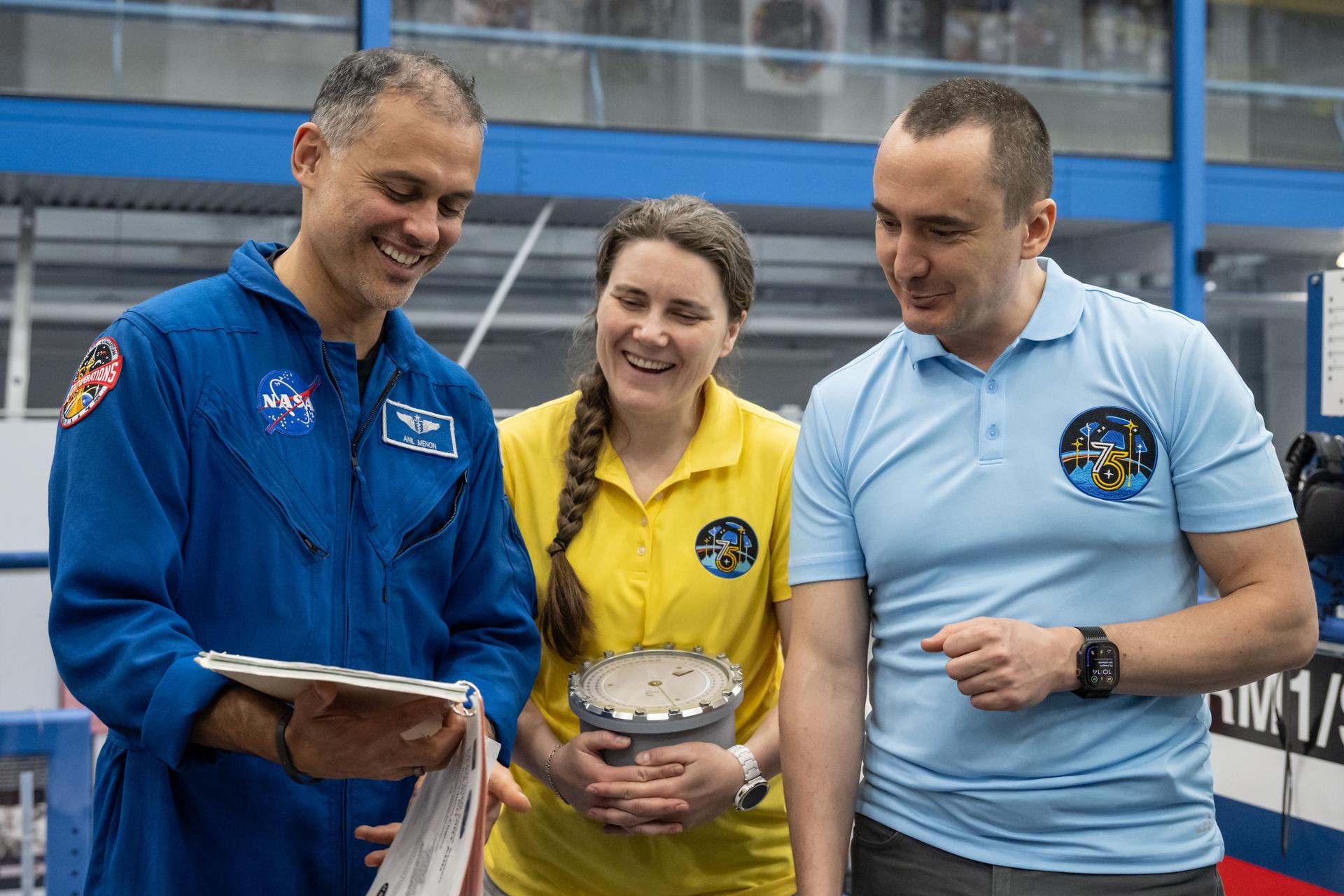
Lift-off occurred precisely at 10:47 a.m. EDT (7:47 p.m. local Baikonur time), with the spacecraft reaching low-Earth orbit atop a Soyuz 2.1a rocket. The crew onboard includes mission commander Pyotr Dubrov and flight engineer Anna Kikina from Roscosmos, alongside NASA astronaut Anil Menon. Dubrov and Kikina are making their second trip to the International Space Station (ISS), while Menon is on his inaugural spaceflight.
The Soyuz MS-29 executed a rapid rendezvous sequence, docking with the ISS just three hours and four minutes after launch at 1:52 p.m. EDT. This swift docking approach is not always feasible, making this mission particularly notable for its efficiency.
Following docking, the Soyuz MS-29 crew joined the existing members of the ISS for an extensive handover period lasting 12 days. During this time, they will collaborate with the departing Soyuz MS-28 crew, led by Sergey Kud-Sverchkov, which is scheduled to undock on July 26.
As part of the tradition and operational continuity, outgoing ISS commander Kud-Sverchkov will pass leadership to NASA astronaut Jessica Meir. She will assume command of the station until the subsequent handover to Crew-12.
The presence of high-ranking officials, including NASA Administrator Jared Isaacman and Roscosmos Director General Dmitry Bakanov, at the launch highlights the mission's diplomatic significance. Isaacman’s visit marks the first time a NASA Administrator has attended a launch at Baikonur since 2018, reflecting a commitment to maintaining robust international space relations.
Roscosmos and NASA have maintained a strategic partnership through mutual crew exchanges, ensuring operational knowledge transfer across both the American and Russian segments of the ISS. This collaboration persists despite broader global political tensions, emphasizing space as a unique realm for international cooperation.
The crew's mission is slated to last eight months, during which they will engage in various scientific research and experimental activities aboard the ISS. These experiments are crucial for advancing our understanding of long-term human spaceflight and its implications for future missions to the Moon and Mars.
This mission also underscores the resilience and adaptability of the Soyuz program, which has been a reliable workhorse for human spaceflight for over half a century. The Soyuz spacecraft, with its proven design and operational legacy, continues to be a cornerstone of crewed missions to the ISS.
As the Soyuz MS-29 crew settles into their new roles aboard the ISS, their work will contribute to the broader goals of space exploration and scientific discovery, paving the way for future missions beyond low-Earth orbit.